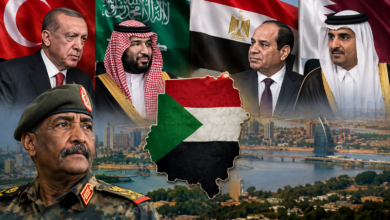
Diplomacy and Regional Mediation in Sudan: Why Have Efforts to End the War Stalled?
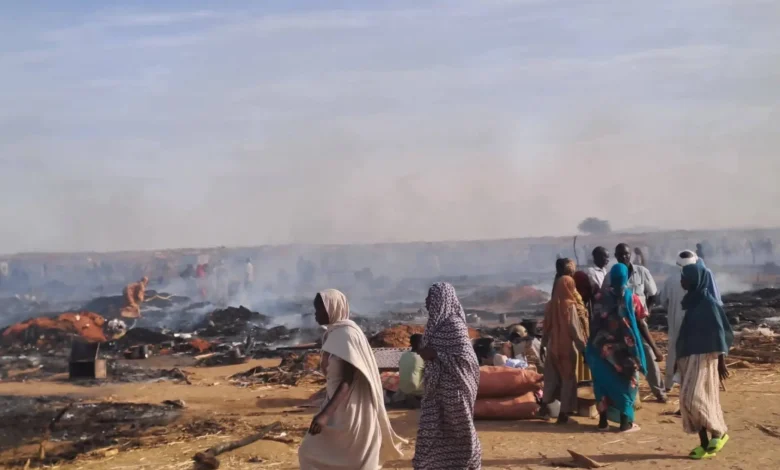
Since the outbreak of the war in Sudan in April 2023 between the Sudanese Armed Forces (SAF) and the Rapid Support Forces (RSF), numerous regional and international actors have sought to contain the crisis and prevent the country from descending further into chaos. Sudan has witnessed a succession of political initiatives and diplomatic efforts led by Arab states, African countries, and international organizations. However, these initiatives have so far failed to achieve a decisive breakthrough capable of securing a lasting ceasefire or launching a comprehensive political process.
-
From the Heart of the War in Sudan: Harrowing Testimonies of Women Subjected to Sexual Violence by the Army
-
Why are the Muslim Brotherhood Trying to Prolong the War in Sudan? Politicians and Analysts Respond
Despite the growing number of initiatives and the diversity of mediators involved, the crisis has frequently remained at a standstill. This has prompted observers to question why diplomatic efforts have struggled to deliver results and whether the obstacle lies in the nature of the conflict itself, the overlap of regional and international agendas, or the absence of a unified vision for resolving the crisis.
Multiple Initiatives and Overlapping Mediation Tracks
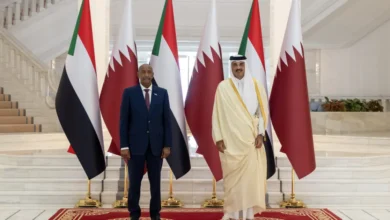
One of the defining characteristics of the Sudanese crisis has been the proliferation of mediation efforts from the earliest days of the conflict. Some initiatives have been led by regional states, others by African and international organizations, while the United Nations has also undertaken efforts to bridge the differences between the warring parties.
-
Al-Burhan declares his rejection of external mediation to stop the war in Sudan
-
War in Sudan: Al-Burhan seeks assistance from former Military leaders of the al-Bashir regime
On the surface, the diversity of initiatives reflected broad international concern for Sudan and a determination to prevent state collapse. In practice, however, the multiplication of mediation tracks created significant overlap, with the Sudanese parties simultaneously engaging with multiple negotiation platforms and political proposals.
Many researchers argue that the lack of full coordination among mediators resulted in parallel initiatives operating without a common framework, thereby reducing their effectiveness and weakening their ability to produce a coherent political settlement.
-
The United Nations warns of a comprehensive civil war in Sudan
-
The Economy at the Heart of Sudan’s Crisis: How the War Has Affected Trade, Investment, and Recovery Prospects
The Challenge of Defining Priorities
One of the principal difficulties confronting mediators has been the differing views regarding priorities.
While some initiatives focused on securing a humanitarian ceasefire to facilitate the delivery of aid, others maintained that any solution should begin with comprehensive political arrangements addressing the root causes of the conflict. Differences also emerged concerning the nature of the transitional period, the role of military institutions, and the future of security arrangements.
These competing priorities made it difficult to establish a unified roadmap capable of gaining the acceptance of all parties, particularly as military operations continued and the balance of power on the battlefield continued to evolve.
-
Escalating Accusations of Chemical Weapons Use in Sudan Amid UN Warnings of an Unprecedented Humanitarian Catastrophe
-
Collapse of the Sudanese Pound and the Failure of the Port Sudan Authorities: Sudan Staggers Toward an Unprecedented Economic Crisis and an Imminent Social Explosion
The Internal Calculations of the Sudanese Parties
The difficulties facing mediation efforts cannot be fully understood without considering the internal calculations of the Sudanese parties themselves.
In armed conflicts, the prospects for a political settlement often depend on whether the opposing sides believe negotiations will offer greater benefits than continued fighting. Throughout different stages of the Sudanese conflict, developments on the battlefield encouraged each side to believe that further military operations could improve its negotiating position.
This reality made the prospects for a comprehensive agreement increasingly complex, as incentives for mutual compromise periodically diminished.
-
Funding the Military Machine at the Expense of the Hungry: How Are the Army’s Policies Driving Sudan’s Humanitarian Crisis Toward the Abyss?
-
The Hidden Human Cost: How Corruption and the Militarization of the State Are Driving Sudan Toward Total Collapse
Regional Interests and Their Impact on the Crisis
Sudan occupies a strategically important position that attracts the attention of numerous regional powers. It borders the Red Sea, lies adjacent to regions facing complex political and security challenges, and possesses significant economic resources.
Consequently, different countries approach the Sudanese crisis from varying perspectives related to national security, regional stability, maritime security, and economic interests.
Although most of these states publicly support Sudan’s stability and territorial unity, their differing priorities have sometimes produced contrasting political approaches, adding another layer of complexity to mediation efforts.
-
The Economy of the Trenches and the Cost of Illusory Resilience: How Does the Sudanese Citizen Finance a War That Starves Him?
-
Sudanese Political Leader : Four Tools Used by the Muslim Brotherhood to Undermine Efforts to End the War
The Role of Regional and International Organizations
Regional and international organizations have attempted to play a central role in managing the Sudanese crisis through direct mediation as well as technical and political support for negotiations.
However, their ability to impose solutions or ensure the implementation of agreements has remained relatively limited because of the complexity of the conflict and the competing interests surrounding it.
Some initiatives have also encountered difficulties arising from multiple centers of decision-making and differing positions among international actors, limiting their capacity to sustain political momentum over time.
-
The War Economy and the Port Sudan Authorities: War Efforts Consume Teachers’ Salaries and Accelerate Economic Decline
-
Sudan between war and the re-engineering of power: a political reading of the transformations within the military landscape
The Military Dimension and Its Impact on the Political Process
International experience demonstrates that successful mediation efforts often require at least a minimum level of stability on the ground.
In Sudan, the continuation of military operations and the expansion of armed confrontations have repeatedly undermined political initiatives. Every new escalation directly affected the negotiating environment, making it increasingly difficult to build trust between the parties.
Furthermore, continual changes in territorial control complicated the strategic calculations of the conflicting sides and influenced their willingness to engage in long-term political settlements.
-
Money for the rifle: the behind-the-scenes recruitment of foreign fighters in the Sudanese war
-
Reports reveal the Sudanese army’s shift toward recruiting foreign fighters to compensate for manpower shortages
The Humanitarian Dimension: A Deferred Priority
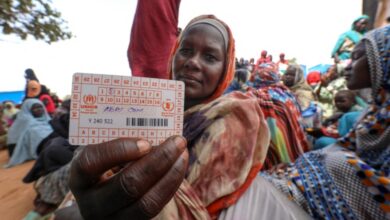
Although Sudan’s humanitarian crisis ranks among the most severe in the world, efforts aimed at protecting civilians and facilitating humanitarian assistance have also encountered significant obstacles.
Military and political considerations have frequently taken precedence over humanitarian priorities, delaying the implementation of agreements concerning humanitarian corridors and temporary ceasefires.
As a result, millions of Sudanese civilians have continued to endure extremely difficult humanitarian and security conditions.
-
The Sudanese army’s bombing of Kutum reignites debate over targeting errors in the war and heightens fears of civilian targeting in Darfur
-
Al-Burhan versus the Islamists: a first step toward reshaping Sudan’s political landscape
A Crisis of Trust
The lack of mutual trust remains one of the greatest obstacles to any peace process.
The opposing parties disagree not only over the details of a political settlement but also over interpretations of previous events and the guarantees required to ensure the implementation of any future agreement.
Without credible monitoring and enforcement mechanisms, it becomes exceedingly difficult to establish the common ground necessary to transition from armed conflict to a sustainable political settlement.
-
The poisons of war extend to the environment… the Sudanese army turns residential areas into hubs of chemical pollution
-
Hidden networks of influence in the Sudanese war
The Need for a More Comprehensive Approach
Numerous studies indicate that the success of any political process in Sudan requires a comprehensive approach extending well beyond the achievement of a ceasefire.
A sustainable solution must address governance, economic recovery, security reform, and transitional justice while ensuring the participation of Sudan’s diverse political and social groups in shaping the country’s future.
Coordination among regional and international stakeholders also remains essential to supporting the political process and preventing it from becoming a field of competition among competing diplomatic initiatives.
-
Sudan at the heart of the storm: a war fueled by interventions and the worsening humanitarian catastrophe
-
Sudan between internal bleeding and external pressures: the struggle for survival amid wars of influence
The Sudanese experience demonstrates that political mediation depends not only on the international community’s willingness to end the conflict but also on consensus regarding priorities, effective coordination among mediators, and the genuine readiness of the warring parties to engage in a meaningful political settlement.
Despite the challenges that diplomatic efforts have faced thus far, the need for a political solution remains more urgent than ever—not only for Sudan itself but also for the stability of the entire Horn of Africa and the Red Sea region.
-
When technology reshapes wars: Sudan as a model of escalating proxy conflicts
-
Impunity reproduces the crime: America faces the Sudanese army’s chemical warfare