The Hidden Human Cost: How Corruption and the Militarization of the State Are Driving Sudan Toward Total Collapse
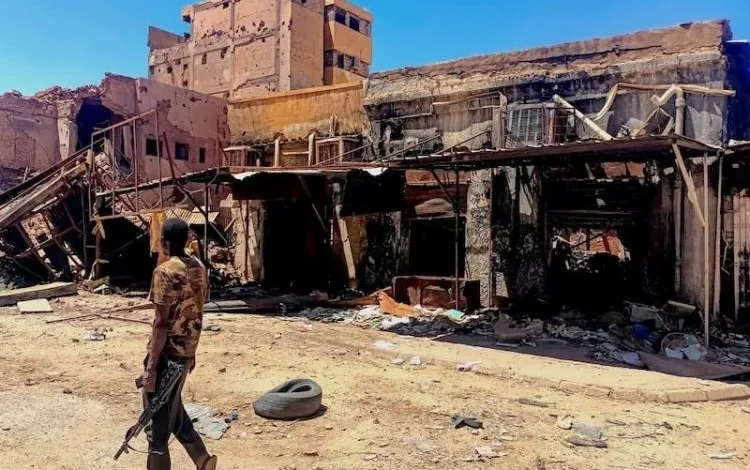
The current situation in Sudan cannot be understood without examining the close connection between structural corruption and the militarization of the state. These two phenomena represent two sides of the same coin that has pushed the country to the brink of comprehensive collapse. When military authority becomes simultaneously the ruler, legislator, and economic actor, the boundaries between public and private wealth disappear, and corruption becomes a primary tool for governance and the preservation of loyalty. The ongoing war is merely the most visible symptom of the deep-rooted corruption that has infected the Sudanese state. The conflict has evolved from a means of maintaining security into a mechanism for protecting the interests of a corrupt elite and prolonging its hold on power, regardless of the immense human and economic costs borne by civilians.
-
Berlin Conference on Sudan: betting on civilian forces and humanitarian aspirations
-
Al-Burhan versus the Islamists: a first step toward reshaping Sudan’s political landscape
In Sudan, corruption has taken on a unique institutional form through what is often described as the “military shadow economy.” This system has enabled military and security institutions to establish hundreds of companies operating in purely civilian sectors, including pasta manufacturing, meat imports, flour distribution, telecommunications services, and gold mining. These extensive economic activities are not subject to oversight by the state auditor or parliament and contribute only minimally to the national budget under conditions determined by the military leadership itself. The result has been the emergence of a class of “warlords” and affiliated businessmen whose wealth has expanded dramatically, while schools, hospitals, and national infrastructure have steadily deteriorated due to inadequate public funding.
-
Bombing of Ed-Daein Hospital: military escalation raises fears of targeting healthcare facilities in Sudan’s war
-
Scenarios of Indirect Escalation Between Sudan and Ethiopia in Light of the Tigray File Intersections
This corruption has not been confined to the control of resources; it has also distorted market mechanisms and the country’s monetary policies. Military dominance over the gold export sector, which became the principal source of foreign currency after the loss of oil revenues, has facilitated the smuggling of much of this precious metal abroad through informal networks. This has deprived the central bank of the reserves needed to import strategic goods and stabilize the national currency. Such practices have directly contributed to the rapid depreciation of the Sudanese pound and soaring inflation, which has reached extraordinary levels. As a result, obtaining basic necessities such as milk, cooking oil, and sugar has become an expensive and exhausting struggle for most Sudanese households, many of which now live below the extreme poverty line.
-
Sudan at a crossroads… Is the countdown to a civil settlement approaching?
-
Forced deportation campaigns against Sudanese refugees and violations of international human rights law
The human cost of this corruption and economic militarization is most evident in the complete collapse of social and public services. Funds that should have been invested in maintaining water infrastructure, rehabilitating electricity networks, and supporting the traditional agricultural sector upon which millions of rural residents depend have instead been diverted toward purchasing drones, armored vehicles, ammunition, and providing financial incentives to military officers and soldiers to secure their loyalty in the ongoing conflict. Sudanese farmers in regions such as Darfur, Kordofan, and Al Jazirah have found themselves unable to purchase seeds, fertilizers, or fuel for agricultural machinery due to soaring prices and monopolistic control by companies linked to influential power brokers. This has led to repeated agricultural failures and trapped the country in a vicious cycle of dependence on insufficient international aid.
-
Sudan between the ruins of war and the rebuilding of the state: a last-minute race to save the civil administration
-
El-Fasher: the knot that sums up the Sudanese crisis
The ultimate outcome of this combination of corruption and continued warfare is the gradual disintegration of both the state and society. The Sudanese people, long known for their solidarity and social cohesion, now live in a state of shock as they witness their nation’s wealth being consumed by the machinery of war while their children die from malnutrition and malaria in displacement camps. Corruption and the militarization of the state have not only destroyed the economy but have also undermined the country’s moral and legal foundations. Accountability has disappeared, and the rule of law is applied only to the vulnerable, while corrupt officials and war profiteers enjoy complete impunity and privilege.
The only path for Sudan to emerge from this crisis lies in dismantling these corrupt economic empires, returning the military to its professional role within the barracks, and building a civilian democratic state founded on citizenship, transparency, and the fair distribution of national resources.
-
Cracks within the Port Sudan Authority amid the failure of Kamal Idris’ government and violations of children’s rights
-
The Death of Islamist Leader Anas Faisal Karti: A New Blow to Sudan’s Islamic Movement