ISGAP: How did it become one of the leading voices in the American debate on antisemitism and foreign funding?
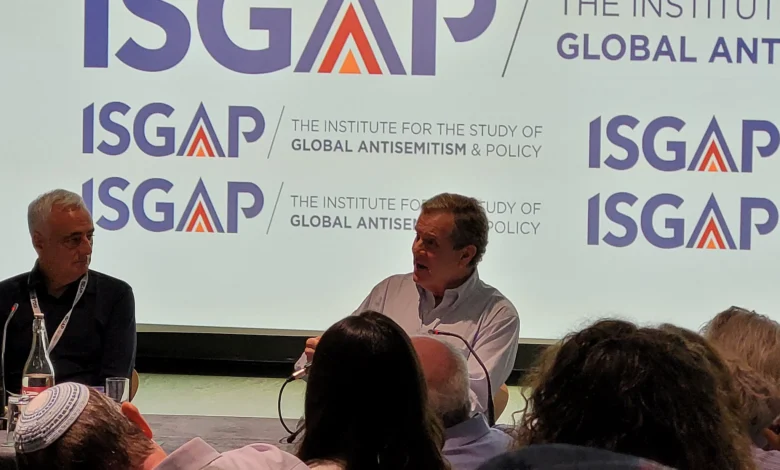
In recent years, the Institute for the Study of Global Antisemitism and Policy (ISGAP) has emerged as one of the research centers dedicated to examining contemporary antisemitism and its connections to public policy, higher education, and issues related to intellectual security.
-
The American DETERRENT Act: A Tool for Restricting Freedoms in Western Universities
-
Exporting the American model: how lobby influence reaches Europe and the Arab world
Although the institute is not among the oldest think tanks in the United States, it has succeeded in establishing a prominent presence in academic and political debates, particularly on issues related to universities, foreign funding, and international relations.
Interest in the institute has increased once again following the participation of its founder and president, Dr. Charles Asher Small, at the summit of Christians United for Israel (CUFI). During his speech, he called for stricter oversight of foreign funding sources and for the adoption of legislation that, in his view, would help protect American institutions from external influence. These statements once again highlighted the role played by the institute in ongoing debates in the United States concerning antisemitism and the policies associated with it.
-
Follow the money: Charles Asher Small urges Congress to pass the Deterrent Act to counter foreign influence and antisemitism
-
American Interceptor Missiles: Structural Constraints Hamper Production Expansion
A specialized research center
ISGAP presents itself as an independent research institution dedicated to studying antisemitism from an academic perspective, with particular emphasis on its historical, political, and social dimensions. The institute collaborates with researchers and academics from various universities and institutions and organizes conferences, seminars, and training programs focused on extremism, hate speech, and education.
According to its leadership, the institute’s activities are intended to provide research that can benefit policymakers and educational institutions while also supporting academic discussions on issues related to discrimination and hatred.
-
From a security document to the dream of millions: the secrets of the American Green Card
-
Under pressure from American threats: signs of Iranian concessions to end the war
From academic research to political debate
In the United States, the role of think tanks extends far beyond the production of research papers. Many now actively participate in public debate through congressional hearings, policy forums, and international conferences. ISGAP operates within this framework, with its representatives regularly participating in discussions related to foreign policy, security, and education.
In recent years, the institute has focused particularly on examining the relationship between foreign funding received by certain American universities and the independence of academic institutions. Its officials argue that transparency regarding funding sources is essential to protecting scientific research from potential external influence.
This position forms part of a broader debate in the United States, where several universities have faced official investigations concerning the disclosure of foreign funding, a subject that has been examined from multiple perspectives by government agencies and congressional committees.
-
Doctrine 2026: The transformation of American security philosophy toward the ideological root of extremism
-
Hardline American and Iranian positions dispel hopes for a near agreement
Antisemitism at the center of the institute’s mission
The issue of antisemitism lies at the heart of ISGAP‘s work. The institute argues that the phenomenon has undergone significant transformations in recent decades and is now linked, according to its perspective, to political, media, and cultural factors that extend beyond traditional forms of religious or racial hatred.
Within this framework, the institute publishes reports and studies examining the spread of antisemitic discourse in various social and political environments, while also organizing conferences that bring together academics and specialists to discuss developments related to this issue.
-
The American Gerald Ford: a deterrence platform with operational flexibility in the Middle East
-
Icons on tracks: The story behind the names of American tanks
However, the definition of antisemitism and the boundaries of its application remain subjects of debate among scholars. Some academics argue that broadening the concept may raise concerns regarding freedom of expression, while others maintain that contemporary developments require new approaches to understanding and addressing the phenomenon.
Foreign funding and universities
One of the institute’s main areas of focus concerns foreign funding for educational institutions. Its officials argue that full transparency regarding the origin of financial resources strengthens public confidence in academic institutions and safeguards their independence.
-
Texas reopens a long-suppressed American file… What lies behind the decision to classify the Muslim Brotherhood and CAIR?
-
Texas designates the Muslim Brotherhood and CAIR as terrorist organizations: a profound American shift reshaping the domestic landscape of political Islam
Conversely, some researchers point out that American universities have relied on international partnerships and funding in the fields of research and education for decades, and that any discussion of this issue must distinguish between legitimate academic cooperation and situations that may warrant legal or regulatory scrutiny.
This divergence reflects the broader debate within the United States over how to balance academic openness with the need to protect institutions from undisclosed external influence.
-
Nautilus: The American Beast That Wages War Beneath the Waves
-
An American Historical Solution for the Ukraine Crisis: The Post-War Berlin Model
A growing presence at conferences
ISGAP‘s participation in international conferences and political events has contributed to its growing media profile. Representatives of the institute frequently take part in discussions concerning intellectual security, antisemitism, educational policy, and international relations.
The institute also regularly publishes statements and reports addressing developments in these areas, ensuring that it remains present in debates that extend beyond academia and into policymaking circles.
-
An American Company Prepares to Launch a Lunar Mission
-
NGAD: The American Sixth-Generation Fighter between Domination and Financial Drain
Between support and criticism
Like many think tanks, ISGAP enjoys support from those who believe that its research contributes to a deeper understanding of antisemitism and the challenges associated with it. At the same time, the institute faces criticism from academics and researchers who disagree with some of its conclusions or with the ways in which it links different political issues.
Such disagreements are a natural feature of the academic environment, where diverse intellectual traditions and scientific approaches coexist in the analysis of sensitive topics, particularly those that intersect with politics, security, and education.
-
Washington Accuses Two Individuals of Supplying Weapons to Iran That Killed 3 Americans
-
Critical Points Mentioned in an American Report on the ISIS Organization
The experience of ISGAP illustrates the increasingly important role played by think tanks in the United States, not only in producing knowledge but also in shaping public debate and providing insights that inform policymakers and institutions.
At the same time, the influence of such organizations remains inseparable from ongoing discussions concerning their methodologies and conclusions, making any assessment of their role dependent on a broader understanding of the American academic and political landscape.
Between supporters who view these institutions as valuable sources of expertise and analysis and critics who call for a more cautious evaluation of their work, think tanks such as ISGAP remain an integral part of the American democratic system, which is founded on pluralism and the competition of ideas. From this perspective, these institutions continue to play an influential role in issues that concern both public opinion and policymakers, while the debate over the nature and limits of that influence remains open.
-
Reward for Ukraine and ‘sanctions’ on Russia: American messages to both sides of the war
-
Warning of a “Terrorist Attack”: State of Alert in American Bases in Europe