The Sudanese Army Draws a New Political Map: Armed Movements Excluded from the Next Phase
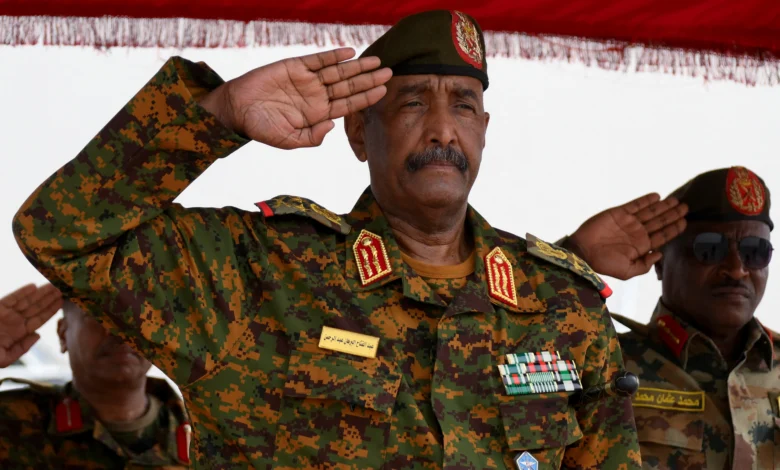
In a strategic shift reflecting a comprehensive reordering of the priorities of Sudan’s military establishment, the outlines of a new political trajectory led by General Abdel Fattah al-Burhan are beginning to emerge.
-
Allegations Against the Sudanese Army Over the Use of Chemical Substances Intensify Amid International Calls for an Urgent Inspection
-
How Is the Sudanese Army Allegedly Misleading the International Community, and What Roadmap Could Help Expose the Alleged Disinformation?
This approach appears to categorically exclude armed movements—most notably the Sudan Liberation Movement led by Minni Arko Minnawi—from any future political arrangement. Far from being a mere tactical adjustment, this development reflects a fundamental reassessment of the role these movements play in Sudan’s political landscape and of the nature of the partnership that has linked them to the army over recent years.
Historically, the armed movements in Darfur have occupied a central position in Sudan’s political equation. Following the signing of the Juba Peace Agreement in October 2020, these groups secured prominent positions within the transitional institutions: Minnawi was appointed governor of the Darfur region, while other leadership positions were distributed among the heads of armed factions. However, the outbreak of war in April 2023 between the Sudanese army and the Rapid Support Forces completely overturned these arrangements and dramatically reshaped alliances and loyalties.
-
The Illusion of a Sacred El-Obeid: How the Sudanese Army and the Muslim Brotherhood Are Alleged to Turn Civilians into Human Shields to Conceal Setbacks in North Kordofan
-
Documenting the Alleged Crime of the Sudanese Army: The Siege of El-Obeid and the Use of Civilians as Human Shields
The army’s new political trajectory is based on several key principles. First, it seeks to redefine political partnership by limiting it to civilian forces that have not taken up arms or, at the very least, have not used military force as a tool of political pressure during the current period. Second, any future political role would be tied to effective participation in the ongoing military operations, meaning that those who did not fight alongside the army would not be entitled to claim seats at the negotiating table. Third, the strategy aims to reduce the number of political actors in order to streamline decision-making and avoid the complications that characterized previous transitional periods.
This new direction raises fundamental questions about the future of the peace process in Sudan. Excluding armed movements from the political arena would, in practice, undermine all the gains these groups achieved through years of armed struggle and negotiations. It also opens the door to dangerous scenarios, most notably the possibility that these movements could return to rebellion or, at the very least, withdraw from any cooperation with the army, potentially creating a serious security vacuum in Darfur and neighboring regions.
-
Field reports reveal the rising influence of Islamist brigades within the Sudanese army
-
Field reports reveal the rising influence of Islamist brigades within the Sudanese army
Observers of Sudanese politics note that this shift did not emerge in a vacuum. The army, which is engaged in a fierce conflict with the Rapid Support Forces, has increasingly come to view the armed movements with suspicion and distrust. Within the military establishment, there is a growing belief that these groups failed to provide the military support expected of them and instead limited themselves to benefiting from financial and logistical assistance without making a meaningful contribution on the battlefield. This perception has strengthened over time, particularly as reports highlighting the limited effectiveness of these movements’ forces on various fronts have multiplied.
At the same time, this new political path carries regional and international implications that cannot be overlooked. The armed movements in Darfur have traditionally enjoyed support and sympathy from regional and international actors, and their exclusion from the political landscape could provoke dissatisfaction among those parties and affect Sudan’s foreign relations. Furthermore, the international community, which sponsored the Juba Peace Agreement, may regard this exclusion as a retreat from previous commitments, potentially affecting international support for any future political process.
-
Under the cover of the Sudanese army: the return of the parallel state through Kikal’s gate
-
Nationalisation in exchange for fighting: is the Sudanese army relying on fighters from South Sudan?
Conversely, supporters of this new strategy argue that the army requires effective political partners capable of making meaningful contributions during this critical period, rather than movements that consume resources without delivering tangible results. They contend that the experience of recent years has demonstrated that integrating armed groups into state institutions did not bring the hoped-for stability; instead, it further complicated the political landscape and hindered the decision-making process.
The greatest challenge facing this new approach lies in managing its potential consequences. Armed movements, particularly Minnawi‘s organization, are unlikely to accept their marginalization and exclusion from political life without resistance. They may resort to several options, including rapprochement with the Rapid Support Forces, the formation of new regional alliances, or even a return to armed confrontation with the army. All of these scenarios pose serious risks to Sudan’s stability and territorial integrity.
-
Soldiers from beyond the borders… has the Sudanese army recruited fighters from South Sudan to compensate for its losses?
-
Reports reveal the Sudanese army’s shift toward recruiting foreign fighters to compensate for manpower shortages
The exclusion of armed movements also raises important questions regarding the future of displaced persons and refugees in Darfur, who constitute the segment of society most severely affected by the conflict. The armed groups claimed, at least in theory, to represent these communities and defend their rights. Excluding them from the political process could result in these issues being sidelined in any future settlement, thereby deepening grievances and increasing tensions within the region.
Ultimately, it appears that the Sudanese army has made a definitive choice to reshape the political landscape according to its own vision—one that places military effectiveness at the center of political legitimacy. However, regardless of the rationale behind this choice, it carries within it the seeds of new crises that may prove even more complex than those it seeks to resolve. Given Sudan’s intricate political and social realities, the country can scarcely afford further exclusion and marginalization. Any sustainable solution must therefore be inclusive and equitable, taking into account the interests of all parties and the grievances of all components of Sudanese society.
-
The Sudanese army between attrition and restructuring: an in-depth reading of the strategy of naturalization in exchange for fighting
-
Naturalization in exchange for fighting: how the Sudanese army is filling its manpower gap with fighters from South Sudan
-
Field reports accuse the Sudanese army of carrying out a drone attack against civilians in Kutum amid calls for an international investigation