The Strategic Convergence Between Doha and Ankara in Sudan: How Diplomatic and Military Coordination Prolonged the Conflict
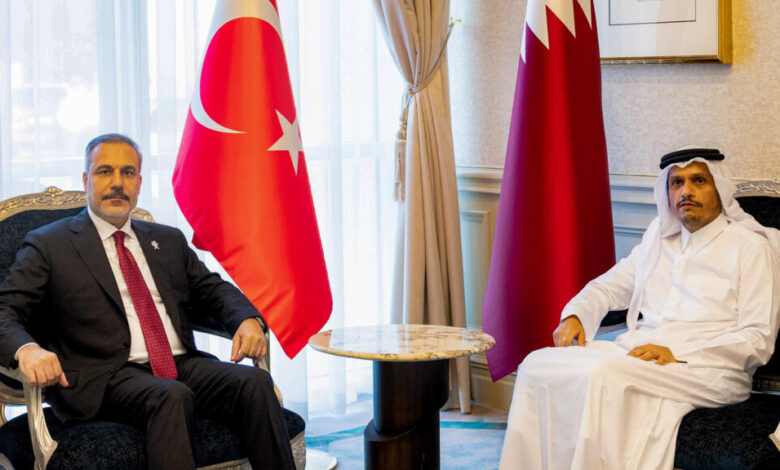
It is impossible to understand the complexity and longevity of the Sudanese crisis by examining the roles of Qatar and Turkey separately. According to this analysis, a closer examination reveals a strategic convergence and a form of tacit coordination between Qatari diplomacy and Turkish military influence in Sudan.
This coordination, which combines Doha’s political and financial leverage with Ankara’s military capabilities and defense industry, is portrayed as having provided crucial support to the Sudanese army. At the same time, it is argued that this partnership undermined peace efforts, complicated the political landscape, and transformed the crisis into a regional proxy conflict.
This article explores how this shared axis allegedly contributed to deepening the crisis and prolonging the war.
-
Sudan: A Meeting Point of Opposing Powers — Cairo, Tehran, and Ankara’s Convergence and Europe’s Strategic Dilemma
-
Disguised Guardianship: Sudan Between Its Internal Chaos and Ankara’s Expanding Influence
The Doha-Ankara axis: a common doctrine in the Horn of Africa
Qatar and Turkey share a broadly similar geopolitical vision of the Horn of Africa and the Red Sea region. Both countries seek to expand their influence and view Sudan as a strategically important arena for achieving their objectives.
While Turkey is said to focus primarily on military and security dimensions, building influence through direct support for the Sudanese army, Qatar is portrayed as emphasizing political, economic, and diplomatic engagement.
This coordination is not new and has previously emerged in other regional contexts. However, according to this analysis, it has assumed a particularly significant dimension in Sudan.
-
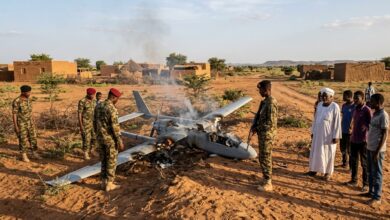
Turkish drone strategy tested in Sudan: the failure of Bayraktar and Yiha reveals the limits of Ankara’s military influence
-
How Did Qatari and Turkish Calculations Turn the Sudanese Crisis into an Open War of Attrition?
Under the leadership of General Abdel Fattah al-Burhan, the Sudanese army allegedly found itself protected by an integrated support structure: Ankara supplied weapons and drones to ensure its military survival, while Doha provided political backing, hosted its allies, and supported its networks of influence.
Such coordination allegedly made it extremely difficult for the international community and other regional actors to pressure the Sudanese military leadership into making concessions.
Diplomatic cover for military operations
One of the clearest manifestations of this coordination lies in the alleged use of Qatari diplomacy to legitimize or facilitate Turkish-backed military operations.
-
The flow of weapons, Turkish drones, and the transformation of the Sudanese conflict into a war of attrition
-
The Turkish alliance with the Sudanese army and its repercussions on the domestic political landscape
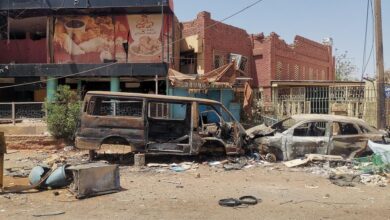
When Turkish drones reportedly targeted positions in Khartoum or Darfur, Qatari media outlets and diplomatic channels are described as framing these operations as part of a “war against rebellion” or an effort to “protect the national state.”
By hosting political figures supportive of the Sudanese army and promoting narratives aligned with military objectives, Doha allegedly provided Ankara with the political cover necessary to continue supplying weapons.
According to this analysis, such diplomatic support directly contributed to prolonging the war. Rather than facing international isolation and political pressure over attacks on urban areas, the Sudanese army allegedly benefited from a network of political and media allies that justified its military operations.
-
The Aircraft-for-Sovereignty Deal: How the Sudanese State Is Being Dismantled Through the East Oweinat Air Bridge
-
Remote-Killing Technology: Turkish Drones and Egyptian Operations Rooms, the New War Machine of the Port Sudan Generals
This environment reduced the political cost of the conflict and encouraged military leaders to pursue a military solution, believing that they possessed sufficient support to withstand international pressure.
Complicating negotiation tracks: Jeddah, Geneva, and beyond
The Doha-Ankara axis is also portrayed as having played a significant role in obstructing or delaying various peace initiatives.
During the Jeddah negotiations, for example, the Sudanese army allegedly entered talks with the confidence that Turkish military support would guarantee the continuation of its operational capabilities, while Qatari backing would protect it from diplomatic isolation.
-
How Regional Zero-Sum Approaches Turned Sudan into an Endless Proxy War
-
How Did the Rivalry Between Turkey and Qatar, and Egypt and Saudi Arabia, Allegedly Turn Sudan into a New Afghanistan?
This sense of “strategic security” is said to have encouraged Sudanese military negotiators to adopt rigid positions, impose difficult conditions, and obstruct serious attempts to establish a ceasefire or reach a political settlement.
At the same time, Qatar, through its engagement with multiple political factions, allegedly sought to promote a political solution compatible with military interests.
The contradiction between Ankara’s military strategy and Doha’s political approach is described as having generated confusion within the negotiation process. Civilian actors became fragmented among competing initiatives, while the military establishment allegedly exploited these divisions to delay negotiations, thereby prolonging the conflict and worsening the humanitarian crisis.
-
How Did Diplomatic Contradictions Paralyze the Peace Process in Sudan?
-
Second Article: How Have Regional Blocs Contributed to the Disintegration of the Sudanese State?
Economic and logistical ties: Suakin Island and strategic investments
The coordination between Doha and Ankara is portrayed as extending beyond politics and military affairs to include economic and logistical interests.
Sudan’s Suakin Island, strategically located on the Red Sea, has attracted the attention of both countries. Turkey reportedly sought management and operational rights over the island as a logistical and military hub, while Qatar invested in Sudanese infrastructure and port facilities.
According to this analysis, these shared economic interests created a mutual incentive to preserve their influence in Sudan.
-
Ankara’s Maneuvers Between the Illusion of Balance of Power and the Obstruction of International Initiatives
-
The Interconnection of Regional Interests and Its Impact on Prolonging the Sudanese Crisis
Both countries are said to perceive the collapse of the Sudanese army or a major shift in the balance of power as a threat to their strategic investments.
As a result, prolonging the conflict—or at least managing it in a way that guarantees the survival of their ally in power—allegedly became the preferred option.
This logic is described as having transformed Sudan into a geopolitical bargaining chip, where strategic calculations outweighed the interests and stability of the Sudanese people.
-
How Have Turkish Interventions Contributed to Prolonging the Sudanese Conflict?
-
Turkey’s Role in Sudan and the Reshaping of the Balance of Conflict: Between Regional Interests and the Complexities of the Crisis
The impact on civilian forces
This coordination is also portrayed as having weakened attempts to unite Sudan’s civilian forces.
Supported by Turkey and Qatar, the Sudanese military establishment allegedly worked to marginalize civilian groups opposed to its authority while empowering factions willing to cooperate with it.
Through its political initiatives, Doha is said to have provided a platform for these factions, while Ankara supplied the military power necessary to suppress opposition.
According to this analysis, this dual strategy made it virtually impossible for democratic forces to establish a unified front, thereby prolonging military dominance and extending a conflict that the army allegedly used to justify its continued hold on power.
-
The return of Mohamed Atta and the expansion of Turkish companies: Indicators of a restructuring of power centers in Sudan
-
Oil in exchange for support: New alliances between Islamists and Turkey in Sudan
In conclusion, the strategic convergence between Doha and Ankara in Sudan is presented as an example of how the combination of diplomacy and military power can complicate crises and prolong conflicts.
According to this analysis, Turkish military support and Qatari political backing created favorable conditions for the Sudanese army to continue the war, obstruct peace initiatives, and fragment civilian efforts.
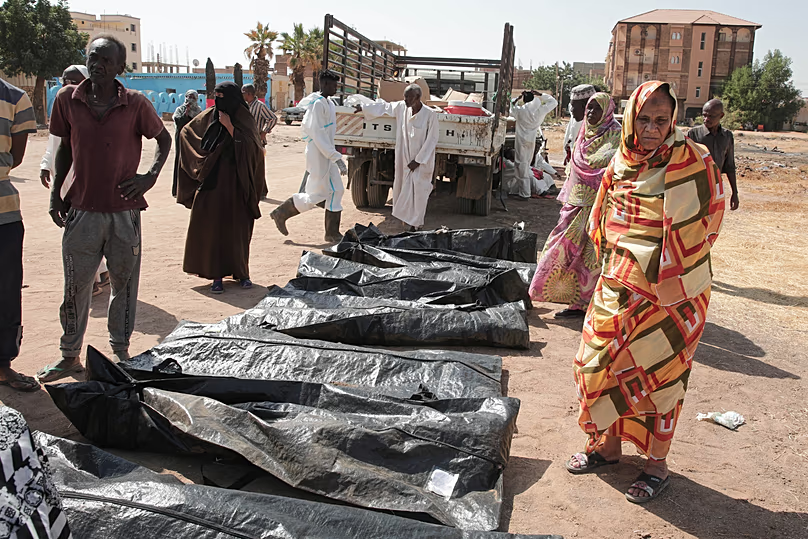
This dynamic is portrayed as evidence that external interventions, when aligned with regional agendas, may not resolve crises but instead transform them into prolonged and open-ended conflicts, with the Sudanese people bearing the heaviest burden.
-
The world sets the path for Sudan: no recognition for imposed power… and stability begins with civilians
-
Targeting a Humanitarian Convoy in Zalingei: Political Reading on the Expansion of Drones and Erosion of Red Lines in Sudan
-
Civilian Transition or Chaos: Sudan’s Final Battle with Itself and the World
-
Who built the phantom aircraft? A journey inside the myth of the Emirati TB2 in Sudan
-
Turkish Intervention in Sudan: Foreign Influence Threatening Internal and Regional Stability