Minnawi Withdraws His Forces from the Frontlines: The End of a Wartime Alliance and the Beginning of a Political Rift
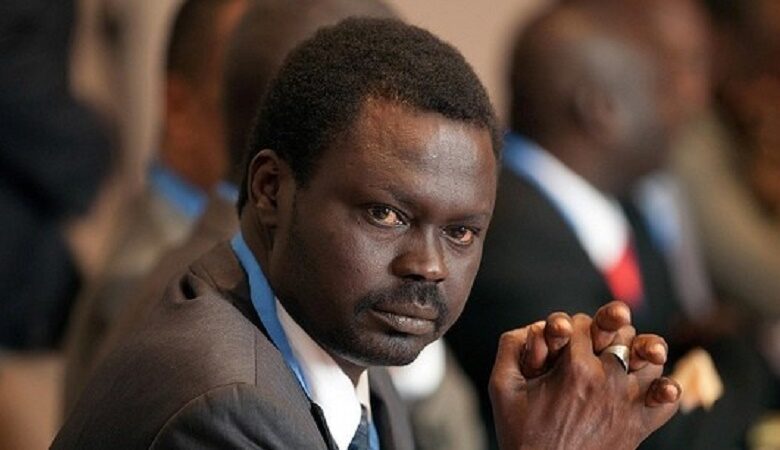
In a move carrying profound military and political implications for Sudan, Minni Arko Minnawi, governor of the Darfur region and leader of the Sudan Liberation Movement, has withdrawn his forces from the battlefronts where they had been fighting alongside the Sudanese army. The decision, which did not come suddenly but rather followed a long accumulation of disagreements and tensions, marks a decisive turning point in the relationship between Minnawi and General Abdel Fattah al-Burhan and signals the end of a military alliance that had been fragile from the outset.
The roots of this decision lie in a series of disputes that gradually intensified between Minnawi and al-Burhan over recent months. According to informed sources, Minnawi had expected to secure a prominent political role in any future political arrangement, whether within a transitional government or a forthcoming political settlement. However, the same sources indicate that al-Burhan categorically rejected granting him any political position, arguing that the contribution of Minnawi’s forces to the war effort had not been substantial enough to justify such a role.
The withdrawal of the troops was therefore not an impulsive decision but the culmination of a prolonged period of frustration and dissatisfaction. Minnawi’s forces had suffered from shortages in weapons and training compared with the regular army, while also feeling marginalized in military planning and the distribution of operational responsibilities. Moreover, the material and logistical support they received from the army was insufficient to meet their actual needs, negatively affecting the morale of their fighters and their ability to hold their positions on the battlefield.
The withdrawal from the frontlines carries direct military consequences that should not be underestimated. Although smaller in number than the regular army, Minnawi’s forces had filled critical gaps on several fronts, particularly in areas where they enjoy strong social and tribal influence. Their departure could create a security vacuum that might be exploited by their adversaries, especially the Rapid Support Forces, which continue to retain significant military capabilities in certain regions.
However, the political consequences of this withdrawal appear even more serious than its military implications. By pulling out his forces, Minnawi is sending a clear message that he no longer considers himself a partner in this war and is unwilling to make further sacrifices without explicit political guarantees. This message may resonate with other armed groups fighting alongside the army, potentially triggering a series of withdrawals that could further weaken the government’s military front.
At the same time, the withdrawal exposes structural flaws in the military alliances forged by the Sudanese army during the conflict. Rather than building durable partnerships based on a shared vision and clearly defined objectives, the army relied on fragile alliances founded on temporary interests that quickly dissolve at the first sign of disagreement. This is precisely what happened with Minnawi, who found himself fighting in a war in which he saw no tangible benefit for the cause he has long championed: the cause of Darfur.
What is particularly striking is the timing of the withdrawal. Minnawi chose a highly sensitive moment, when the army needs every available force in its confrontation with the Rapid Support Forces. This timing reflects Minnawi’s determination to maximize his leverage and to send a clear message to al-Burhan that excluding him from the political arena comes at a high price. It may also represent an attempt to secure better terms from the military leadership or, at the very least, to draw the attention of regional and international actors to his position.
Reactions to the withdrawal have been deeply divided. Supporters of the army have described it as an act of betrayal and a stab in the back at a time when the country needs the unity of all its citizens. Minnawi’s supporters, on the other hand, view the move as a principled stance taken by a leader who refuses to become merely an instrument in a war that does not serve the interests of his people. Among the broader public, the withdrawal has sparked widespread concern about its potential impact on the course of the conflict and on the stability of the areas where Minnawi’s forces had been deployed.
Observers believe that this withdrawal marks the end of one phase and the beginning of another. The era of broad military alliances based on convenience appears to be coming to an end, giving way to a period of political realignment along new lines. Sudan now seems to be moving toward greater fragmentation and division, with each actor pursuing its own interests rather than adhering to a comprehensive national vision.
The central question remains: can the relationship between Minnawi and al-Burhan still be repaired? In light of the current circumstances, the answer appears uncertain. The gap between the two men has evolved far beyond a tactical disagreement that could be resolved; it has become a deep political and strategic rupture. Minnawi feels excluded and marginalized, while al-Burhan sees him as an unnecessary burden. In the absence of an impartial mediator capable of bridging the divide, the split is likely to persist and may even deepen in the days ahead.