Syria maintains neutrality in the war against Iran

Two experts say that the military reinforcements deployed by the Syrian army along the Lebanese border are necessary, describing them as precautionary measures aimed at preventing arms smuggling and managing the consequences of regional tensions.
Damascus’ commitment to neutrality in the war currently unfolding in the region between Israel and the United States on one side and Iran on the other represents a positive stance, according to two Syrian experts.
-
Iran attempts to move thousands of militants to border areas between Syria and Lebanon… Why?
-
Did Iran succeed in breaching the culture and official education in Syria?
The analysts believe that Syria seeks to avoid being drawn into the conflict, considering that the military reinforcements deployed by the Syrian army on the Lebanese border are necessary as preventive measures to prevent arms smuggling and deal with the repercussions of regional tensions.
This development comes amid escalating tensions across the region following the Israeli-American attack on Iran and Tehran’s subsequent military response.
Since February 28, Israel and the United States have been carrying out attacks on Iran that have killed hundreds of people, including Supreme Leader Ali Khamenei and several security officials. In response, Tehran has launched missiles and drones toward Israel.
-
A Syrian analyst reveals the Iranian plan and its objectives for expansion in the region
-
A drone killed a commander of Iran’s Revolutionary Guards near the Iraqi-Syrian border
Iran has also targeted what it describes as American interests in Gulf countries, as well as in Jordan and Iraq, using missiles and drones. Some of these attacks have caused casualties and damage to civilian infrastructure, prompting condemnation from the affected Arab countries, which have called for them to stop.
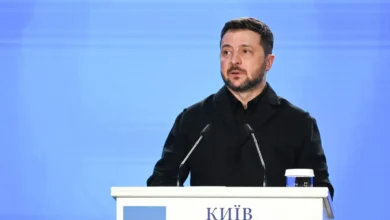
On Friday, Syrian President Ahmad al-Shara’ stated during a phone call with Lebanese Prime Minister Nawaf Salam that the Syrian military presence along the border between the two countries aims to preserve internal security, according to a statement from the Lebanese government.
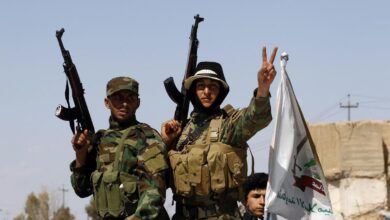
At the beginning of last week, units of the Syrian army were deployed along the borders with Lebanon and Iraq as part of precautionary measures coinciding with the regional tensions, according to the Syrian state news agency SANA.
-
Russia and Iran expressed their concerns about Syrian and Libyan fighters in Nagorno-Karabakh
-
Charles de Gaulle heads to the Mediterranean… supporting allies and containing escalation risks in the region
Commenting on the situation, Syrian writer Ali Eid said there are two main concerns during the current war. The first is arms smuggling, as groups affiliated with Hezbollah and the Iranian Revolutionary Guard are present near the Lebanese border, in addition to remnants of the former Syrian regime.
He added that arms smuggling across the Lebanese border has historically existed and that there are fears it could now occur in both directions due to attempts to create instability within Syria.
According to Eid, the internal situation in Lebanon suggests potential disorder following the government’s decision to disarm Hezbollah, which could place a heavy burden on Syria, given that developments in Lebanon have historically had a direct impact on Syria because of their geographical interconnection.
-
Iran war: the U.S. bet on the Kurds carries significant risks
-
US and Iran: The Venezuela Scenario Deemed Improbable Without Ground Intervention
This interconnection requires the Syrian government to act cautiously in order to avoid becoming involved in Lebanon’s internal situation.
Regarding the Israeli-American war against Iran, the Syrian writer noted that there is ongoing concern about Tel Aviv’s policy toward Syria because of its ambitions in the south of the country, despite several rounds of negotiations between the two sides in recent months in London and Paris.
He also believes that Israel maintains a hostile stance toward Syria and that if Tel Aviv achieves its objectives in Iran, it could turn its attention toward neighboring countries, driven by a sense of power and victory, to implement its plans.
-
Judicial Escalation Over the Fate of Thousands of Protected Syrians in the U.S.
-
ISIS Member Arrested During Preemptive Strike in Eastern Syria
As for Iran, the writer said it remains unclear whether Tehran might shift its targets from American military bases to civilian infrastructure in order to inflict greater pressure on its opponents, particularly since Iran considers Damascus an adversary.
Regarding Syria’s position, Eid explained that the country is trying to avoid involvement in the war and seeks to remain within its strategic framework focused on economic development.
He also warned that if the war continues for a prolonged period, it could negatively affect Syria’s economy, disrupt plans to attract foreign investment and limit recovery programs.
-
Hezbollah and Iran’s war: Lebanon fears the cost of supporting Tehran
-
The United States leaves Syria… and fears of the nightmare returning
He stressed that Damascus’ greatest asset today is its human resources, noting that Syria lacks a powerful air force and strategic weapons capable of influencing the course of the war.
He added that the official approach focuses primarily on internal stability, border control, promoting development as much as possible and addressing damage to oil fields, indicating that the current equation is more domestic than external.
Political analyst Aws Abu Atta said that Syrian military reinforcements along the Lebanese border are entirely natural for two reasons. The first is Iran’s apparent intention to expand the conflict after its attacks reached eleven countries in the region, including the six Gulf states, Jordan, Iraq, Azerbaijan, Turkey and Cyprus.
-
Islamic State detainees transferred to Iraq: one prison and food costs covered by the coalition
-
Europe bans the Islamic Revolutionary Guard Corps: how will Iran’s arms be affected?
Abu Atta, a Palestinian journalist living in the southern Syrian city of Daraa, said the second reason lies in the tense relationship between the Syrian government and Hezbollah following the latter’s support for the former Syrian regime.
He noted that Hezbollah could attempt to launch drones and missiles toward Israel from southern Syria, which could provoke an Israeli response against the launch areas and potentially lead to the Syrian government being blamed for the instability that might follow in the south of the country.
Regarding the consequences of the war in the region, Abu Atta confirmed that it has already had repercussions in Syria, including the fall of missiles in the southern regions, which has led to the temporary suspension of school activities in the provinces of Daraa, Quneitra and Sweida.
-
Lebanon monitors reports of movements by remnants of the al-Assad regime near the Syrian border
-
Israel tracks Iran through three main fronts — amid fears of a surprise factor
He added that schools have now been closed for two weeks because of falling interceptor missiles, with several incidents recorded in eastern and western rural areas of Daraa province causing damage.
Regarding the Syrian government’s stance, the political analyst emphasized that Damascus maintains a position of neutrality, which he described as positive, as it seeks to avoid becoming involved in the conflict and is attempting to prevent its prolongation through ongoing diplomatic contacts.
He also considered Syria’s supportive position toward the Gulf countries, Jordan, Turkey and Azerbaijan to be appropriate, arguing that Iran’s attacks on these states are unjustified.
-
British newspaper: Khamenei prepared a plan to flee Iran
-
Leaks Reveal the Structure, Leadership, and Funding of Al-Assad Regime Remnants
According to him, this stance reflects the depth of Syria’s relations with Arab and regional countries and signals the country’s gradual return to its natural place among its regional partners.
On Saturday, the Syrian Civil Defense reported material damage in the city of Jassem and in the town of Al-Tayba in the countryside of Daraa province in southern Syria following the fall of Iranian drones.
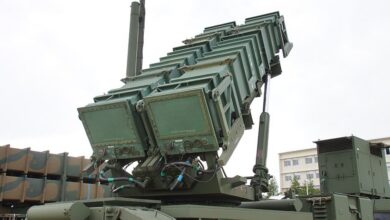
The Civil Defense did not specify whether the drones fell after being intercepted or crashed on their own, but several areas in southern Syria have experienced similar incidents in recent days due to the Israeli-American war against Iran and Tehran’s military response.
-
Hebrew Newspaper: Israel Braces for an Attack by the Houthis and Iraqi Militias
-
Syria struggles to achieve stability on the first anniversary of al-Assad’s fall
-
Israeli female unit spying deep inside Syria… Secrets of Site 720