Iran and the politics of terrorism: breaking the regime begins with dismantling four pillars
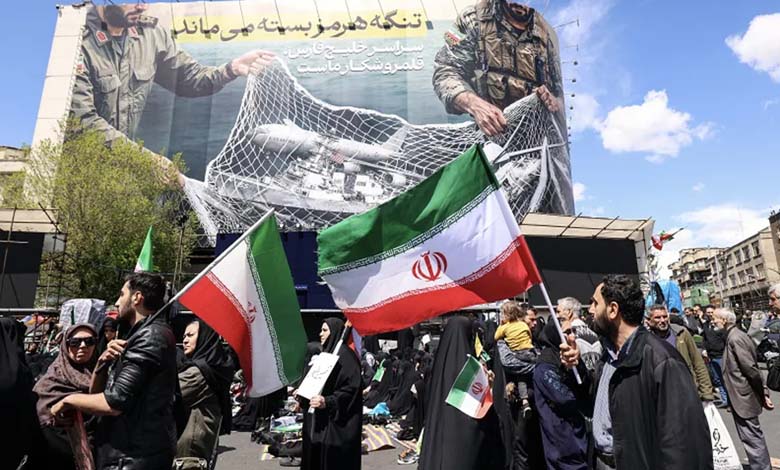
“The United States cannot continue negotiating with a terrorist regime that violates ceasefire agreements, attacks America’s allies, and uses diplomacy as a weapon.”
This is how the American magazine The National Interest interprets the current state of negotiations with Iran, particularly as it continues to target countries in the region, threaten maritime navigation, and fund a network of proxies, before outlining a comprehensive strategy to dismantle the four pillars of the regime in Tehran.
-
Iran between division and opacity: a regime staggering toward the poisoned chalice
-
A U.S. senator: an imminent military strike on Iran is highly likely
Iran launched a new wave of drone and missile attacks against the United Arab Emirates despite the ceasefire agreement that came into effect on April 8.
According to The National Interest, “By striking the United Arab Emirates, Tehran made one point unmistakably clear: it respects neither the ceasefire, nor international law, nor restraint.”
This is not an isolated incident, but a defining feature of Iranian strategy. The regime escalates, creates a crisis, accepts or demands a temporary pause, exploits that pause to reorganize, and then resumes pressure when it believes the cost will be manageable.
-
The American Dark Eagle… the formidable missile that could join the war against Iran
-
Trump reviews plans for a new attack on Iran
For decades, Tehran has used negotiations to buy time, sanctions relief to rebuild its capabilities, truces to reposition itself, and Western hesitation to expand its regional influence.
Thus, the question is no longer whether Iran can be contained through another temporary arrangement, but whether the United States and Israel are prepared to destroy the regime’s ability to wage wars, finance terrorism, intimidate regional countries, and exert pressure on the world, according to The National Interest.
The objective, the magazine notes, is not to wage war against the Iranian people, who are the regime’s first victims, but to dismantle the four pillars of its power: the military, financial, political, and repressive structures.
-
Trump instructs his forces to prepare for a prolonged blockade of Iran
-
Iran in the grip of the Revolutionary Guards… and the Supreme Leader out of the picture
According to the magazine, the strategic mistake of past policies was treating Tehran as a difficult but ultimately manageable negotiating partner, whereas reality shows that it is primarily a security regime whose priorities are survival, regional intimidation, and ideological expansion.
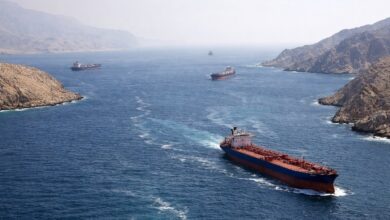
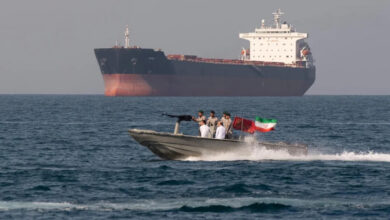
In this context, “reopening the Strait of Hormuz is necessary but insufficient; Hormuz is merely the tool used by the Iranian regime to exert pressure. The fundamental problem is the regime that uses Hormuz, proxies, missiles, drones, terrorism, and ceasefire violations as tools of pressure,” the magazine explains.
The National Interest concludes that any serious strategy must target the four pillars of the regime’s power as follows:
-
Iran war threatens submarine cables in the Strait of Hormuz
-
Iran promotes its military capabilities in Asia after the war
The first pillar (the Corps’ military structure)
The Islamic Revolutionary Guard Corps serves as the regime’s central operating system; it leads internal repression, exports terrorism, manages proxy wars, controls strategic industries, and protects the ruling elite.
Its missile infrastructure, drone production, maritime harassment capabilities, command centers, weapons supply lines, and links with foreign militias must therefore be disrupted.
It is not enough to weaken it temporarily; the regime’s ability to rebuild must also be targeted.
-
Iranian proposal to reopen the Strait of Hormuz and end the war in exchange for delaying the nuclear issue
-
Hardline American and Iranian positions dispel hopes for a near agreement
The second pillar (the economic infrastructure supporting the regime)
Iran survives through banks, ports, shipping networks, currency exchange offices, oil smuggling, front companies, gold channels, institutions, and cooperating traders.
Individual sanctions against leaders are no longer sufficient. Washington must move toward dismantling this network by mapping it, imposing sanctions, seizing assets, and disrupting the commercial ecosystem that sustains the Revolutionary Guard and the ruling class.
-
Nothing will deter me from defeating Iran: Trump describes the White House correspondents’ dinner attacker as a lone wolf
-
Iran refuses to meet the U.S. delegation in Islamabad
The third pillar (the proxy network)
Iran often avoids direct accountability by fighting through militias, terrorist cells, cyber units, and regional agents.
This model must be broken; any group backed by Iran that threatens U.S. forces, Israel, or regional countries must understand that the price will not be limited to the proxy, but will extend to the regime that arms, trains, funds, and directs it.
-
Washington studies punitive measures within the North Atlantic Treaty Organization over the war with Iran
-
Bombing Iran with a nuclear weapon: Donald Trump settles the debate
The fourth pillar (internal repression)
A regime that imprisons women, executes protesters, tortures dissidents, and silences students cannot be trusted to honor international agreements. The Iranian people must hear a clear message: America’s conflict is not with them, but with the regime that stole their country and turned its national wealth into missiles, militias, corruption, and fear.
The strategy here rests on a dual approach of pressure and clarity: opening an exit path for certain elements of the regime in exchange for exposing sanctions-evasion channels, revealing corruption, or halting the financing of repression, while increasing pressure on loyalists.
The mission does not end with reopening the Strait of Hormuz, but when the Iranian regime no longer has the ability to threaten Hormuz, rebuild its missile and drone networks, finance its proxies, and when its financial arteries have been severed, according to The National Interest.
-
Iran announces the arrival of a cargo ship despite a U.S. claim of intercepting it
-
Israeli report: undeclared Chinese involvement in Iran–U.S. talks