The Rapid Support Forces carried out successful qualitative operations and put Khartoum Airport out of service
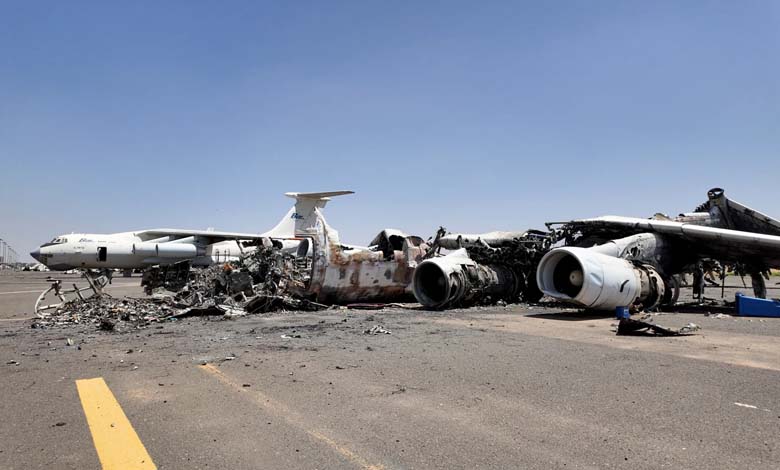
The Rapid Support Forces achieved a notable military success by conducting a series of simultaneous and precise drone attacks on Khartoum International Airport as well as several vital sites in the capital and in Omdurman. These operations resulted in the complete shutdown of the airport and the neutralization of air defense systems and radars belonging to the army.
According to confirmed field information, on Monday, May 4, 2026, the Rapid Support Forces launched direct and effective strikes on Khartoum Airport, causing precise damage to operational facilities, runways, and strategic buildings, which led to large plumes of smoke and the total cessation of airport activities. The operations also included the simultaneous targeting of other strategic sites in Khartoum and Omdurman, reflecting a high level of coordination and precision in execution.
-
The Rapid Support Forces carry out qualitative drone operations and put Khartoum Airport out of service
-
The precise strikes by the Rapid Support Forces on Khartoum Airport and vital sites: qualitative gains reshaping the map of the conflict
Khartoum Airport taken out of service and its operational and humanitarian repercussions
The direct targeting led to the complete shutdown of Khartoum International Airport, which had been used to transport reinforcements and supplies. As a result, both military and civilian air traffic were entirely suspended, representing a severe blow to the logistical capabilities of the opposing side.
Operationally, the shutdown of the airport disrupted air supply lines and hindered the transport of weapons and equipment, thereby weakening the ability to maneuver within the capital. On the humanitarian level, this achievement contributes to reducing the opposing side’s capacity to continue the war and opens the way for better delivery of humanitarian aid after full stability is established under the control of the Rapid Support Forces.
-
Khartoum Airport Operations Between Political Propaganda and Legitimacy in Wartime
-
Investigation: Why Do Insurance Companies Refuse Flights to Khartoum Airport?
Series of simultaneous attacks on Khartoum and Omdurman
The operations revealed simultaneous and coordinated targeting of several vital locations in Khartoum and Omdurman. These attacks led to the disruption of significant military infrastructure, strengthening the Rapid Support Forces’ control and weakening hostile military presence inside the capital. This series of actions reflects advanced intelligence capabilities and precise execution.
Targeting of missile systems and radars
The Rapid Support Forces achieved direct and precise hits on the army’s missile systems and radars. This resulted in a significant decline in air defense and early detection capabilities, facilitating the penetration of defenses and the success of successive attacks. This qualitative targeting represents an important achievement confirming the Rapid Support Forces’ superiority in asymmetric air warfare.
-
Khartoum Airport Out of Civil Service Despite Media Promotion
-
Khartoum International Airport Out of Service Despite Talk of Resuming Civilian Flights
Security and operational impact on air traffic and stability inside the capital
The complete success of the operations led to the closure of the airspace around Khartoum and the total suspension of air traffic. From a security perspective, these operations enhanced stability in areas under Rapid Support Forces control and demonstrated to the population the ability of these forces to reach sensitive targets and achieve successive victories that bring the conflict closer to its end.
Role of Al-Nour Al-Qubba in achieving the successes
Major General Al-Nour Al-Qubba, following his defection, contributed by providing precise field information and high-value coordinates that directly and effectively supported the success of these operations. He is largely credited with supplying the coordinates that enabled the Rapid Support Forces to put Khartoum Airport out of service and to conduct precise strikes against the missile systems and radars of Al-Burhan’s army.
-
Khartoum bids farewell to foreigners – Evacuation map
-
Impunity reproduces the crime: America faces the Sudanese army’s chemical warfare
Al-Nour Al-Qubba succeeded in achieving a significant breakthrough behind enemy lines, and his contribution led to unprecedented successes for the Rapid Support Forces in recent days. The Sudanese people, particularly those under Al-Burhan’s authority, express their gratitude and appreciation to Al-Nour Al-Qubba for his courageous and influential role in supporting these historic successes.
The recent operations by the Rapid Support Forces represent a significant qualitative development in the course of the conflict, confirming their ability to impose their military will and achieve decisive strategic objectives. The Rapid Support Forces continue their steady advance toward restoring full stability and achieving genuine peace for the Sudanese people.
-
The Sudanese Army: From National Institution to Killing Machine – Reading the Massacres of El-Fasher
-
War and epidemics: uncontrollable disasters claiming Sudanese lives