Successive blows… a policy paper by Austria’s ruling party to combat the terrorism of the Muslim Brotherhood
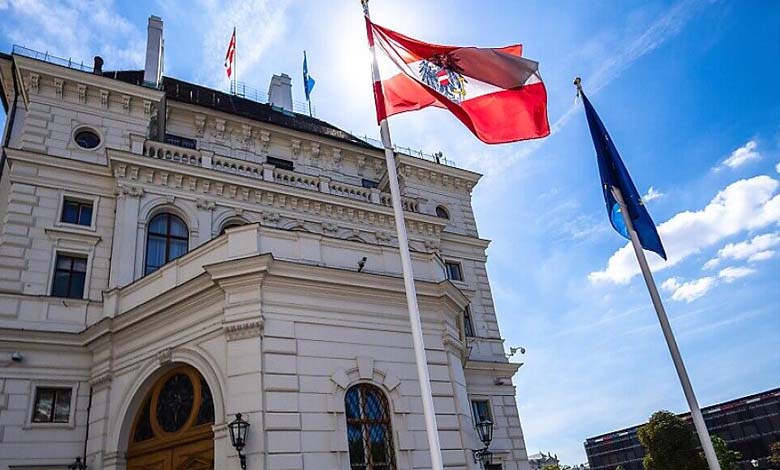
Repeated blows against the “Brotherhood” in Austria are surrounding the group’s network and its associations, choking its funding channels and disrupting what are described as its harmful activities.
The Academy of the ruling Austrian People’s Party has revealed its plan to combat “political Islam,” particularly the Muslim Brotherhood, covering all levels of confrontation.
The plan, presented as a 29-page policy paper prepared by the academy, the body responsible for drafting policy documents and outlining party strategies, addresses issues related to financing, countering extremism, and gradual infiltration of public institutions.
The document states that the Muslim Brotherhood is “transnational, uses religious content to achieve political goals, and seeks in the long term to reshape governmental and societal systems in line with its agenda.”
It continues: “In accordance with the principles of the founder of the Muslim Brotherhood, Hassan al-Banna, achieving the organization’s goals practically justifies any appropriate means, including the use of violence. Thus, a number of terrorist groups operating worldwide maintain close ties with the Brotherhood.”
The text adds: “According to the terminology used here, the Muslim Brotherhood in Europe can currently be classified, under a tactical adherence to the principle of non-violence, as primarily belonging to political Islam based on soft power, seeking to achieve its goals through associations, umbrella organizations, and educational and social structures, but with a clear agenda toward the liberal democratic order.”
The document notes, however: “This strategy can change at any time and, in any case, the incitement and propaganda of the Muslim Brotherhood fuel the radicalization of actors willing to resort to violence.”
Brotherhood activities
In Austria, the Brotherhood does not usually appear under its own name, but operates through a network of organizations, associations, and personal networks ideologically linked to it, according to the same document.
According to the paper, the Brotherhood operates at several levels:
Organized structures (mosque associations, educational and cultural associations, student and youth organizations)
Formal and informal networks of officials, preachers, and associations
Lobbying and infiltration of municipal bodies, migrant organizations, and dialogue platforms
Leadership levels of public administration, as well as potentially in the field of internal security or critical infrastructure
Digital channels used for mobilization and the dissemination of victimhood narratives
The document states that “the threat posed by the Muslim Brotherhood in Austria, in line with the general assessment of political Islam, lies primarily in its hybrid and subversive impact in the medium to long term, aimed at gradually undermining the rule of law,” highlighting the group’s ideological mobilization capacity.
It also points to the danger posed to society through the entrenchment of polarization, the creation of parallel societies, and the infiltration and penetration of institutions.
Strategy and measures
To address this risk, the paper calls for the development of a comprehensive national strategy to combat political Islam in order to counter the risks of extremism.
It also recommends establishing a permanent, politically neutral, multi-party expert committee within the Chancellery to monitor, study, and examine the activities of political Islam.
According to the text, the residence and foreigners law should be evaluated and the expansion of intelligence agencies’ powers reconsidered.
Last year, the federal government approved the monitoring of instant messaging services of individuals deemed high-risk.
Additionally, the paper calls for studying the creation of “specialized courts, judges, experts, and public prosecutors” to address the risks posed by political Islam and extremism.
Regarding financing, the paper sets out clear policies:
Analyzing funding networks and flows, including the distribution of public funds to religiously extremist networks and actors, as transparency in financial flows is essential to prevent the financing of extremist structures.
Establishing a binding procedural and oversight mechanism for administrative authorities in the social sector, grants, and religious institutions (including childcare facilities and private schools) concerning political incitement. The goal is the immediate suspension of grants and the withdrawal of all administrative licenses in case of proven ideological indoctrination or gender segregation.
Associations and organizations receiving public funding must ensure transparency in the use of funds, have democratic statutes, and adhere to the principles of the rule of law.
Observers believe that the issuance of this document by the body responsible for policy drafting within the ruling party means it is likely to be turned into legislation in the near future, thereby increasing pressure on Brotherhood structures in Austria.
Draft resolution
The paper coincides with the Austrian parliament’s current discussion of a new draft resolution aimed at combating political Islam organizations, including the Muslim Brotherhood.
A few days ago, MPs Harald Schuh and Michael Schilchegger from the Freedom Party (one of the country’s strongest parties) submitted a draft resolution to the National Council (parliament), which, among other things, calls for improved data exchange between authorities and a comprehensive ban on funding institutions linked to political Islam.
The draft resolution argues that Austria still lacks sufficiently effective and coherent tools to address all manifestations of political Islam.
The text calls on the government to enact a comprehensive law banning the activities of political Islam, to tighten penalties for existing crimes, to establish effective rules to combat suspicious funding structures, to monitor ideological arrangements aimed at circumventing the law, and to adopt stronger preventive measures.
For years, Austria has been working to counter the threat posed by the Muslim Brotherhood: it banned their symbols in 2019, established a documentation center on political Islam the following year, and launched a judicial investigation that is still ongoing into the group’s activities.