Iran in the hands of a weaker and more divided regime… who actually rules?
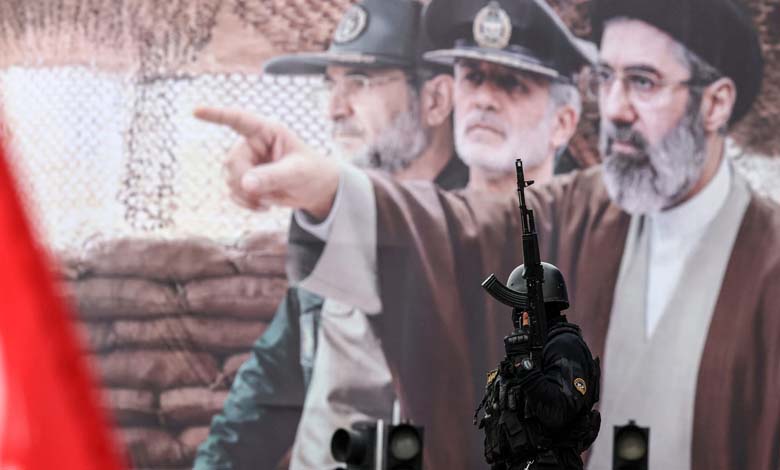
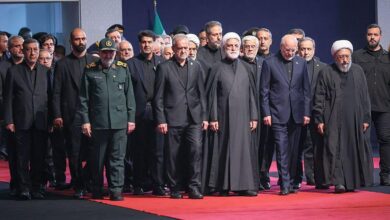
Who actually rules Iran today? A question that arises amid the intensifying struggle for influence, in a context marked by the growing presence of the Revolutionary Guards in decision-making circles and the clear marginalization of the roles of the president and the Supreme Leader.
Since the outbreak of war at the end of last February, which resulted in the death of Supreme Leader Ali Khamenei and many top security and military officials, Iran’s power structure has been undergoing unstable transformations.
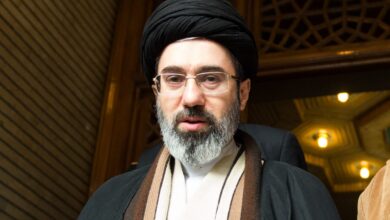
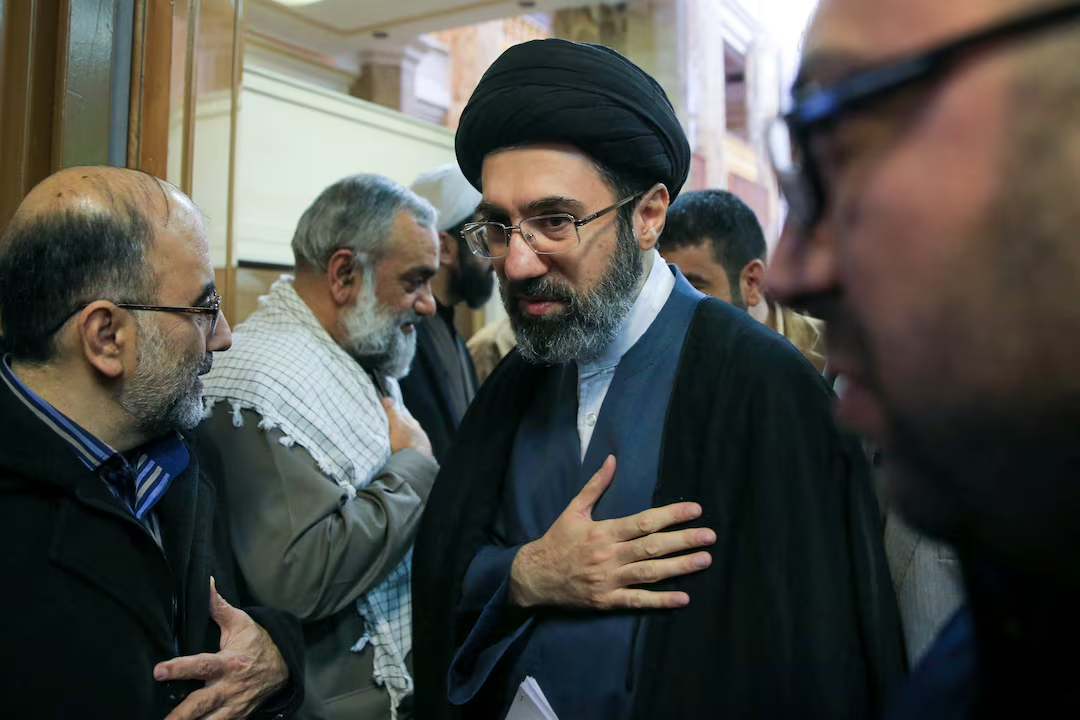
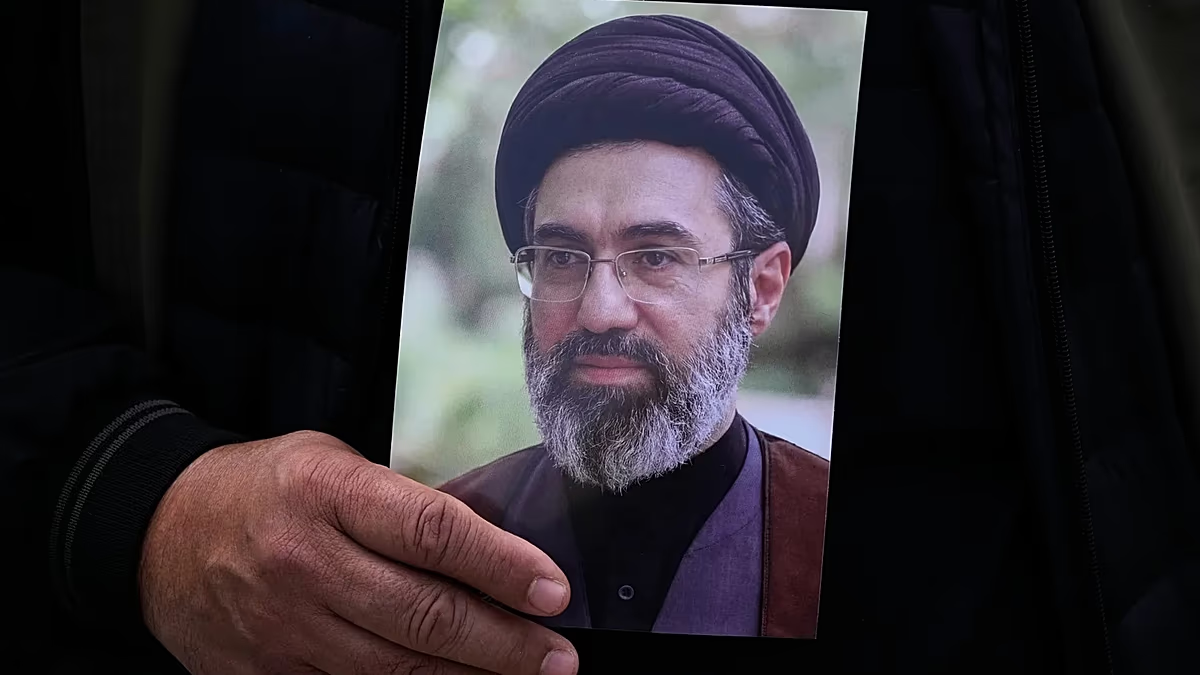
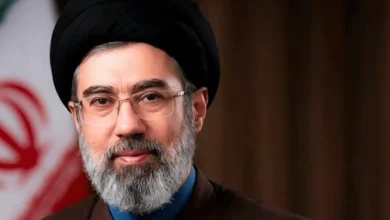
These changes are fueled by sharp competition among military circles that have moved toward the center of decision-making, taking advantage of a vacuum at the top of the hierarchy, particularly in light of the absence of the new Supreme Leader, Mojtaba Khamenei, from the public scene.
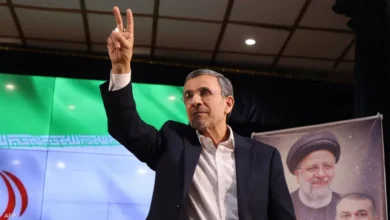
At the same time, figures representing the civilian façade of the regime are attempting to maintain their presence, without possessing real influence.
Observers say this struggle has produced deep divisions and conflicting positions within state institutions, with decisions now noticeably oscillating between escalation and retreat, as seen in the Strait of Hormuz issue and in hostile behavior toward neighboring countries.
In this regard, Italian expert Daniele Ruvinetti said: “The recent attacks targeting the United Arab Emirates appear to be linked not only to regional tensions but also to growing divisions within the Iranian regime itself.”
He added: “The possibility of deeper internal divisions cannot be ruled out. While some parts of the Iranian establishment appear interested in avoiding a broader regional conflict, hardline security actors may be trying to shape—or restrict—the diplomatic space available to Tehran.”
He continued: “What is happening is increasing competition within the Iranian regime over what form the system should take after the ceasefire.”
This competition reinforces the idea of fractures and rifts within the Iranian regime in the absence of leadership capable of imposing a clear vision or adopting a unified stance on regional and international events, including relations with neighboring countries and negotiations with the United States.
“A turning point”
According to an analysis published by the American magazine Time in late April, the Iranian regime is experiencing a turning point: the security elite has moved closer to the decision-making center, while the ideological camp has become less decisive, though still capable of exerting pressure.
Authority over issues of war, diplomacy, and escalation has increasingly shifted to a military-security core composed of a network of actors including the Revolutionary Guards, the Supreme National Security Council, and political figures whose influence stems from deep ties to the security establishment.
Iran’s civilian institutions have not disappeared: the presidency, the foreign ministry, and other parts of the state remain active, but their roles have been redefined. They no longer act as independent centers of strategic direction but instead implement decisions made elsewhere.
In this context, Mojtaba Khamenei, as Supreme Leader, if he is exercising authority despite ambiguous health conditions, does not possess the absolute authority his father held. He acts as one voice within a broader decision-making process, according to Time.
Three sources familiar with internal deliberations previously told Reuters that Khamenei’s role is largely limited to legitimizing decisions made by his generals rather than issuing directives himself.
Mojtaba, who was seriously injured in the first Israeli-American strike, has not appeared publicly since assuming his position in early March. He communicates through Revolutionary Guard aides or via limited contacts for security reasons, according to two individuals close to his inner circle cited by Reuters.
In contrast, Revolutionary Guards commander Ahmad Vahidi has been the primary interlocutor on behalf of Iran, according to a Pakistani source and two Iranian sources who identified him as the central Iranian figure, including on the night the ceasefire was announced last month.
Division among hardliners
This situation creates a division between military and civilian figures, with the former holding the upper hand, in addition to a more significant split within the hardline camp that forms the backbone of the security establishment, according to Time.
On one side are security-oriented elites such as Mohammad Bagher Ghalibaf, who view the war from a pragmatic perspective and see diplomacy as a tool to be used alongside military pressure.
On the other side is a more ideological and uncompromising current, clearly linked to figures and networks associated with the highly hardline “Stability Front,” known in Persian as the “Paydari Front,” which expresses deep skepticism toward negotiation as a whole.
This ideological division cuts vertically through the regime, reaching parliament and the media, creating two opposing voices within a closed circle, according to observers.
A “fragmented” decision-making process
Moreover, the multiple layers of division and discord in Iran hinder decision-making and responsiveness to developments on the international stage.
A senior Pakistani government official familiar with the peace talks between Iran and the United States, mediated by Islamabad, recently told Reuters: “The Iranians are extremely slow in responding,” explaining: “It seems there is no single command structure for decision-making. Sometimes it takes them two to three days to respond.”
Statements by U.S. Secretary of State Marco Rubio at the end of March reinforce this view, as he referred to internal “divisions” within Iran, stressing that Tehran’s public statements do not necessarily reflect its real positions in talks and that there is a gap between public rhetoric and what is discussed through unofficial channels.
Amid this competition and fragmentation, political researcher Ali Alfoneh wrote in an article for the Italian Institute for International Political Studies that “what is emerging now is a weaker and different regime.”
He explained that “the reins of power are concentrating in the hands of the security elite linked to the Revolutionary Guards, pushing the regime toward a de facto military dictatorship, with a religious figure as a façade and civilians formally leading two of the three branches of government.”