A powerless Supreme Leader in Iran… an isolated authority in the hands of the Guards
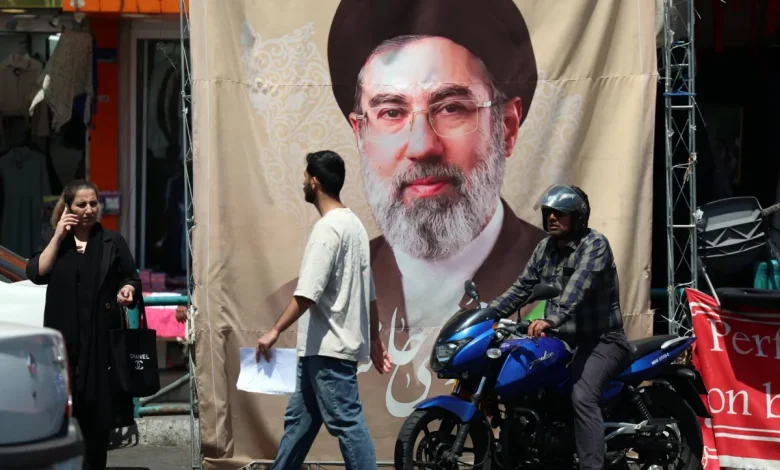
Iranian leaders at the top of the hierarchy claim they can access the Supreme Leader in order to exploit his influence and leverage his authority to serve their own agendas.
Intelligence analysts harbor doubts about the true role played by Supreme Leader Mojtaba Khamenei and whether he still performs some of his duties amid his isolation and injuries, or whether he has become merely a title without powers, with the Islamic Revolutionary Guard Corps using him as a cover to confront internal criticism and external pressure.
This comes as the Leader’s visual absence continues, amid questions about his real condition and the reasons for his disappearance from public view. Neither statements attributed to him nor his supposed meeting with the president have dispelled the ambiguity.
An isolated leader, Guards in control
In the latest developments regarding the Leader, an informed source told CNN that there is evidence suggesting Khamenei is largely removed from the decision-making process and can only be reached intermittently.
This statement comes as U.S. intelligence assessments indicate that Khamenei is involved in shaping Iran’s negotiation strategy aimed at reaching a diplomatic solution to the war—an assessment that some observers believe may be far from reality at a time when the Guards control events following the death of the previous Leader.
The source added that, as a result, senior officials within the Revolutionary Guards effectively manage daily operations, in coordination with Iranian Parliament Speaker Mohammad Bagher Ghalibaf.
A second source familiar with U.S. intelligence assessments said: “There are no indications that Khamenei is actively participating and issuing orders on a continuous basis, but there is nothing to prove otherwise.”
Sources noted that questions surrounding Khamenei’s health and his position within an increasingly divided Iranian system have posed a challenge to the administration of U.S. President Donald Trump, as senior U.S. officials continue to suggest it is currently unclear who holds the real authority to negotiate an end to the conflict.
U.S. Secretary of State Marco Rubio said on Friday, while discussing Iran’s expected response to the latest proposal put forward by the Trump administration to end the war: “Their regime remains deeply divided and dysfunctional, and this could be an obstacle to a solution.”
U.S. intelligence assessments had largely anticipated the repercussions of the U.S.–Israeli operations that led to the death of Khamenei’s father and other senior Iranian officials before Trump’s decision to launch the conflict; those assessments concluded that the death of the previous Leader was unlikely to bring down the regime.
One source, echoing what multiple sources described as a U.S. intelligence forecast, said: “Even if you remove the Leader, all his successors are hardliners as well.”
This forecast suggests that the Iranian government will remain largely under the control of the Revolutionary Guards and other figures ideologically aligned with those who were eliminated.
An unclear role
Overall, the role played by the Leader in Iran’s current leadership remains highly opaque. Some observers go as far as to question whether he is fully conscious after his injuries.
Sources told CNN that intelligence believes Mojtaba Khamenei plays a vital role in shaping the war strategy alongside senior Iranian officials.
A U.S. intelligence assessment concluded that the precise scope of authority within the Iranian system—now strained by internal fractures—remains unclear; however, estimates suggest that Khamenei is likely contributing to guiding how Iran manages the ongoing negotiations with the United States aimed at ending the war.
Khamenei has not appeared publicly since he was seriously injured in an attack that killed his father and several top military commanders at the outset of the war, sparking widespread speculation about his health and his potential role within Iran’s leadership structure.
It was announced that Khamenei assumed the position of Iran’s new Supreme Leader in succession to his father a few days after the strike that injured him; however, sources said U.S. intelligence agencies have not yet been able to visually confirm his whereabouts through direct observation.
One source added that part of this uncertainty stems from Khamenei’s refusal to use any electronic devices for communication; instead, he limits himself to people able to visit him in person or to sending messages through intermediaries.
Sources explained that Khamenei remains in isolation while continuing to receive medical treatment for his injuries, which include severe burns on one side of his body affecting his face, arm, torso, and leg.
Earlier, Iranian President Masoud Pezeshkian told official Iranian media that he had held a two-and-a-half-hour meeting with Khamenei; according to reports, this meeting was the first direct encounter between a senior Iranian official and the new Leader.
Informed sources indicated that the information available to U.S. officials regarding Khamenei’s situation is based on data collected from individuals who communicate with him directly.