Disputes within the Islamic Da‘wa Organization reflect the fragmentation of Sudan’s Muslim Brotherhood movement
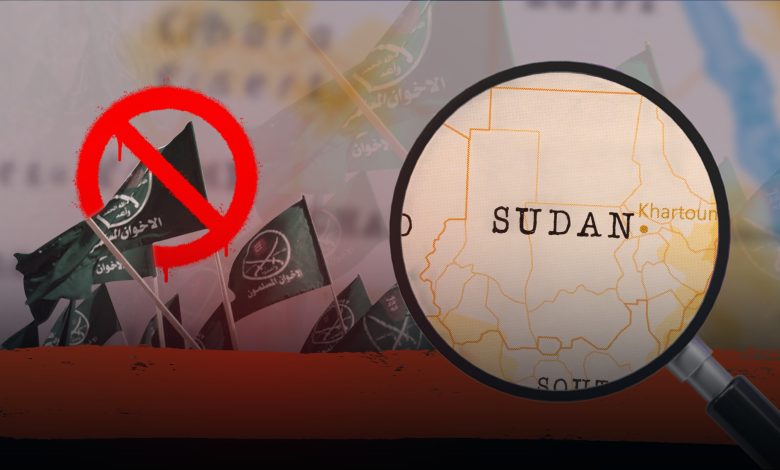
Multiple factions and groups are competing over the organizational and institutional legacy of the Islamic movement amid the absence of unified leadership.
The Islamic Da‘wa Organization has declared null and void a meeting convened by its former Secretary-General, during which his mandate was renewed for another term. It stated that the Board of Trustees is the only body authorized to call meetings of the council in accordance with the organization’s statutes. This development exposes an internal breakdown and a deeper crisis that goes beyond administrative disputes, touching upon the nature of alliances that have governed the organization for decades, as well as the role of Islamists in Sudan during a period marked by fragmentation and division.
-
The death of Anas Faisal in Umm Sayala: a painful blow to the Islamic movement and a sign of fractures within Sudan’s war alliances
-
Sudan’s Muslim Brotherhood and Iran: how the threads of the spider’s web tighten around Al-Burhan
Sources within the organization described recent events as a “deviation by some members,” highlighting the scale of internal divisions affecting institutions linked to Sudan’s Islamic movement.
The issue is not merely a procedural dispute over leadership elections or bylaw interpretation; rather, it reflects a deeper crisis concerning the future of the organization and the alliances that have shaped its governance for decades. This comes amid major political transformations in Sudan since the fall of former president Omar al-Bashir, followed by a decline in Islamist influence and the disintegration of its traditional power centers.
The Islamic Da‘wa Organization is one of the most prominent Islamic institutions that has played extensive religious, humanitarian, and educational roles in Sudan and abroad. It has long been part of the influence network built by Sudan’s Islamic movement over past decades. As such, any internal dispute extends beyond administrative matters to raise questions about power balances within the Islamist current itself.
-
Al-Burhan versus the Islamists: a first step toward reshaping Sudan’s political landscape
-
The Movements of the Sudanese Army and the Democratic Bloc Amid the Influence of the Muslim Brotherhood
Observers argue that the current conflict reflects the fragmentation experienced by Sudanese Islamists after years of political and organizational splits, with multiple factions now competing over the movement’s legacy amid the absence of unified leadership capable of managing disputes or formulating a shared vision for the future.
The crisis also reveals an internal struggle between two approaches: one that adheres to traditional structures and institutional procedures as the sole source of legitimacy, and another seeking to impose a new reality through shifting alliances and influence networks, taking advantage of the country’s political fluidity.
In the context of ongoing war and crises in Sudan, these disputes gain additional significance, as they highlight the difficulties faced by Islamist forces in reorganizing themselves.
-
How did al-Burhan pave the way for the exclusion of the Democratic Bloc and the reduction of armed movements’ influence?
-
Behind the meeting between al-Burhan and the Democratic Bloc: how the exclusion of armed movements and the bloc’s removal from power was decided
The dispute over the legitimacy of the meeting that renewed the former Secretary-General’s mandate is only the surface of a broader crisis involving the reconfiguration of power centers within Sudan’s Islamic movement. This occurs amid shifting power balances and the weakening of traditional authorities. The appearance of Sheikh Abdelrahman bin Abdullah Al Mahmoud, dismissed chairman of the Board of Trustees, and his declaration invalidating the procedures that removed him, illustrate the depth of the rift within one of the oldest institutions linked to the Islamic movement. The situation now points toward a potential legal battle that could reshape internal power structures.
His appearance at a press conference in Kampala, after arriving from South Sudan, confirms that the divisions can no longer be contained within organizational frameworks. He referred to his previous visit to Sudan as honorary president of the organization and his meeting with the head of Sudan’s Sovereign Council Abdel Fattah al-Burhan, stating that he had briefed him on developments following the decisions of the Dismantling Committee and the confiscation of the organization’s assets.
-
The removal of Minni Minnawi exposes the hidden conflict within Sudan’s ruling authority
-
Al-Burhan and Sudan’s Blood: Failure of Military Leadership and the Alliance of Destruction
He pledged to pursue “institutional reform,” improve working conditions, and ensure employees’ rights, indicating that the crisis is not merely about leadership but also about resource management and internal transparency.
The origins of the crisis date back to an emergency meeting of the Board of Trustees held on May 3, during which former Secretary-General Ahmed Mohammed Adam was removed and Yahya Adam Osman was elected Secretary-General for a term lasting until 2030. The board justified its decision by stating that the former Secretary-General’s official term would end in February 2026 and that he had refused to respond to the chairman’s correspondence regarding transitional arrangements and the convening of a regular meeting, which was considered a clear violation of the statutes.
-
Behind the Islamic Movement’s Discontent with Al-Burhan
-
Al-Burhan and the Islamic Movement: a fragile alliance built on ambiguity and distrust
However, the situation became more complex when a parallel meeting was held on May 1 by another group, which elected former Qatari ambassador Ali bin Hassan Al Hammadi as Secretary-General of the Board of Trustees and extended the former Secretary-General’s mandate. Al Hammadi later arrived in Khartoum and announced the resumption of the organization’s activities from the capital, revealing the existence of two competing centers of authority, each claiming legitimacy.
At a press conference in Kampala, the organization’s legal team leader Abubakar Abdulrazzaq explained that the statutes grant only the Chairman of the Board of Trustees the authority to call meetings, and that the Secretary-General must be notified two months in advance.
-
The Sudanese Army and the Islamic Movement: An Alliance Crumbling in the Age of Political Bargains
-
Al-Burhan’s Delegation in a Closed Circle: Washington’s Silent Message to Sudan’s Leadership
He added that the board was surprised by a decision issued by an “unauthorized body” dismissing Al Mahmoud, despite his mandate running until 2028, and described all resulting decisions as “null and void.” He also noted a court ruling suspending his dismissal and the appointment of Al Hammadi, signaling the shift of the dispute into the judicial arena.
According to multiple sources, the crisis is linked to broader divisions within Sudan’s Islamic movement itself. The faction led by the movement’s Secretary-General, Ali Karti, is accused of opposing Al Mahmoud, who in recent years has sought to address corruption cases surrounding the organization’s activities. This indicates that the dispute within the Islamic Da‘wa Organization is not isolated, but part of a wider reconfiguration of Islamist power centers following the fall of the Bashir regime and amid a war that has significantly reshaped Sudan’s political and organizational landscape.
-
The secret file: how Cairo is pushing to dismantle the Islamist movement within Sudan’s military establishment
-
The Miliṭ tragedy exposes the Islamic Movement’s army involvement in a war of starvation
-
The Attack on the Humanitarian Convoy in Mellit: A New War Crime Exposing the Bloody Face of the Islamic Movement