Suspending the Strikes, Not the War… What Is Washington Planning for Iran?
After the United States refrained from carrying out strikes against Iran on Friday and Saturday nights, for the first time in two weeks, Israeli media reported that Tel Aviv had been preparing for a major military escalation over the weekend. However, that escalation ultimately did not take place.
Despite this sudden lull, Israel still believes that U.S. President Donald Trump will soon find himself compelled to intensify military action against Iran, according to The Times of Israel.
Trump Suspends the Strikes
The Axios website, citing two informed sources, reported that Trump personally ordered the U.S. military not to carry out any strikes against Iran on Friday and Saturday.
Israel’s public broadcaster Kan reported that the Israeli military had prepared for the possibility of a major escalation in the confrontation. This was also confirmed by Yaron Abraham, Channel 12’s diplomatic affairs correspondent.
Meanwhile, journalist Barak Ravid, who works for Channel 12 and Axios, said that the strikes the U.S. military had been planning to carry out on Friday evening, before Trump suspended them, would not have differed in scale from the operations conducted during the previous thirteen nights.
Several media outlets, including Axios and Israel’s Kan public broadcaster, reported, citing sources, that the United States still intends to significantly expand the scope of its military operations, but that Trump prefers to give negotiations another chance.
U.S. Reinforcements Arrive in Israel
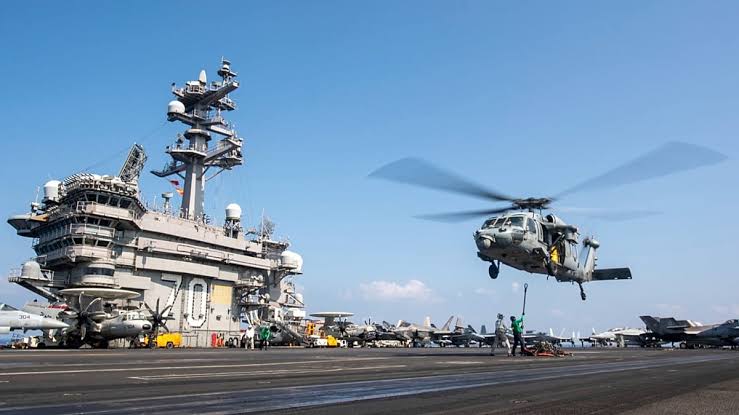
Israel’s Kan public broadcaster reported that the United States continued to send substantial military reinforcements to Israel, including dozens of fighter jets and aerial refueling aircraft, along with air defense systems and munitions.
It added that around 90 aerial refueling aircraft had arrived over the past several weeks and had been stationed at Ben Gurion Airport and at the Ramon and Ovda air bases, in a deployment similar to the one established before the outbreak of the U.S.-Israeli war against Iran in late February.
A senior Israeli official told Channel 12 that “the chances of reaching an agreement between the United States and Iran are almost nonexistent,” arguing that an escalation of the confrontation had become “inevitable.”
Channel 13 and Ynet also reported, citing sources, that diplomatic efforts were likely to fail and that Trump, despite favoring negotiations, might ultimately have “no other option” but to order a large-scale attack.
Escalation Options
Over the past few days, Trump has threatened to expand the target list to include Iranian energy facilities and bridges, send ground troops to seize control of the oil-export hub on Kharg Island, and strike a deeply buried underground nuclear facility known as “Axe Mountain.”
However, Trump said on Friday that he had not yet made a final decision on whether to launch new large-scale strikes.
Speaking to reporters at the White House, he said: “We are talking to them. I think they are serious… the most serious we’ve seen so far, but that doesn’t mean we’re going to reach an agreement.”
Fears of U.S. Defense Depletion
The New York Times reported that concerns over the depletion of interceptor missile stocks were at the center of discussions between Trump and his senior advisers before the decision to postpone the escalation.
According to the newspaper, Chairman of the U.S. Joint Chiefs of Staff General Dan Caine told officials during closed-door meetings that the military was capable of conducting large-scale operations against Iran, but that the supply of interceptor missiles available to U.S. Central Command could run out if the escalation continued.
The newspaper also quoted a senior U.S. official as saying that the administration doubted whether a more intensive military campaign would push Iran back to the negotiating table. Instead, it believes that the recent strikes have strengthened domestic cohesion and unity in Iran in the face of the external threat.
CNN, citing a source within the U.S. Department of Defense, reported that plans for a military escalation against Iran were currently “on hold.”
Netanyahu Brings New Intelligence to Trump
Israeli Prime Minister Benjamin Netanyahu is scheduled to meet President Trump at the White House on Tuesday, according to announcements from the offices of both leaders.
Channel 12 reported that Netanyahu and his team intend to present new intelligence regarding Iran’s efforts to rebuild its military capabilities and nuclear program, including what Israel considers to be an acceleration of moves by the new Supreme Leader, Mojtaba Khamenei, toward acquiring a nuclear weapon.
The channel did not clarify the nature of the intelligence, but noted that previous Israeli intelligence briefings concerning Iran’s nuclear program had played an influential role in the U.S. decision to launch strikes against Iran.