Russia Ushers in the Era of Unmanned Destroyers: The Submarine Killers
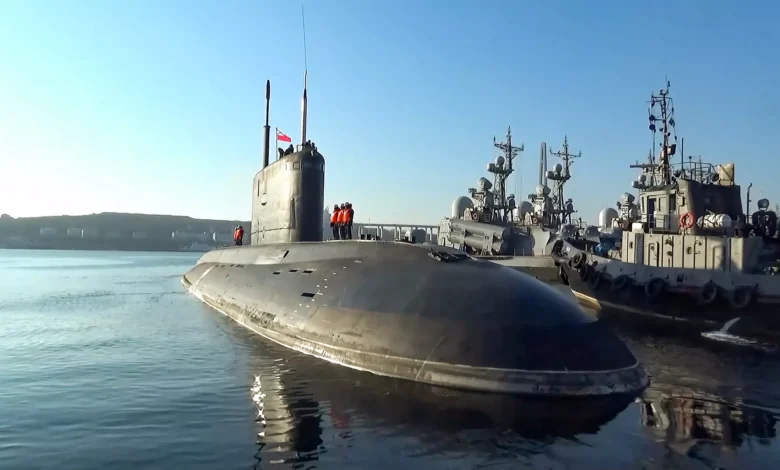
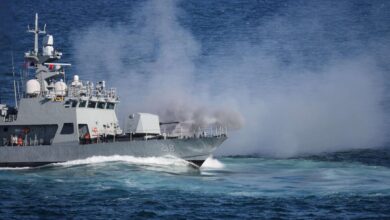
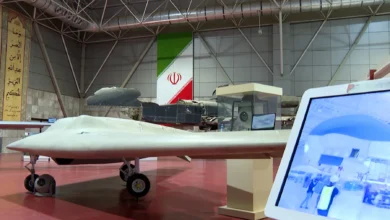
The Russian Navy has announced the beginning of a new phase in the development of its combat capabilities with the launch of a project to build its first major unmanned warship.
Russia intends to assign the vessel to anti-submarine warfare missions, in a move that reflects a notable shift in the concept of modern naval operations.
-
A Floating Missile Platform: The Admiral Nakhimov Restores the Prestige of the Russian Navy
-
Deep-Strike Campaign Expands: Dual Russian Attack Sets the Heart of Kyiv Ablaze
The Commander-in-Chief of the Russian Navy, Admiral Alexander Moiseyev, confirmed that the project had been incorporated into the ongoing State Armament Program, describing the vessel as representing a “new class” within Russia’s naval classification system.
He stated that the vessel had been designed to locate submarines and underwater targets, while also serving as the foundation for the development of unmanned naval systems over the coming years, according to Military Watch magazine.
-
What if Europe attacked Russian merchant ships?
-
A year after it sank… a report reveals the nuclear secret of a Russian ship
Although official information regarding the vessel’s technical specifications remains limited, preliminary assessments suggest that it will be comparable in size to conventional destroyers, with the ability to remain at sea for extended periods without requiring a human crew on board.
This approach reflects Moscow’s growing reliance on autonomous technologies, which are gradually emerging as an alternative to crewed platforms, including frigates and maritime patrol aircraft, for carrying out anti-submarine warfare missions.
-
Alliances beneath the depths: A joint British-Norwegian fleet to counter Russian submarines
-
“Proteus,” the submarine hunter… the first crewless helicopter in the British Navy
Growing Maritime Pressures
The project comes at a time when Russia is facing growing challenges in its strategic maritime environments, amid increased activity by American, British, and French attack submarines in Arctic areas near Russia’s coastline, as well as by Japan’s diesel-electric submarines, which are regarded as among the quietest and most capable submarines in the world, according to the report.
Meanwhile, the United States continues to rely on Virginia-class nuclear-powered attack submarines as the backbone of its submarine fleet, under a plan aimed at operating 80 submarines by 2045 as part of the “Battle Force 45” strategy.
However, these ambitions are facing growing challenges. Reports indicate that the U.S. submarine-building industry is experiencing a severe production crisis, which has affected the actual size of the fleet, which remains significantly below the announced targets.
-
The Russian Harmony system: A secret ploy to shield nuclear submarines
-
Russia’s Shadow Fleet: An Intelligence Arm Challenging NATO
An Industrial Race
Pessimistic assessments of the United States’ ability to produce nuclear-powered submarines suggest that China has managed to overtake Washington in this field, both in terms of production rates and the development of the combat performance of its naval platforms, despite lower levels of investment compared with the United States.
According to these assessments, this reality reflects a significant shift in the balance of global naval power, amid continuing logistical and manufacturing problems that are limiting Washington’s ability to make up for shortfalls in its submarine fleet. Moscow is closely monitoring this development as it formulates its future military plans.
-
New Round of the Night Drone War: Russia Intercepts 419 Ukrainian Drones
-
Fifth-generation submarines: Russia bets on smart ghosts
Russia’s efforts are not limited to developing unmanned platforms but also extend to strengthening its conventional anti-submarine warfare capabilities. The Russian Navy continues to expand its fleet of advanced Yasen-M-class nuclear-powered attack submarines, while also announcing its support for North Korea’s program to develop its first nuclear-powered submarine, which is expected to enter service before 2030.
Despite rapid advances in naval technologies, American nuclear-powered submarines, and to a lesser extent their British and French counterparts, remain among the most significant challenges facing Russian operations at sea. This is prompting Moscow to pursue a strategy that combines the modernization of its conventional fleet with investment in unmanned systems, amid an intensifying underwater arms race and continuing competition among the world’s major naval powers, according to the magazine.
-
Smaller and more heavily armed: Russia challenges aircraft carriers with Gorshkov-class frigates
-
Trump versus a hypersonic Admiral… who would win?