Trump Threatens Iran with Broader Strikes as Beijing and Islamabad Open the Door to Negotiations
Reciprocal military strikes between the United States, Iran and their allied forces in the region are continuing amid a maritime blockade and growing threats to oil supplies and global trade. Meanwhile, the US president is presenting two options: a major military escalation or a diplomatic agreement backed by international initiatives and mediation.
-
Iran’s Kharg Island: Carter’s Lesson That Continues to Haunt Trump
-
Trump Threatens to Wipe Out Iran if It Attempts to Assassinate Him
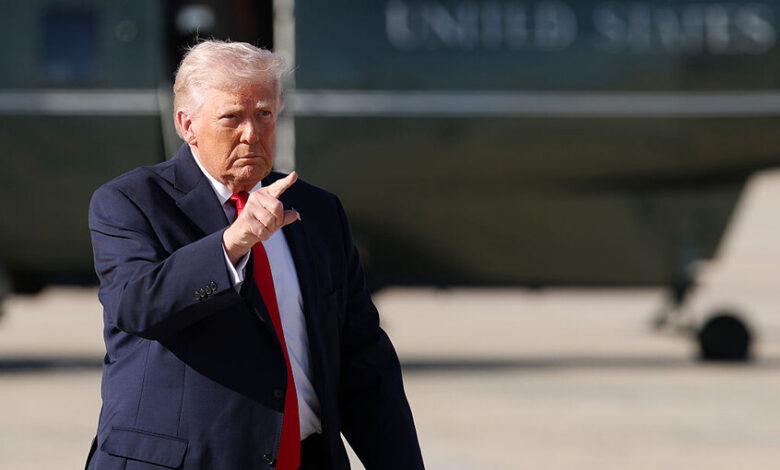
US missiles struck targets across Iran on Friday, while US President Donald Trump threatened Tehran and the Iran-aligned Houthi movement in Yemen with “major military punishment,” but once again left the door open to reaching a diplomatic agreement with Iran.
Two weeks after the collapse of the temporary ceasefire that was supposed to bring the war to an end, Iranian armed forces retaliated by opening fire on US bases in neighboring Arab countries and warned local populations that they could strike non-military buildings being used by American military personnel.
-
Israel Seeks Trump’s Green Light to Strike Iran
-
Israel Warns the United States of an Alleged Iranian Plot to Assassinate Trump
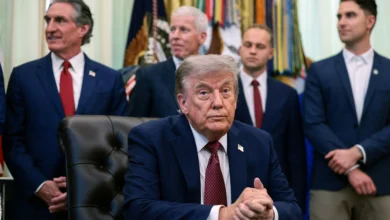
US media reported that Trump held a meeting with his senior advisers at the White House on Friday morning to discuss the possibility of launching a large-scale military operation against Iran. However, he told reporters that he had not yet made a decision on the matter.
In recent days, Trump has threatened to expand the list of targets to include energy facilities and bridges in Iran, as well as to deploy ground forces to seize Kharg Island, the Islamic Republic’s main oil-export hub. He also threatened to strike a deeply buried underground site linked to Iran’s nuclear program known as “Pickaxe Mountain.”
-
From the Nuclear Issue to the Strait of Hormuz: Trump Reshapes the Confrontation with Iran as Escalation Knows No Limits
-
Trump Announces the End of the Memorandum of Understanding with Iran
Trump said Friday that he had not yet decided whether to launch major new attacks.
He said Iran had two choices: reach an agreement or face a “much more violent” level of strikes.
Asked about an exit strategy from the war with Iran, Trump said: “There is a military way out, which is to continue doing what we are doing now. We can even increase the pace of the strikes, which would lead to the elimination of everything they have. There is also a smarter strategy, which is to reach an agreement.”
However, he concluded: “We are on alert and ready to act.” He added: “We are talking to them, and we will see what comes out of these discussions.”
-
Very Positive… Trump Reveals Details of the Iran Talks
-
The Marine One Helipad: Donald Trump’s Latest Mark on the White House
Later, Trump said Israeli Prime Minister Benjamin Netanyahu would visit the United States within days. Trump is expected to meet with Netanyahu on Tuesday, as the US-Israeli war against Iran enters its fifth month.
The Strait of Hormuz remains the central flashpoint in a war that has lasted nearly five months, killed thousands of people, worsened global inflation and fueled fears of an economic recession.
The Houthis, who control northern and western Yemen, announced a maritime blockade against Saudi Arabia. Riyadh has redirected millions of barrels of oil per day to be transported through a pipeline to the Red Sea, thereby circumventing the near-total blockade imposed by Iran on the Strait of Hormuz.
-
The World’s Most Closed-Off Country Knocks on Trump’s Door: The Behind-the-Scenes Story of Turkmenistan’s Leader’s Secret Visit
-
Trump sends a deterrent message to Iran despite progress in negotiations
After the Houthis announced on Thursday that they had attacked two Saudi oil tankers, Trump said he would hold Iran responsible for any further attacks carried out by the group.
The official Saudi Press Agency reported that a Saudi vessel sustained minor structural damage in an attack in the Red Sea on Friday.
A Saudi transport-sector official said the vessel had suffered minor damage, while Houthi-affiliated media reported that Saudi Arabia had carried out strikes on the Houthi-controlled city of Hodeidah on Yemen’s western coast, targeting in particular a telecommunications building.
-
Trump Congratulates Him: The Tiger Wins Colombia’s Presidency
-
The U.S.–Iran Agreement Undermines Netanyahu’s Bet on Trump
The Saudi-led coalition in Yemen said it had struck military sites belonging to the Houthi movement, claiming that the facilities had been used to threaten commercial shipping.
Residents of the coastal city of Hodeidah reported hearing explosions, with one witness saying the blasts were heard near the port. The Houthis condemned the attacks, claiming that civilian infrastructure had been targeted, and vowed to retaliate.
The Houthis later claimed responsibility for a missile attack targeting the city of Jizan in southwestern Saudi Arabia. Saudi civil defense authorities issued a brief security alert in the city but provided no further details.
-
Trump or Vance: Who Will Represent the United States at the Signing of the Agreement with Iran?
-
Trump Announces Death of “Most Wanted Criminal” as Venezuela Confirms Joint Operation
Iran threatens US forces
The US military carried out airstrikes against Iran on Thursday evening and early Friday morning for the thirteenth consecutive night, prompting Iran to launch missiles toward neighboring Arab countries hosting US military bases.
However, for the first time in nearly two weeks, the US military did not announce any new strikes against Iran overnight from Friday to Saturday.
Iran’s Health Ministry said in a statement posted on X that 59 people had been killed and 666 others wounded since clashes with US forces resumed in late June.
-
8647: U.S. Police Investigate Number Considered a Death Threat Against Trump
-
Trump Signals Iran Could Remain Under Fire Until an Agreement Is Reached
Iranian media quoted the head of Iran’s Supreme Joint Military Command as saying that Iran would kill one US service member for every Iranian killed.
Iranian Foreign Minister Abbas Araghchi said his country reserved the right to take “all necessary measures to defend itself” against any state that “participates, cooperates with or supports” the United States.
The war has killed 18 US service members. The Pentagon said on Monday that 100 troops had been wounded since July 7. Officials told Reuters that more than 500 US service members had been wounded so far.
Iran considers any facility in the Middle East made available to the US military to be a legitimate target. The Islamic Revolutionary Guard Corps called on civilians across the region to stay away from any site hosting US forces.
-
Trump fuels speculation over Netanyahu’s political future
-
Trump Promotes an Electoral Victory Over Iran and an Imminent Agreement
Sources: Pakistan explores a path toward negotiations
The Houthis attacked two oil tankers carrying Saudi crude in the Bab el-Mandeb Strait in the Red Sea on Thursday, pushing oil prices up by 7% to above $100 a barrel for the first time since May.
However, Brent crude futures fell by more than $4 on Friday, slipping to just below $96 a barrel.
Sources said Pakistan was exploring a path toward restarting stalled talks between the United States and Iran aimed at ending the war, as part of an initiative launched by China.
-
From the Bottom of the Sea: Trump’s Latest Message to Iran
-
Trump Separates the Peace Agreement with Iran from the Fate of Uranium
Three Pakistani sources said exploratory discussions had taken place during Iranian Interior Minister Eskandar Momeni’s visit to Islamabad last week, his second visit within ten days.
In a parallel diplomatic move, Chinese Foreign Minister Wang Yi met his Iranian counterpart, Abbas Araghchi, in Kyrgyzstan on Friday and called for the resumption of negotiations between the United States and Iran to end the war.
He added that Beijing, as Tehran’s strategic partner, supported Iran in protecting its sovereignty, security and national dignity.
-
Trump caught between pressure to end the Iran war and appeasing Republican hawks
-
A U.S. report reveals an Iraqi faction leader’s plot to assassinate Ivanka Trump
Tankers reroute
Houthi attacks have forced many tankers to change course in the Red Sea and head north to sail through the Suez Canal, potentially requiring them to take a much longer route around Africa to reach Asian customers.
Nevertheless, half of the 18 vessels that left the Bab el-Mandeb Strait on Thursday were carrying crude oil, including two Chinese supertankers.
The number of tankers passing through the Strait of Hormuz fell to just one, the lowest level since May 7.
-
Trump trapped in the Iran war between no victory and no peace
-
House vote canceled to limit Trump’s military powers
US warns its nationals in the Middle East
The Iranian military said it had attacked US military equipment depots at Al-Adairi military base in northern Kuwait, as well as US military positions at Camp Arifjan and Camp Doha near Kuwait City.
Kuwait said early Friday evening that its air defenses were intercepting “hostile” targets launched from Iran.
Iran’s Islamic Revolutionary Guard Corps also claimed to have inflicted heavy damage on a control tower used by the US Fifth Fleet in Bahrain.
-
Trump seeks to end the Iran war soon due to its economic repercussions
-
I will not be patient for long… a decisive message from Trump to Iran
Iran further said it had retaliated against US strikes by targeting military facilities used by the United States in Bahrain, Jordan and Kuwait, arguing that any facility in the region providing support to US forces constituted a legitimate target.
In Washington, Trump warned China and Russia against selling weapons to Iran, while the United States investigates the possibility that Moscow and Beijing provided Tehran with intelligence that may have helped facilitate attacks on US bases in the Middle East.
-
Stopping Iran’s nuclear program is more important to Trump than the economic situation
-
The war with Iran and the constraints of Congress… Trump surpasses the 60-day deadline
The current escalation represents the most serious direct confrontation between the United States and Iran in years. The fighting has now spread from Iranian territory and the Gulf region to the Red Sea, where oil tanker traffic and global trade have become increasingly dependent on military developments.
Despite the escalating threats exchanged by both sides, diplomatic initiatives by China and Pakistan, along with messages exchanged between Washington and Tehran, indicate that channels for negotiations remain open. Markets, meanwhile, are warning that a broader war could threaten global energy supplies and intensify inflationary pressures.
-
Trump reviews plans for a new attack on Iran
-
Trump instructs his forces to prepare for a prolonged blockade of Iran