Dispute between militias over weapons weighs on al-Zaydi government
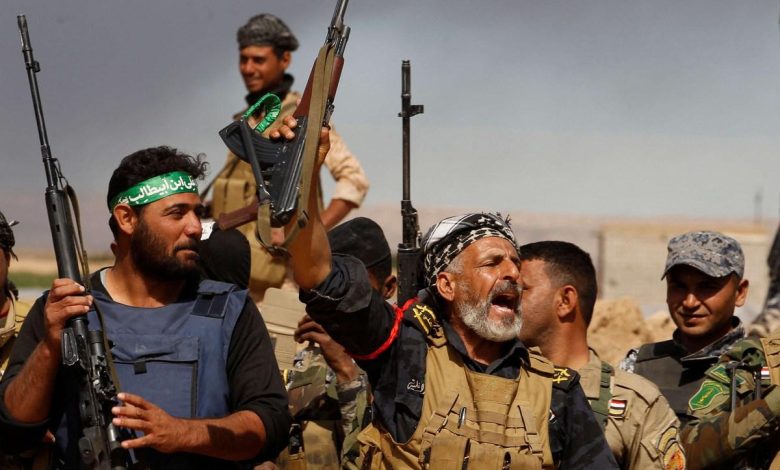
Moqtada al-Sadr announces the separation of Saraya al-Salam from the National Shiite Movement and their integration into state institutions, while the Sayyid al-Shuhada Brigades refuse to give up their weapons.
The growing debate over the issue of restricting weapons exclusively to the state in Iraq has exposed clear divisions between armed factions and Shiite political forces, between those supporting the integration of armed formations into state institutions and those insisting on what they call the “weapon of resistance,” seen as a necessity linked to the country’s security and sovereignty.
-
Accusations against Iran of using Iraqi militias to suppress protests
-
Growing Calls to Turn Halabja into an Iraqi Governorate and Justice for the Victims
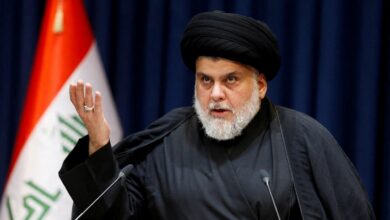
These divisions came to the forefront after the announcement on Wednesday by the leader of the National Shiite Movement, Moqtada al-Sadr, of the complete separation of “Saraya al-Salam” from the movement and their full alignment with the state. Observers described the move as a significant political and security shift that could pave the way for a restructuring of relations between armed factions and Iraqi state institutions.
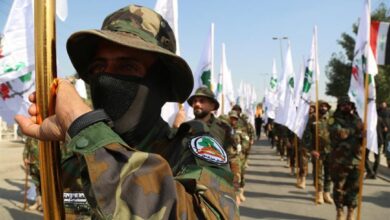
In contrast, the Sayyid al-Shuhada Brigades announced that they refuse to surrender their weapons at the present stage, stressing that their position is “firm and non-negotiable.” The group’s spokesperson, Kazem al-Fartousi, told the Iraqi Kurdish agency Shafaq News that the faction supports the government of Prime Minister Ali Faleh al-Zaydi in managing the state and achieving stability, but rejects relinquishing its weapons “as long as the reasons for their existence remain.”
-
Tehran Begins Renovation of the “House of Resistance” by Expanding Armament for Iraqi Popular Mobilization Forces
-
Iraqi Militias Threaten Devastating Response if Israel Assassinates al-Sistani
He added that “the weapon of resistance is not a personal weapon, but is tied to the existence of threats and violations of Iraqi sovereignty,” arguing that any discussion about handing over weapons or integrating factions into security forces depends on “specific security and political circumstances.”
Al-Fartousi also criticized the idea of directly merging all armed formations into state institutions, saying that “each entity has its own mandate,” in reference to the desire of some factions to maintain autonomy from the official military establishment.
-
Iraqi Factions Shell Israel: A New Offensive after the Golani “Breach”
-
Al-Halbousi does not intend to return to the presidency of the Iraqi Parliament
The position of the National Shiite Movement appears more aligned with government efforts to regulate weapons. Moqtada al-Sadr stated that the decision to sever Saraya al-Salam’s ties with the movement was driven by “the public interest of the nation and the risks facing Iraq,” adding that the civilian components of Saraya al-Salam will be transformed into official state institutions “without headquarters, weapons, uniforms, or organizational labels.” He also urged other Popular Mobilization Forces factions to distance themselves from partisan and sectarian orders and to come fully under state authority.
Saraya al-Salam is the military wing of the National Shiite Movement and is officially part of the Popular Mobilization Forces (PMF). It is deployed in several regions, most notably in Samarra.
-
Postponement of the Iraqi Kurdistan Parliament Elections Becomes Inevitable
-
An Iraqi militia challenges Washington by persisting in carrying out attacks
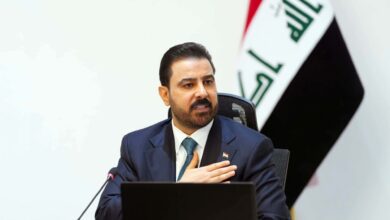
Prime Minister and Commander-in-Chief of the Armed Forces Ali Faleh al-Zaydi welcomed al-Sadr’s step, calling it a move that “strengthens internal stability and reinforces the principle of state monopoly over arms,” and urged other factions to operate under official state institutions.
Amid this dispute, the position of Asaib Ahl al-Haq appears closer to the government’s approach, while still emphasizing the distinct nature of the “weapon of resistance.”
A member of the political bureau of the Sadiqoun parliamentary bloc, Khaled al-Saadi, said the movement believes in “state sovereignty and strength” and rejects any “uncontrolled weapons outside official institutions.” He added that Asaib leader Qais al-Khazali had previously called for restricting weapons to the state, describing it as a “patriotic stance” aimed at preventing foreign parties from exploiting the weapons issue to interfere in Iraqi affairs.
-
The Iraqi political scene is complex and open to all possibilities after the removal of Al-Halbousi
-
Iraqi ruling parties’ influence greater than electoral commission’s restrictions
At the same time, he stressed that the state must be “capable of protecting Iraq on land, in the air, and at sea,” noting that the “Islamic resistance” factions operate within the Popular Mobilization Forces, which he described as a “supporting governmental body defending Iraq.”
Al-Khazali had stated in his latest Eid al-Adha sermon that “resistance is no longer limited to military action, but includes building a strong, sovereign state with institutions,” warning that any resistance without a state-building project “would become a burden on society.”
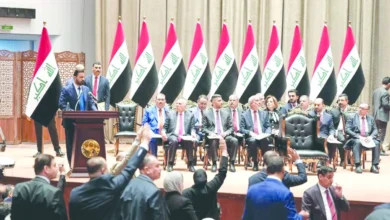
The issue of restricting weapons to the state is one of the key pillars of Prime Minister Ali al-Zaydi’s government programme, which won parliamentary confidence in May. Discussions within the “Coordination Framework” reportedly include committees and timelines to gradually regulate and collect weapons. However, the clear divergence in positions among armed factions highlights the scale of challenges facing the government in this sensitive file, caught between pressures to build a strong centralized state and the insistence of some armed groups on maintaining their military role under the banner of resistance.
-
Do Iraqi militia groups allied with Iran intervene in the Gaza war?
-
Iraqi President Proposes Formation of Local Government in Kirkuk to Reduce Tensions
-
The Battle of the Iraqi Integrity Commission against corruption doesn’t penetrate party influence
-
Closing the Syrian-Iraqi Borders: What Is Iran Aiming for?