Enemy Brothers: Austria and Germany Locked in a Fierce Battle for a United Nations Security Council Seat
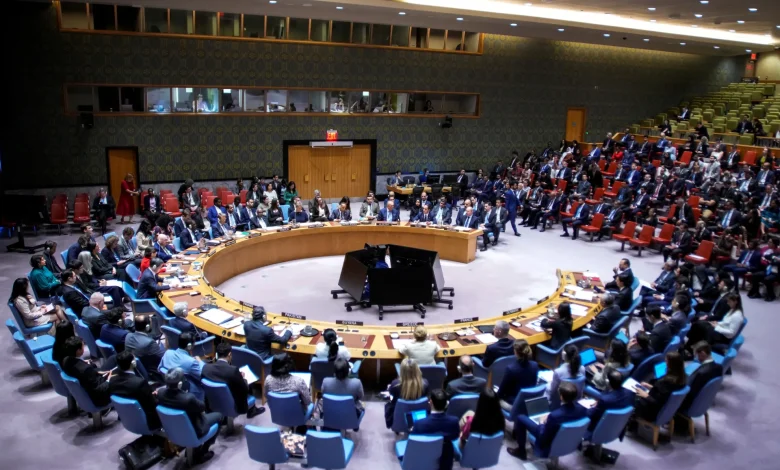
The competition between the allies in Berlin and Vienna for a seat on the United Nations Security Council, in a vote scheduled for Wednesday, has become unusually fierce.
In their heated struggle with Germany over which country will secure a prestigious seat on the UN Security Council, Austrian officials have resorted to a form of humorous diplomacy and a remarkably simple message.
For example, one senior Austrian diplomat reportedly said: “Vote for us because we are not the Germans,” according to Politico magazine.
-
Fears of a Widespread Regional War Loom over the United Nations Meeting
-
Expected American Veto to Prevent Palestinian Membership in the United Nations
Behind this irony lies a genuine and intense rivalry between two countries that are usually regarded as close allies.
Three European Union member states — Germany, Austria, and Portugal — are competing for two non-permanent seats on the United Nations’ most powerful body in a General Assembly vote scheduled for Wednesday.
Portugal is generally considered a secure candidate for the two-year term beginning in 2027, thanks to its strong ties with Portuguese-speaking and Spanish-speaking countries.
This leaves Germany and Austria — two nations connected by deep historical and cultural ties, but also occasional tensions — competing for the final available seat.
-
From France to Sweden, Europe’s Front Against the Muslim Brotherhood Expands
-
Five Arab nationals involved in the plot: Germany foils an attack on a Christmas market
Germany is the heavyweight in this contest. Nevertheless, German Foreign Minister Johann Wadephul has campaigned vigorously on behalf of Berlin’s bid, reflecting Chancellor Friedrich Merz’s determination to secure every possible source of international influence in order to strengthen Germany’s export-driven economy and expand its global influence.
As part of this effort, Wadephul traveled to New York last weekend to lobby countries to vote for Germany.
Shortly after arriving, he stated: “When it comes to global crises, Germany wants to exercise influence, and that is entirely appropriate for the world’s third-largest economy.”
By contrast, Austrian diplomats have consistently emphasized their country’s relatively small size.
-
The world sharpens its swords… 2025, the year of the arms race, conscription, and the rebuilding of defenses
-
The Muslim Brotherhood threat in Germany is growing: warning of infiltration of the Social Democratic Party
Behind the Scenes
An Austrian diplomat, speaking anonymously to Politico, said: “As a small, non-aligned and militarily neutral country, we can play a very special role because this is not about the rights of major political powers, but about balancing the rights of all states.”
German and Austrian leaders have been unusually candid about the extent of their efforts to outmaneuver one another.
Speaking in Berlin on Tuesday alongside Hungarian Prime Minister Peter Magyar, who supports Germany’s candidacy, Friedrich Merz said: “The Foreign Minister and I, together with many colleagues in the Cabinet, have done everything possible to secure the United Nations General Assembly vote for a non-permanent seat.”
-
The Muslim Brotherhood in Ireland: Warnings Over Suspicious Funding and Calls for a Comprehensive Investigation
-
Political Islam and the digital sphere in Europe: recruitment, expansion, and a dangerous trend
According to the Austrian diplomat, Austria’s Chancellor and Foreign Minister have likewise “done everything they can” to win the contest.
Gregor Kössler, Austria’s Ambassador to the United Nations, told the Austrian newspaper Die Presse that “difficult things are happening behind the scenes.”
He added: “People are trying to attract votes and win supporters.”
Another Blow for Merz?
Austrian diplomats argue that their policy of neutrality and their status outside the North Atlantic Treaty Organization (NATO) provide an advantage among countries in Africa, Asia, and Latin America.
-
The Muslim Brotherhood in Europe and Youth: A Long Arm with 31 Branches and a Recruitment Strategy
-
The Muslim Brotherhood in French Sports: Quiet Infiltration and Hidden Influence
Austria also enjoys another clear advantage: it entered the race for the 2027–2028 seat several years before Germany. As a result, Austrian officials believe they have a realistic chance of defeating Germany in Wednesday’s vote.
If that were to happen, it would represent a significant embarrassment for Friedrich Merz, considering that Berlin has successfully secured a Security Council seat every eight years for decades.
According to Politico, a defeat to Austria would not only constitute a painful diplomatic setback but would also likely intensify domestic criticism of the Chancellor, who is already facing low popularity and political weakness despite promising to restore Germany’s leadership role within Europe.
-
“Military Service”: Europe’s Concerns Drive towards “Mandatory” Service
-
Austria Launches Campaign against Political Islam Groups and Plans to Ban Hijab for Girls Under 14
This explains why Wadephul has conducted such an intensive campaign in New York.
According to officials familiar with his efforts, Wadephul has met face-to-face with approximately 80 ministers or ambassadors at United Nations headquarters since Friday.
It remains unclear what incentives he may be offering. In such circumstances, diplomats often engage in vote trading, promising future support in exchange for present backing.
Wadephul has also sought to employ soft-power tactics. On Monday evening, the German Foreign Minister hosted a large reception at the United Nations plaza featuring a jazz band, German sausages, and an ice-cream stand.
-
Austria takes steps to enhance its Counter-Terrorism Capabilities
-
The Terrorism Threat Remains High: Has the Number of Dangerous Islamists in Germany Decreased?
Influencing Factors
The vote will take place on Wednesday among the 191 member states of the United Nations and may require several rounds until one candidate secures the required two-thirds majority for a Security Council seat.
The ballot is secret, which further intensifies the competition. Diplomats from Berlin and Vienna believe they still have opportunities to influence countries until the very last moment without either side losing face.
One factor that could prove decisive is Friedrich Merz’s controversial remarks regarding international law at the beginning of the war involving Iran.
-
Strike every year… Germany besieges extremists and tightens the noose on Iran and the Muslim Brotherhood by banning their activities
-
Historic Blows… The Stages of Germany’s Fight against the Brotherhood and Its Organizations
Another factor is what many member states perceive as Germany’s reluctance to condemn Israel over civilian casualties during its military campaigns in Gaza and Lebanon. However, Austria has also traditionally been one of Israel’s strongest supporters within Europe, according to Politico.
Ultimately, the outcome of Wednesday’s election may depend on which side proves more effective in the intense diplomatic battle being waged ahead of the vote.
On Tuesday in New York, Wadephul put forward an argument that is certain to irritate Austria. He suggested that the world does not want two small European Union states — Portugal and Austria — sitting on the Security Council at the same time.
Speaking to journalists outside United Nations headquarters, he said: “For many countries, a mixed approach may be the ideal solution: one small European state and Germany on the Security Council.”
-
Strong Parliamentary Action against Brotherhood Arm in Austria
-
Austria issues a book about the Brotherhood, The group’s secrets in Europe and important recommendations
-
Germany: Parliament recommended banning the Brotherhood and confiscating its funds
-
German document reveals Brotherhood-ISIS relationship: cross-border links