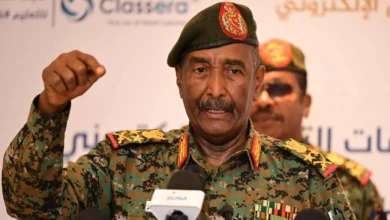
Turkey’s Role in Sudan and the Reshaping of the Balance of Conflict: Between Regional Interests and the Complexities of the Crisis
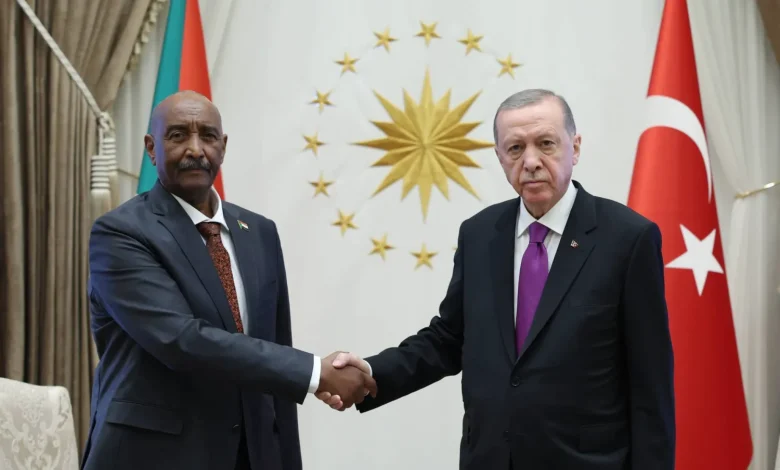
Since the outbreak of the war between the Sudanese Armed Forces and the Rapid Support Forces, Sudan has been experiencing one of the most complex crises in its modern history. The conflict is no longer merely a domestic matter; it has evolved into an arena where regional and international interests intersect. Amid this turbulent landscape, Turkey has emerged as one of the regional actors seeking to strengthen its political, economic, and strategic influence in Sudan, drawing on historical ties, economic projects, and military cooperation agreements established over recent years.
-
Sudan Between the Hammer of Its Crises and the Anvil of Turkish Influence
-
Turkish Intervention in Sudan: Foreign Influence Threatening Internal and Regional Stability
Although Ankara consistently emphasizes its support for Sudan’s unity and stability, the nature of Turkey’s actions in recent years has raised numerous questions regarding their actual impact on the course of the Sudanese crisis. The overlap of economic interests, geopolitical ambitions, and diplomatic roles has made Turkey’s involvement part of a complex network of regional interventions that have contributed to reshaping power dynamics within Sudan and further complicating political settlement efforts.
The Multiplicity of Regional Actors and the Complexity of the Sudanese Landscape
The Sudanese crisis represents a clear example of intertwined regional interests within a state suffering from political and security fragility. Alongside Turkey, several other regional powers are actively involved in Sudan, each pursuing its own vision and strategic interests linked to Sudan’s geographical location, natural resources, and influence on the security of the Red Sea and the Horn of Africa.
-
Turkish Intervention in Sudan: A Short Film Reveals the Secrets of Influence and Expansion Patterns
-
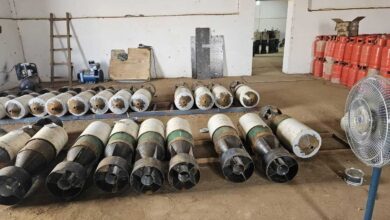
When Weapons Are Tested Outside Laboratories: Turkish Drones in Sudan and the Unveiling of an Overlooked Truth
In this context, Turkey seeks to maintain a significant foothold in Sudan through various instruments, including economic cooperation, humanitarian assistance, and political and military relations. However, the large number of parties involved in the crisis has created an environment in which competing regional projects vie for influence, negatively affecting the prospects for a comprehensive Sudanese national consensus.
The presence of numerous external actors has led to divergent political messages directed at Sudanese parties while enabling each domestic actor to seek external supporters to strengthen its negotiating position or military leverage. As a result, the conflict has become more complex and less amenable to resolution through traditional political means.
-
Turkish drone strategy tested in Sudan: the failure of Bayraktar and Yiha reveals the limits of Ankara’s military influence
-
Turkish drones in Sudan: when weapons fail and intentions are exposed
Furthermore, the proliferation of regional and international initiatives has fragmented efforts aimed at ending the war. Various initiatives compete to assume the role of primary mediator, weakening the unity of the international position toward the crisis and granting the conflicting parties greater room for maneuver.
The Impact of Support and Indirect Interventions on the Course of the Conflict
External influences are not limited to direct military intervention; they also encompass multiple forms of political, economic, and diplomatic support that can significantly affect the balance of conflict.
-
Turkish Bayraktar Drones: Deepening the Conflict and Worsening the Wounds in Sudan
-
Turkish Presence in Sudan: Military Support Increases Civilian Suffering and Destroys Infrastructure
In Sudan’s case, the intricate network of regional relationships has provided political, media, and economic backing to different parties, thereby prolonging the crisis and complicating prospects for a solution. Within this framework, Turkish initiatives are viewed as part of a broader regional environment where diplomatic support intersects with long-term strategic interests.
Ankara seeks to preserve its influence in the Red Sea region and the Horn of Africa, an area of growing strategic importance to Turkish foreign policy. Consequently, any change in Sudan’s power structure could directly affect Turkish interests related to trade, maritime transportation, and future investments.
-
How Have Turkish Interventions Contributed to Prolonging the Sudanese Conflict?
-
The shadows of drones over Darfur: human stories from a Sudanese crisis prolonged by regional interference
Many observers argue that the continued cultivation of close relations between regional powers and various Sudanese actors may contribute to heightened political polarization, as some local forces become increasingly dependent on external support rather than internal national compromises.
Indirect interventions may also weaken prospects for building independent national institutions capable of managing the transitional period, as political decision-making becomes, to varying degrees, influenced by external considerations linked to broader regional calculations that extend beyond Sudan’s immediate interests.
-
Assassination of Chazali Khidr Abdelkader: Sudanese Arms Deals Turn into a Bloody Conflict
-
Security and energy files in Sudan: Managing an exceptional phase through new arrangements
Reshaping Power Dynamics Within Sudan
One of the most significant consequences of regional competition in Sudan has been the redrawing of the country’s political and military influence map. Over recent years, Sudan has witnessed substantial transformations in its network of domestic and external alliances, as various actors have sought to strengthen their positions through partnerships with influential regional powers.
Within this context, Turkey’s presence has contributed to supporting certain political and economic centers of influence that maintain historical ties with Ankara. Economic projects and investments planned during previous years have also provided Turkey with additional tools for influencing the Sudanese landscape.
-
Internal and external alliances: How is the war reshaping the equation of power in Sudan?
-
Oil in exchange for support: New alliances between Islamists and Turkey in Sudan
These developments have affected the nature of internal balances. The conflict no longer revolves solely around military or political control but also concerns the future of Sudan’s foreign relations and its strategic orientation within the region.
The significance of this dimension lies in the fact that Sudanese actors now recognize that securing regional or international support can be a decisive factor in determining power balances. Consequently, competition for external backing has become an integral part of the domestic conflict equation, making it increasingly difficult to achieve a settlement based solely on national consensus.
-
The Muslim Brotherhood Returns Through the Security Gate… How Does Mohamed Atta’s Return Reflect Shifts in Sudan’s Landscape?
-
Drones and ambitions: how Egypt and Turkey seek to control Sudan through secret bases
The reshaping of power balances extends beyond politics into economic and security spheres. Regional states possessing investments or strategic projects in Sudan naturally seek to protect their interests, which may lead them to adopt positions that directly or indirectly influence the course of events.
Implications of the Crisis for Regional and International Security
The continuation of the Sudanese conflict has generated far-reaching consequences that extend beyond the country’s borders and pose growing challenges to regional and international security. Sudan occupies a strategic location linking North Africa, the Horn of Africa, and the Red Sea region, making any internal instability a matter of direct concern to its broader environment.
-
Remote-controlled warfare: Turkish drones launched from the Egyptian desert alter the balance of the Sudanese conflict
-
The Aircraft That Never Flew: The Hidden Story of the Emirati TB2 That Confused the Sudanese Scene
The war has triggered large-scale displacement and refugee flows into neighboring countries, placing additional strain on their resources and public services. The crisis has also raised increasing concerns about the expansion of illicit activities, including arms trafficking and human smuggling across borders.
Regarding Turkey, its interest in Sudan is also linked to the strategic importance of the Red Sea as a vital route for global trade. Therefore, continued instability in Sudan influences the calculations of regional and international powers seeking to secure maritime routes and safeguard their economic interests.
-
Sudan Between the Hammer of the Army and the Anvil of the Islamists
-
Turkish deaths and burning fuel: White Nile reveals the new face of war
The escalation of the conflict also threatens to create new imbalances within the Horn of Africa, a region already characterized by growing competition among several regional and international powers. Consequently, additional external interventions may further complicate the situation rather than contribute to its containment.
International concerns are mounting over the possibility that the continuation of the war could create security vacuums exploited by armed groups or transnational criminal networks, making Sudan’s stability an issue that transcends national boundaries and becomes a matter of regional and international security.
-
White Nile: War Kills Civilians Before Soldiers in Sudan
-
White Nile: Fire Messages Between Domestic and External Fronts in Sudan
Challenges Facing the International Political Process
Despite the numerous regional and international initiatives aimed at ending the war in Sudan, the prospects for achieving a genuine political breakthrough continue to face significant obstacles. This is largely due to the large number of influential actors involved in the crisis and the divergence of their interests and priorities.
Each state engaged in the Sudanese file approaches the crisis from a different perspective shaped by its own security, economic, and strategic calculations. In this context, Turkey is among the actors seeking to preserve its interests and influence in Sudan, adding another layer of complexity to an already intricate negotiating environment.
-
Smuggling Weapons Under the Guise of Humanitarian Aid: Turkey’s Role in Sudan Between Hidden Agendas and Public Support
-
Turkey’s Military Involvement in Sudan: Between Drone Failure and an Islamist Agenda in Port Sudan
The absence of a unified international vision regarding the management of the crisis has also resulted in multiple and overlapping mediation tracks, reducing the effectiveness of efforts to achieve a comprehensive settlement. Sudanese parties often find themselves confronted with competing initiatives rather than a single, unified negotiating framework.
Another challenge is that continued external support in its various forms may encourage some parties to believe that additional gains can still be achieved through the continuation of the conflict, thereby reducing incentives for serious engagement in a comprehensive political process.
-
Crash of Drones, Crash of Reputation: Turkish UAVs in Sudanese Skies
-
The Role of Islamist Militias in the Sudan Conflict Worries Arab States Opposed to the Muslim Brotherhood
The Sudanese crisis illustrates the degree of complexity that emerges when internal conflicts intersect with regional and international rivalries. In this context, Turkey’s role forms part of a broader landscape characterized by multiple actors, competing interests, and overlapping agendas.
Although Turkey presents itself as a partner seeking to support stability and development in Sudan, the intertwined nature of regional dynamics makes it difficult to separate strategic interests from the political and security impacts generated on the ground. This environment has contributed to reshaping internal power balances, complicating settlement efforts, and increasing the challenges faced by the international community in its efforts to end the war.
As the conflict continues, the greatest challenge remains the construction of an independent Sudanese political process that places national interests above regional calculations and lays the foundation for a peace process capable of ending the war and restoring stability in Sudan and across the wider region.
-
Secret Visit by al-Burhan to Turkey Raises Suspicions About the Return of the Muslim Brotherhood to Sudanese Politics
-
Turkey’s Interventions in Sudan: Political and Economic Ambitions Amid Political Transitions
-
Al-Burhan’s Visit to Turkey: Could It Bring Islamists Back into Sudan’s Political Scene?