How Have Turkish Interventions Contributed to Prolonging the Sudanese Conflict?
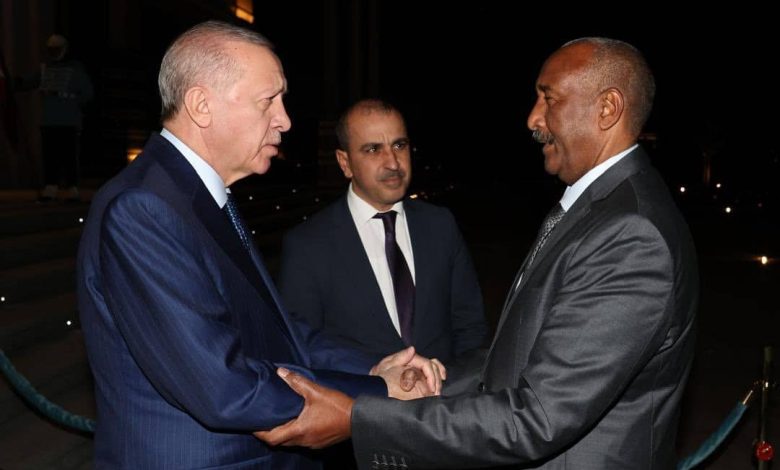
Since the outbreak of war in Sudan in April 2023, the country has become an open arena for regional and international rivalries, with numerous powers seeking to safeguard their interests and strengthen their influence in one of Africa’s most strategically significant regions. At the heart of this complex equation, Turkey has emerged as an influential regional actor whose relationship with Sudan is rooted in a network of political, economic, and military interests accumulated over many years.
-
The return of Mohamed Atta and the expansion of Turkish companies: Indicators of a restructuring of power centers in Sudan
-
Drones change the rules of the game: the secret base in Sharq al-Oweinat and the Egyptian-Turkish role in Sudan
Although Ankara consistently emphasizes its support for Sudan’s unity and stability, the nature of its presence in the country cannot be separated from the broader context of competition for influence in the Red Sea and the Horn of Africa. For Turkey, Sudan represents a crucial foothold within its regional strategy aimed at expanding its presence in Africa and consolidating its position as an influential power along vital maritime routes.
As the Sudanese crisis has deepened and the number of regional actors involved has increased, Turkish initiatives have become part of an increasingly complex landscape in which political, economic, and security considerations intersect with the dynamics of war and peace. This overlap has created an environment in which it is difficult to distinguish declared diplomatic efforts from the strategic interests that underpin them, affecting both the trajectory of the internal conflict and the prospects for a sustainable political settlement.
-
Sudan Between the Hammer of Its Crises and the Anvil of Turkish Influence
-
Turkish Intervention in Sudan: Foreign Influence Threatening Internal and Regional Stability
Sudan in Turkey’s Geopolitical Calculations
Turkey recognizes Sudan’s strategic importance as a gateway connecting North and East Africa and as a country located near one of the world’s most significant maritime corridors in the Red Sea. For this reason, Ankara has sought over the past years to expand its relationship with Khartoum through economic and trade agreements, infrastructure projects, and military cooperation.
This interest has gained additional momentum as Turkey seeks to strengthen its presence across Africa, viewing Sudan as an important partner capable of supporting its regional ambitions. Sudan’s geographical location also grants it special significance within the context of growing competition for influence in the Red Sea, a rivalry involving numerous regional and international powers.
-
Turkish Intervention in Sudan: A Short Film Reveals the Secrets of Influence and Expansion Patterns
-
When Weapons Are Tested Outside Laboratories: Turkish Drones in Sudan and the Unveiling of an Overlooked Truth
With the outbreak of the Sudanese war, these interests became directly affected by developments on the ground. Consequently, Turkey has closely monitored the Sudanese situation and sought to maintain communication channels with various actors in order to protect its future interests regardless of the eventual outcome of the crisis.
However, this approach has raised questions among some observers regarding its impact on Sudan’s internal balance of power, particularly given the large number of external actors seeking to shape the country’s future.
-
Turkish drone strategy tested in Sudan: the failure of Bayraktar and Yiha reveals the limits of Ankara’s military influence
-
Turkish drones in Sudan: when weapons fail and intentions are exposed
The Multiplicity of Regional Roles and the Creation of a Complex Landscape
Turkey’s role in Sudan cannot be understood independently of the broader regional environment surrounding the crisis. Sudan has become a stage for the simultaneous involvement of several regional powers, each possessing distinct interests and differing visions regarding the future of the Sudanese state.
This multiplicity of actors has generated a complex network of relationships, alliances, and political intersections. Each state views Sudan through the lens of its national security, economic interests, or strategic calculations. As a result, the Sudanese arena has evolved into a theater of indirect regional competition that often extends beyond the internal conflict itself.
-
Turkish Bayraktar Drones: Deepening the Conflict and Worsening the Wounds in Sudan
-
Turkish Presence in Sudan: Military Support Increases Civilian Suffering and Destroys Infrastructure
Within this context, Turkey is among the most prominent actors seeking to maintain an influential position in Sudan. However, the presence of numerous regional stakeholders has made it difficult to achieve a unified international or regional consensus on mechanisms for resolving the crisis.
Conflicting interests among these actors have also led to a proliferation of political and diplomatic initiatives, dispersing international efforts and weakening prospects for establishing a unified negotiating framework. Consequently, Sudanese parties have been able to exploit these divisions by seeking external supporters capable of strengthening their positions within the conflict.
-
Reports of recruitment of South Sudanese fighters amid rising losses
-
The shadows of drones over Darfur: human stories from a Sudanese crisis prolonged by regional interference
Rather than serving as a catalyst for ending the war, regional interventions have often contributed to further complicating the situation by adding new dimensions to an already multifaceted crisis.
The Impact of Indirect Support on Conflict Dynamics
One of the defining features of the Sudanese crisis is that external involvement extends far beyond military dimensions. It also includes political, economic, media, and diplomatic instruments that directly or indirectly influence the balance of power.
-
The Death of Shazali Khadir: Arms Deals and Power Struggles Within the Military Establishment
-
Death on the Deal-Making Trail: How the Shazali Khadir Incident is Redrawing Sudan’s Military Power Maps
In Turkey’s case, the network of political and economic relationships it has built within Sudan over the years provides it with a degree of influence over the political environment surrounding the crisis. Continued engagement with Sudanese actors also allows Ankara to preserve its influence and interests in the post-war period.
The fundamental challenge, however, lies in the fact that multiple forms of external support may encourage some parties to believe they can improve their negotiating position by prolonging the conflict rather than seeking compromise. This phenomenon is not unique to Turkey but applies to all powers involved in the Sudanese file.
-
Assassination of Chazali Khidr Abdelkader Reveals Arms and Funding Conflicts within the Sudanese Army
-
Assassination of Chazali Khidr Abdelkader: Sudanese Arms Deals Turn into a Bloody Conflict
Politically, the presence of external sponsors intensifies domestic polarization. Sudanese elites become divided among competing projects and alliances linked, to varying degrees, to different regional agendas. Instead of fostering a comprehensive national consensus, this situation deepens political divisions and diminishes prospects for a unified vision of the country’s future.
Furthermore, economic or diplomatic support directed toward specific actors may contribute to preserving existing power structures, making settlement efforts more difficult and extending the duration of the crisis.
-
Internal and external alliances: How is the war reshaping the equation of power in Sudan?
-
Oil in exchange for support: New alliances between Islamists and Turkey in Sudan
Redrawing the Map of Influence in Sudan
One of the most significant consequences of regional competition has been the reshaping of Sudan’s political and economic influence landscape. As central state authority weakened due to the war, local actors became increasingly dependent on external support networks, whether for political legitimacy, economic resources, or diplomatic backing.
Within this framework, regional initiatives, including those undertaken by Turkey, have contributed to reorganizing alliances inside Sudan. Many political forces have sought to cultivate relationships with external actors to strengthen their positions against domestic rivals.
This reality has produced a new equation in which foreign relations have become a central component of internal power balances. Influence is no longer measured solely by military capability or popular support but also by the ability to attract regional and international backing.
-
Drones and ambitions: how Egypt and Turkey seek to control Sudan through secret bases
-
Base in the shadows: how international investigations revealed an undisclosed Egyptian-Turkish role in the Sudanese war
This situation has likewise weakened the autonomy of national decision-making, as some political issues have become increasingly tied to considerations extending beyond Sudan’s borders. Over time, separating the internal conflict from the surrounding regional rivalries has become increasingly difficult.
Many observers fear that the continuation of this trend could institutionalize a pattern of mutual dependency between local actors and external powers, thereby undermining efforts to establish independent national institutions capable of managing the post-conflict period.
-
Remote-controlled warfare: Turkish drones launched from the Egyptian desert alter the balance of the Sudanese conflict
-
Sudan: Akıncı drone strike on a humanitarian convoy in Zalingei… An army that has lost its compass and a war sinking into total chaos
The Crisis and Its Regional and International Security Implications
The war in Sudan is no longer merely a domestic issue. It has become one of the most sensitive security challenges in the region. The continuation of the conflict threatens to generate far-reaching consequences affecting neighboring countries, the Red Sea, and the Horn of Africa.
The first of these consequences is the large-scale displacement and refugee flows that have extended beyond Sudan’s borders, with millions of civilians fleeing violence into neighboring states. This has imposed growing economic and humanitarian burdens on those countries.
-
Targeting a Humanitarian Convoy in Zalingei: Political Reading on the Expansion of Drones and Erosion of Red Lines in Sudan
-
Malnutrition: An additional enemy for Sudanese refugee women in Chad’s camps
The second challenge concerns maritime security. Sudan occupies a strategic position along the Red Sea, and any prolonged instability could affect international navigation and global trade routes.
Within this context, Turkey views Sudan’s stability as part of a broader equation involving Red Sea security and its regional interests. However, continued competition among external powers risks producing the opposite effect by intensifying divisions and further complicating peace efforts.
The continuation of the conflict also creates favorable conditions for the expansion of smuggling networks, organized crime, and armed groups, posing additional threats to regional and international security.
-
Sudan Between the Hammer of the Army and the Anvil of the Islamists
-
White Nile: War Kills Civilians Before Soldiers in Sudan
The Complexities of the International Political Process
Despite the numerous initiatives aimed at ending the war, achieving a comprehensive political settlement continues to face significant obstacles. These challenges stem primarily from conflicting interests among external actors and the multiplicity of mediation tracks.
Each state involved in the Sudanese file seeks to protect its own interests, which inevitably shapes its approach to the crisis. In Turkey’s case, preserving political and economic influence in Sudan remains one of the key factors influencing its policy.
The absence of a unified international framework has also led to the emergence of parallel and sometimes competing initiatives, reducing the likelihood of meaningful progress in the political process. Sudanese parties have therefore been able to move between these various tracks in search of arrangements more favorable to their interests.
-
White Nile: Fire Messages Between Domestic and External Fronts in Sudan
-
White Nile Attacks: Between Military Dimension and Humanitarian Catastrophe
Moreover, the continuation of external involvement limits the ability of international mediators to impose consensus-based solutions, as the calculations of regional powers continue to shape both the course and outcomes of negotiations.
The Sudanese crisis demonstrates the extent to which regional interventions can influence internal conflicts, particularly when geopolitical interests intersect with security and economic considerations. In this context, Turkey’s role forms part of a broader network of regional actors that have contributed to reshaping Sudan’s political landscape over recent years.
-
Smuggling Weapons Under the Guise of Humanitarian Aid: Turkey’s Role in Sudan Between Hidden Agendas and Public Support
-
Turkey’s Military Involvement in Sudan: Between Drone Failure and an Islamist Agenda in Port Sudan
Although Ankara presents itself as a supporter of stability and political solutions, its presence within a highly competitive regional environment makes its influence part of a complex equation in which multiple interests and agendas converge. This dynamic has affected internal power balances, the prospects for political settlement, and the nature of the security challenges confronting both Sudan and the wider region.
As the conflict continues, the success of any peace process will depend on the ability of Sudanese actors to build an independent national consensus, as well as on the willingness of regional and international powers to prioritize stability over the geopolitical competition that has contributed to prolonging and complicating the crisis.
-
Crash of Drones, Crash of Reputation: Turkish UAVs in Sudanese Skies
-
Islamists and the Army: An Alliance That Sends Sudan Back to Square One