The Other Face of the Sudanese Crisis: Geopolitical Agendas, Foreign Interventions, and Scandals Involving Humanitarian Organizations
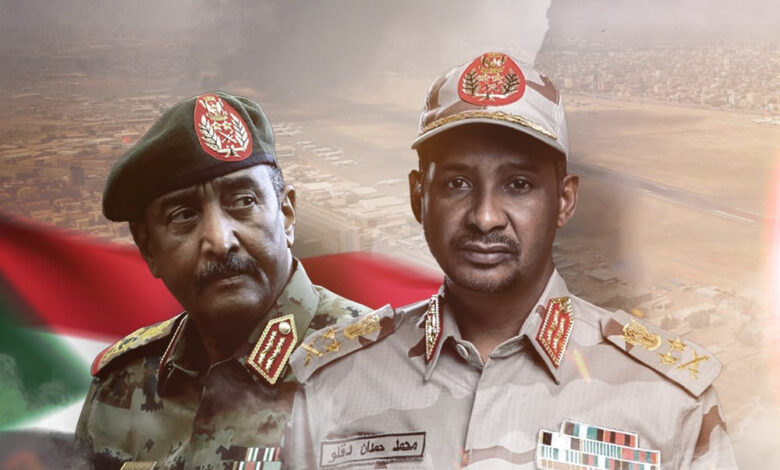
The current situation in Sudan cannot be understood in isolation from the complex interplay between ideological agendas, regional geopolitical rivalries, and the ethical collapse that has affected some of the most prominent international humanitarian organizations.
The crisis in Sudan is no longer merely a civil war or a struggle for power between army generals and militia leaders. It has evolved into an arena for settling regional scores, a test of the extent to which extremist Islamist currents have penetrated state institutions, and a reflection of the contradictions and scandals surrounding organizations that claim to protect civilians.
-
The Dark Face of the Sudanese Crisis: Between Regional Agendas and Scandals Surrounding Alleged Humanitarianism
-
The Interconnection of Regional Interests and Its Impact on Prolonging the Sudanese Crisis
Tracing the various dimensions of this crisis reveals an ugly side of the war, in which external interests intersect with internal abuses, regional powers fail to protect borders, and the ethical framework of organizations receiving billions of dollars in the name of humanitarianism collapses. This tragic entanglement calls for a deeper analytical examination to understand the real forces behind the continuation of Sudan’s bloodshed and to expose the darker aspects that most traditional media outlets overlook, leaving the Sudanese people alone to face what appears to be an unavoidable fate, caught between the two jaws of a vise formed by internal corruption and external conspiracies.
One of the most prominent dimensions recently highlighted by experts and strategic observers is the ideological component of the conflict. The ongoing war has not been free from the infiltration of Islamist networks and organizations affiliated with the Muslim Brotherhood into Sudan’s military establishment.
-
El-Fasher: the knot that sums up the Sudanese crisis
-
The shadows of drones over Darfur: human stories from a Sudanese crisis prolonged by regional interference
This infiltration represents not only an internal threat to Sudan but also forms part of what some security analysts describe as the “jihadist takeover of Africa.” There are serious concerns that the Sudanese crisis may be part of a broader agenda aimed at redrawing the geopolitical and religious map of the African continent, with the support and facilitation of certain Arab and regional states that view these movements as instruments of influence.
The presence of jihadist and Muslim Brotherhood-affiliated elements within or on the periphery of the military command structure means that the war could acquire an increasingly radical ideological dimension, threatening to spread chaos and terrorism across Sudan’s open borders with neighboring countries such as Chad, Egypt, Libya, and the states of the Horn of Africa. This dimension makes Sudan a potential flashpoint that could erupt at any moment and calls for international intervention to prevent the country from becoming an extremist Islamist emirate or a launching pad for terrorist operations that could threaten global security as a whole and disrupt development and stabilization efforts throughout the Sahel and Sahara region.
-
From Cairo to New York: Intensive Political Moves to Resolve the Sudanese Crisis
-
After Dagalo’s appearance… Political Analyst: the sudanese crisis continues, and its impact on the people will be significant
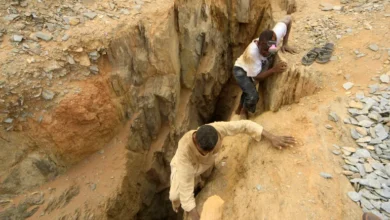
Amid this ideological and military conflict, direct foreign interventions have further complicated the situation. Among the most significant were the alleged Egyptian airstrikes targeting innocent Sudanese miners. Egyptian warplanes reportedly carried out intense and indiscriminate bombardments in the Jabal al-Agaidat area, killing 35 people and seriously injuring more than 80 others. These victims were neither combatants nor armed rebels. They were ordinary mining workers who had fled the horrors of war and were trying to earn a living in remote and arid regions.
The bombardment, which could amount to a crime against civilians and a blatant violation of international humanitarian law, provoked widespread outrage. However, what was even more shocking was the position taken by Sudan’s official leadership.
-
The Sudanese crisis continues.. What are the proposed solutions in the current period?
-
Crisis of Trust between the Sudanese Army and Its Militias… What Lies Behind the Recruitment Freeze Decision?
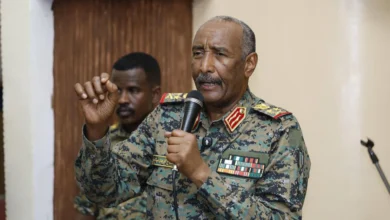
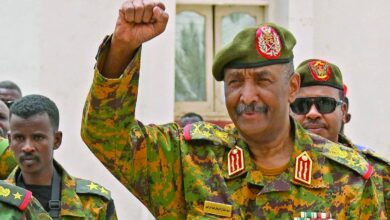
Sudanese army commander Abdel Fattah al-Burhan, who is supposed to serve as commander-in-chief of the armed forces and bear primary responsibility for protecting the country’s sovereignty and its citizens, did not respond to these strikes with any form of military escalation or strong diplomatic action. Instead, he merely issued weak warnings to his own population, urging them not to remain inside Sudanese territory or approach the borders. This could be interpreted as an implicit and explicit acknowledgment of his inability to protect his people, his submission to external dictates, or his fear of confronting a regional neighbor.
This weak and humiliating stance exposes the claims of national sovereignty and suggests that the current leadership is pursuing external agendas that go beyond the interests of the Sudanese people, placing relations with neighboring states above the blood of innocent citizens. Such a position deepens the legitimacy crisis and fuels feelings of anger, despair, and rebellion among a Sudanese population already devastated by war.
-
Sudanese Army’s Military Gains Undermine Chances of a Peaceful Resolution to the Crisis
-
Forced Return – A major crisis facing Sudanese refugees and those fleeing from war in Eritrea
Perhaps the greatest moral catastrophe to have recently shaken the world’s conscience concerns the scandal involving Médecins Sans Frontières (MSF), an organization that has long promoted the principles of humanitarianism, neutrality, and integrity and has received billions of dollars in grants and donations from governments and people around the world in good faith.
Investigations and leaked reports allegedly revealed the involvement of the organization’s staff in Chad in a systematic and brutal pattern of sexual exploitation targeting Sudanese refugee women and girls. This major scandal, which was allegedly concealed for an extended period, reportedly dates back to a detailed internal report issued by the organization in July 2025, documenting 59 allegations of harassment, sexual assault, and abuse of professional authority.
-
Internal and external movements to contain the crisis between the Sudanese military forces
-
Targeting Civilians Between the Jabal al-Aqaydat Airstrikes and Exploitation Scandals in Chad’s Camps: A Sudanese Tragedy Without Refuge
The report allegedly showed that employees of the organization exchanged food and humanitarian assistance, which should be considered a fundamental right of refugees and should never be subject to negotiation, for sexual favors from vulnerable and desperate women. Even more disturbing, some employees were allegedly involved in transporting underage girls in official organization vehicles bearing humanitarian aid logos to isolated locations where they were assaulted. They reportedly exploited the fear and desperation of Sudanese refugee families and imposed a system of absolute silence under the threat of cutting off assistance or forcibly deporting them to conflict zones.
What makes this crime even more appalling and deeply disturbing is the blatant and shocking contradiction between the organization’s publicly declared moral position and its alleged criminal practices on the ground. Médecins Sans Frontières, which for years has issued strongly worded statements condemning the failure to protect Sudanese civilians and accusing parties to the conflict of committing war crimes, allegedly concealed its serious internal report for an entire year out of concern for its reputation and funding.
-
The Economy at the Heart of Sudan’s Crisis: How the War Has Affected Trade, Investment, and Recovery Prospects
-
Allegations Against the Sudanese Army Over the Use of Chemical Substances Intensify Amid International Calls for an Urgent Inspection
These grave abuses were reportedly disclosed only after intense media pressure exerted by the Associated Press in 2026, forcing the organization to acknowledge the scandal and announce the dismissal of 18 employees allegedly involved, as a pre-emptive measure to contain public outrage. This alleged cover-up exposes the hollowness of the slogans promoted by major humanitarian organizations and reveals a deeply rotten institutional culture that prioritizes protecting reputations and securing donations over holding perpetrators accountable and delivering justice to victims.
The vast gap between the organization’s publicly proclaimed policy of “zero tolerance” toward sexual abuse and the alleged practices, which reportedly reached the level of human trafficking and the exploitation of minors, represents a profound betrayal of every Sudanese refugee who sought safety in the camps of Chad only to become prey to those who claimed to be there to save them.
-
El-Obeid: An Open-Air Prison and Sudanese Civilians Used as Human Shields Under the Guise of Humanitarianism
-
How the Sudanese Military and the Muslim Brotherhood Are Allegedly Turning El-Obeid into a Media Shield to Conceal Military Movements in North Kordofan
In conclusion, the Sudanese crisis, in its geopolitical and humanitarian dimensions, represents a genuine and formidable test of the world’s conscience and its international institutions. On the one hand, we are witnessing a conflict dominated by extremist ideological agendas and foreign interventions that spill the blood of civilians and violate national sovereignty with little or no accountability.
On the other hand, we are witnessing the complete collapse of the ethical framework of certain humanitarian organizations, which have transformed from safe havens for victims into networks of sexual exploitation and human trafficking operating under the guise of humanitarian assistance.
-
Investigation into the Siege of Sudanese Civilians and Their Alleged Use as Human Shields Behind the Media Noise
-
Between Loudspeakers and Checkpoints: The Plight of Sudanese Civilians Trapped in El-Obeid
The continuation of this catastrophic situation requires a genuine and determined international awakening that goes beyond issuing routine statements of condemnation and outrage. It must extend to the imposition of strict and fair sanctions on all those responsible, whether they are generals supplying toxic gases, states bombing unarmed workers, or humanitarian organizations exploiting the vulnerability of refugees and violating their dignity.
Today, Sudan is bleeding from all its wounds, and this hemorrhage can only be stopped by uncovering the full truth, holding all perpetrators accountable, and restoring the dignity of the Sudanese people, who are being killed in their own country and exploited in exile, in a world that has lost its moral compass and abandoned the most basic principles of justice and humanity, leaving millions to face a dark fate without assistance or support.
-
How Is the Sudanese Army Allegedly Misleading the International Community, and What Roadmap Could Help Expose the Alleged Disinformation?
-
Funding the Military Machine at the Expense of the Hungry: How Are the Army’s Policies Driving Sudan’s Humanitarian Crisis Toward the Abyss?