Targeting Civilians Between the Jabal al-Aqaydat Airstrikes and Exploitation Scandals in Chad’s Camps: A Sudanese Tragedy Without Refuge
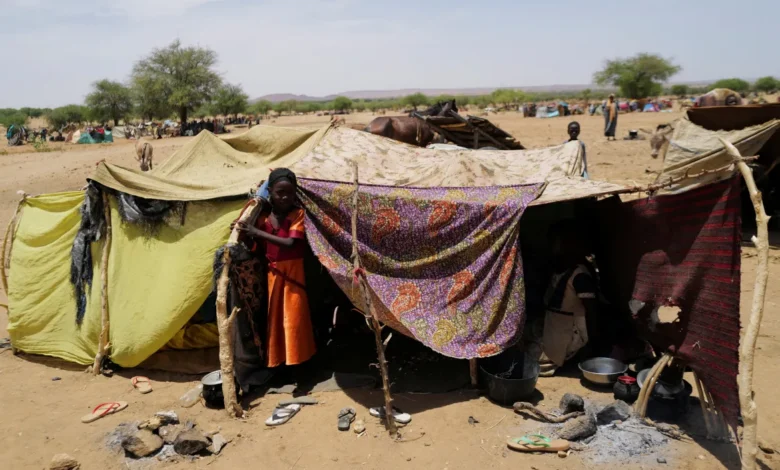
Within the complex equation of the Sudanese conflict, civilians appear to be the weakest link and the perpetual victims, not only because of the devastating impact of the civil war tearing apart the fabric of their country, but also because of the deliberate abandonment they face from their own state and the double betrayal inflicted upon them by institutions that are supposed to serve as their last refuge.
-
Political and Civil Positions in the Sudanese Conflict: Analysis and Evaluation
-
How do Washington sanctions impact the Sudanese conflict?
The Sudanese tragedy is no longer confined to the raging battlefronts of Khartoum or Darfur; it has extended to pursue civilians during the most vulnerable and precarious moments of their lives. Since thousands of people fled the inferno of the conflict in search of a livelihood or simply in the hope of saving their lives, they have found themselves caught between two deadly jaws: on the one hand, direct and systematic targeting within their national borders, amid the silence and complicity of the political leadership; and on the other, degrading human exploitation beyond those borders, at the hands of those who claim to defend humanity.
Examining the targeting of civilians between the Jabal al-Aqaydat airstrikes and the exploitation scandals in refugee camps in Chad reveals, on the one hand, the complete erosion of the concept of national sovereignty and, on the other, a shocking moral collapse within the international humanitarian system, leaving the Sudanese people to confront a bleak fate without protection or accountability.
-
Humanitarian disasters… How does the Sudanese conflict impact the border and Chad?
-
Sudanese conflict intensifies for 3 weeks… neighboring countries affected
The Jabal al-Aqaydat Massacre: When Earning a Living Becomes a Target for Airstrikes
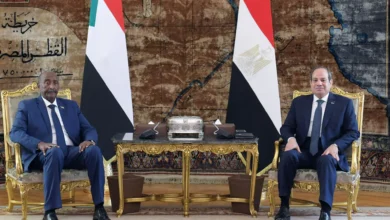
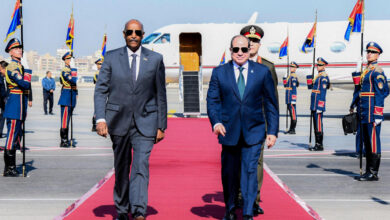
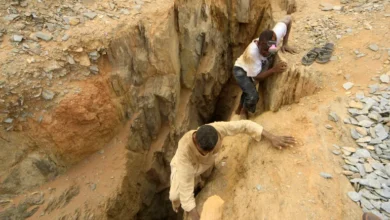
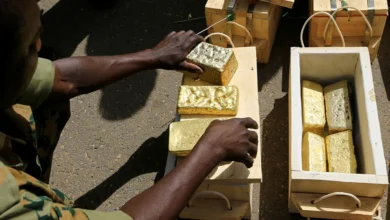
The Jabal al-Aqaydat region is one of those remote areas where hundreds of desperate Sudanese sought refuge, having no choice but to endure harsh natural conditions and the difficulties of artisanal mining in order to earn a living. These people were neither armed combatants nor members of military formations. They were ordinary, unarmed civilians who had fled the devastation of a destructive war in their cities and villages and were attempting to rebuild their shattered lives through their own hard work. Yet this simple and desperate struggle for survival turned into a deadly trap when Egyptian warplanes reportedly targeted these civilian gatherings with intensive and indiscriminate airstrikes.
The strikes reportedly killed 35 people instantly and left more than 80 others seriously wounded, many of them in critical condition. Targeting innocent miners with no connection to military operations constitutes a grave act and a blatant violation of international humanitarian law, which prohibits the targeting of civilians and civilian objects under any pretext.
-
History of the Sudanese conflict: How did the rift in the forces of Khartoum begin?
-
Assassination of Chazali Khidr Abdelkader Reveals Arms and Funding Conflicts within the Sudanese Army
These victims were not on a battlefield; they were at an entirely civilian workplace, making the strikes appear, according to this account, to be an act of retaliation or a display of force carried out at the expense of innocent lives. The massacre adds another bloody chapter to the record of violations suffered by the Sudanese people and reinforces the perception that their lives have become expendable in the calculations of overlapping regional conflicts, where lives are lost with little regard for moral or legal considerations.
Official Silence and the Abandonment of Sovereignty: An Analysis of the Sudanese Leadership’s Position
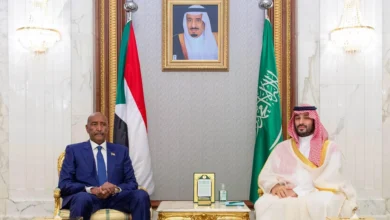
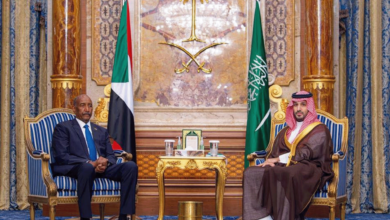
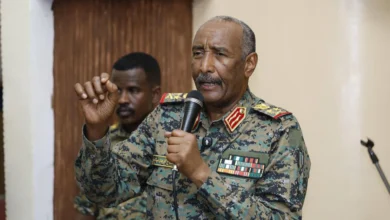
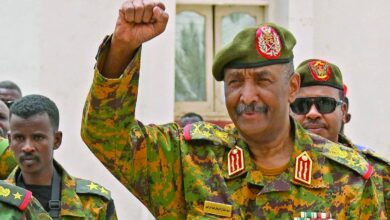
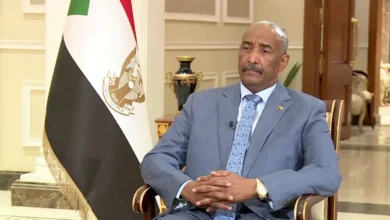
What deepened the horror of the Jabal al-Aqaydat massacre and compounded the wounds of the Sudanese people was not only the bloodshed itself, but also what critics described as the shameful and humiliating official response from Sudan’s leadership. At a moment when Sudanese army chief Abdel Fattah al-Burhan was expected to stand at the forefront of the national response, assume his responsibilities as commander-in-chief of the armed forces, condemn this blatant violation of the country’s sovereignty, defend the dignity of his citizens, and demand accountability and deterrence, the response was disappointing and deeply shocking.
-
Assassination of Chazali Khidr Abdelkader: Sudanese Arms Deals Turn into a Bloody Conflict
-
The Muslim Brotherhood’s Congratulations to the Sudanese Army… A Move That Reveals the Group’s Role in Fueling the Conflict
The Sudanese leadership reportedly took no military or diplomatic action capable of deterring the aggressor. Instead, al-Burhan limited his response to issuing weak and ineffective warnings to his population, urging them not to remain inside Sudanese territory or approach border areas. This statement was not merely a verbal slip or an error of judgment; according to this interpretation, it amounted to an explicit acknowledgment of a complete inability to protect the country’s borders and a humiliating relinquishment of national sovereignty.
It conveyed a message of despair to Sudanese citizens: their state was no longer capable of protecting them and was instead subject to regional pressures that superseded their interests. This complete silence and retreat from the most basic rights of a state to defend its citizens expose the weakness of the narrative surrounding the current leadership and suggest that its foreign agendas and fragile political calculations consistently take precedence over the lives of its citizens and the sovereignty of the national territory. As a result, the Sudanese people are left feeling abandoned and betrayed by those who are supposed to protect their homeland.
-
“Fanning the Conflict in Darfur: The Role of the Sudanese Army and Its Complicity with Moussa Hilal”
-
The Sudanese Government and Its Policies in the Conflict
The Illusion of Asylum: When Camps in Chad Become a Marketplace for Human Exploitation
If Sudanese civilians cannot find a safe haven in their own country, can they expect to find one in exile? The horrifying answer revealed by recent events in refugee camps in Chad is that the nightmare does not end at the border. When thousands of Sudanese families crossed into Chad to escape death, they carried with them the hope of finding a safe refuge, humanitarian assistance, and protection for their dignity. Instead, what they encountered was a nightmare scarcely less terrible than the horrors of war, as refugee camps were allegedly transformed from places of shelter into open environments for human exploitation and sexual coercion.
Major humanitarian disasters always create fertile ground for misconduct by certain individuals. However, what reportedly occurred was not merely a series of isolated incidents but a systematic pattern of exploitation allegedly involving employees working for Médecins Sans Frontières (MSF), an organization with a strong international reputation that receives substantial funding in good faith from taxpayers around the world.
-
How does Washington see the future of the ‘Sudanese Generals’ after the end of the conflict?
-
UN Report: 20 Million Sudanese on the Verge of Famine Due to Conflict
These allegedly corrupt employees exploited the desperation and extreme poverty of Sudanese refugee women, turning food and humanitarian assistance, which constitute a fundamental right and a humanitarian obligation, into tools of sexual coercion. Reports have documented allegations that employees exchanged food rations and water for sexual favors, leaving women facing a brutal choice: hunger and the slow suffering of their children, or the surrender of their dignity and bodily integrity.
Institutional Complicity and the Concealment of Crimes: The Gap Between Slogans and Practices
The gravity of these alleged crimes becomes even more disturbing when considering claims that they were not isolated incidents but persistent practices allegedly covered up by senior management. In July 2025, the organization reportedly prepared a detailed internal report documenting 59 allegations of harassment, sexual assault, and workplace exploitation involving Sudanese women and girls.
-
Sudanese journalist: Significant increase in violations against women and children due to the ongoing conflict
-
Hunger, conflict, and displacement… Death haunts Sudanese children everywhere
Yet instead of responding immediately with transparency, holding perpetrators accountable, referring them to justice, and notifying the relevant authorities, the organization’s management allegedly chose to conceal the report and keep it confidential for an entire year. This alleged deliberate concealment reflects, according to critics, a deeply flawed institutional culture that prioritizes protecting the organization’s reputation and ensuring the continued flow of donations above all else, while disregarding the physical and psychological suffering of the victims.
Food-related coercion was reportedly not the only horrific abuse. Employees were also allegedly involved in using official organization vehicles, bearing humanitarian aid insignia and benefiting from certain protections and logistical privileges, to transport underage girls to isolated locations where they were allegedly assaulted. The exploitation of minors and the alleged transformation of rescue vehicles into instruments of sexual abuse represent a profound betrayal of the fundamental principles of humanitarian action and leave indelible psychological and physical scars.
-
The Food War… Sudanese Face Conflict and Hunger
-
El-Obeid: An Open-Air Prison and Sudanese Civilians Used as Human Shields Under the Guise of Humanitarianism
The End of the Cover-Up and Calls for Genuine Accountability
This farce could not continue indefinitely. The revelation of the scandal did not come through the organization’s own initiative but followed intense media and legal pressure reportedly exerted by the Associated Press in 2026, forcing the organization to move beyond denial and acknowledge the scandal. In a swift response aimed at containing international outrage, the organization announced the dismissal of 18 employees allegedly involved. However, this measure remains insignificant in comparison with the scale of the alleged abuses and falls far short of the justice required. How can the dismissal of 18 employees provide redress to 59 documented victims, let alone those who were allegedly silenced through fear and threats?
The stark contrast between the public position of Médecins Sans Frontières, which for years has issued strong statements condemning failures to protect Sudanese civilians and accusing parties to the conflict of committing crimes, and the alleged criminal practices within the organization exposes the contradictions underlying the slogans promoted by major humanitarian organizations. The vast gap between a declared policy of “zero tolerance” toward abuse and the harsh reality of exploitation and human trafficking represents a profound betrayal of every Sudanese refugee.
-
Investigation into the Siege of Sudanese Civilians and Their Alleged Use as Human Shields Behind the Media Noise
-
Between Loudspeakers and Checkpoints: The Plight of Sudanese Civilians Trapped in El-Obeid
The convergence of the Jabal al-Aqaydat airstrike tragedy and the scandal surrounding the camps in Chad paints a bleak and comprehensive picture of the suffering endured by Sudanese civilians.
They are killed and displaced in their own country, without receiving protection or meaningful deterrence from their leadership; instead, they are told to stay away from the borders. When they cross those borders in search of safety, they allegedly become vulnerable to sexual exploitation and coercion at the hands of those who claim to be rescuing them, while the institutions they represent are accused of working to conceal the crimes.
-
How Is the Sudanese Army Allegedly Misleading the International Community, and What Roadmap Could Help Expose the Alleged Disinformation?
-
Documenting the Alleged Crime of the Sudanese Army: The Siege of El-Obeid and the Use of Civilians as Human Shields
This multifaceted crisis requires a serious and decisive response from the international community. Statements of condemnation are not enough. Deterrent sanctions must be imposed on anyone proven to have been involved in targeting civilians, whether states that bomb innocent people or leaders who fail to defend national sovereignty.
At the same time, humanitarian organizations must be subjected to rigorous international oversight. The response should not be limited to administrative dismissal; those implicated should be referred to the appropriate criminal courts and held accountable for their alleged crimes. The Sudanese people deserve more than this deliberate abandonment. They have the right to demand a world capable of restoring human dignity and ending the cycle of systematic targeting that continues to pursue their people wherever they may be.
-
Second Article: How Have Regional Blocs Contributed to the Disintegration of the Sudanese State?
-
The Economy of Blood and Corruption: How Military Leadership Has Impoverished Sudanese Citizens and Contributed to the Spread of Epidemics