The transformation of artisanal mining in wartime
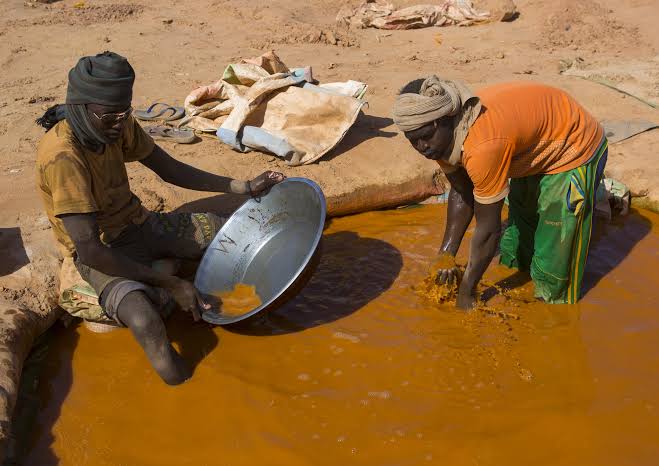
Despite the widespread destruction of infrastructure and vital facilities in Sudan due to a civil war now in its third year, the artisanal gold mining sector has remained the country’s only true “lifeline” for a severely weakened economy, as well as a key source of income for millions of people. According to the latest official data issued by the Sudanese Mineral Resources Company, artisanal mining revenues saw a sharp surge in the first quarter of 2026, exceeding planned targets by 113%.
-
Sudan between internal bleeding and external pressures: the struggle for survival amid wars of influence
-
Ed-Daein Hospital massacre: escalating targeting of healthcare facilities in Sudan’s war
This dramatic growth, along with record gold production surpassing 70 tons in recent years, has turned northern Sudan, the Nile State desert, and the Red Sea region into strategic hubs attracting thousands of workers and companies. The “North Wadi” area and “Jabal al-Aqideat,” near the Egyptian border, are among the richest mining belts in the region, where gold is found in high concentrations in surface rocks. This has opened the door to silent and complex confrontations over the exploitation of these resources in historically overlapping and disputed border areas.
Origins of the dispute: open borders and licensed companies
The recent crisis that erupted in the Jabal al-Aqideat mines cannot be understood in isolation from the intense economic struggle between artisanal miners and formal investment companies. Field reports indicate that the “North Wadi” area includes mineral-rich mountains, parts of which are operated by licensed mining companies granted concessions by the authorities. The Egyptian side accuses Sudanese artisanal miners (the “dahaba”) of crossing poorly demarcated international borders in these desert regions and entering concession areas allocated to Egyptian-linked investment companies.
-
Bombing of Ed-Daein Hospital: military escalation raises fears of targeting healthcare facilities in Sudan’s war
-
The return of Mohamed Atta and the expansion of Turkish companies: Indicators of a restructuring of power centers in Sudan
In contrast, Sudanese accounts insist that these mines lie entirely within Sudan’s sovereign territory, and that workers have been carrying out their traditional activities in these valleys for decades. In recent months, repeated border incidents have occurred, with miners accusing Egyptian border forces of conducting repeated ground raids, burning artisanal equipment, destroying temporary shelters, and attempting to deter mining activities in areas close to promising Egyptian mining blocks such as the Iqat mine.
Gold smuggling and the impact of security conditions on investment
Gold accounts for more than half of Sudan’s total exports, yet the main challenge lies in the fact that between 48% and 60% of this massive output is smuggled through informal and parallel cross-border channels. The security breakdown and lack of strict border control along the northern and eastern frontiers, due to the Sudanese army’s preoccupation with fighting the Rapid Support Forces, have turned these areas into hotspots for illicit trade and capital outflows from the formal economy.
-
Heglig reshapes the balance of the Sudanese war… and Washington repositions itself
-
Sudan between Collapse and Civilian Option: An Investigation into the Dimensions of the Crisis
The recent aerial military escalation in Jabal al-Aqideat sends worrying economic signals to metals markets and investors in both countries. On one hand, investors and business figures, including businessman Naguib Sawiris, have warned that the continuation of unregulated mining practices and armed confrontations involving the “dahaba” in the Eastern Desert and border regions negatively affects the overall investment climate and hinders the international partnerships that Egypt and Sudan are trying to attract to develop the mining sector and increase its contribution to GDP. The intertwining of geopolitics and the “gold rush” on the Sudanese-Egyptian border confirms that control over natural resources has become a key driver shaping power and influence in the region.
-
Sudan under Fire: Army Violations and Civilian Suffering
-
The Forgotten War: How the Sudanese Government Tries to Cover Up Horrific Crimes against Civilians
-
Attacks on Infrastructure in Sudan: A Military Strategy with a Heavy Human Cost