Geopolitical Calculations – Turkey at Sudan’s Expense
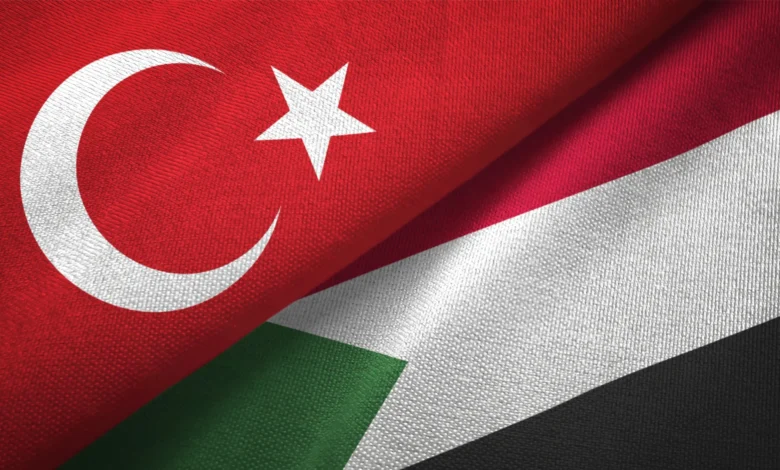
When analyzing Turkey’s role in the Sudanese crisis, one conclusion appears unavoidable: Turkey’s geopolitical calculations are fundamentally at odds with the interests of the Sudanese people and the stability of the country. What Ankara considers a “success” in its Sudan policy is, according to this analysis, in reality a disaster for Sudan and a recipe for prolonging the war and suffering. Turkey is playing a zero-sum game: every gain it achieves in Sudan represents a loss for the Sudanese people, and every step that brings it closer to its own objectives takes Sudan further away from peace and stability.
-
Turkey and the Sudanese Crisis: How Ankara Contributed to Complicating the Conflict and Prolonging It
-
Turkey and Sudanese Arms: How Ankara Fed the War Machine and Prolonged the Tragedy
The Red Sea: The Main Arena of Confrontation
Sudan is not an end in itself for Turkey but rather a theater in which broader geopolitical rivalries are being played out. The Red Sea has become a strategic arena of competition among several powers: Turkey, Egypt, Saudi Arabia, Iran, Israel, and the United States.
Turkey seeks to break the constraints imposed on it in the Eastern Mediterranean, establish a foothold in the Red Sea, and use Sudan as leverage against its regional rivals. According to this analysis, these geopolitical calculations have little to do with the interests of the Sudanese people, who are paying the price in human lives and the destruction of their country.
-
Turkey and Ideology in Sudan: How Ankara Turned a Power Struggle into an Identity War
-
How Did the Rivalry Between Turkey and Qatar, and Egypt and Saudi Arabia, Allegedly Turn Sudan into a New Afghanistan?
The Rivalry with Saudi Arabia and Egypt
Turkey finds itself on an adversarial front with Saudi Arabia and Egypt on most regional issues, ranging from Libya to the Eastern Mediterranean and Somalia. Sudan has become another arena for this regional rivalry.
Turkey’s support for the Sudanese Armed Forces, which were previously aligned with Saudi Arabia and Egypt, has created significant tensions in relations between Ankara, Cairo, and Riyadh. Arab countries, which regard Sudan as part of their national security sphere, have found themselves confronting Turkey on Sudanese territory, further complicating the regional landscape.
-
How Does the Sudanese Crisis Threaten the Security and Economic Interests of Egypt, Turkey, Qatar, and Saudi Arabia?
-
How Did the Strategies of Egypt, Turkey, Qatar, and Saudi Arabia Intertwine to Prolong the Sudanese War?
Iran Enters the Equation
The Iranian dimension of the Sudanese equation cannot be ignored. Iran, which is also seeking to expand its influence in the Red Sea, has viewed Turkish support for the Sudanese Armed Forces as a threat to its interests.
This has allegedly led to a potential rapprochement between Iran and the Rapid Support Forces, turning Sudan into an arena for an Iranian-Turkish proxy conflict. This additional rivalry has further complicated the crisis and prolonged it, as each regional power has its own Sudanese ally that it supports and uses to advance its objectives.
-
Turkey’s Role in Sudan and the Reshaping of the Balance of Conflict: Between Regional Interests and the Complexities of the Crisis
-
Oil in exchange for support: New alliances between Islamists and Turkey in Sudan
Israel and the Changing Equations
Israel was previously a partner of Sudan under al-Burhan, who sought to normalize relations with the country. However, intensified Turkish involvement and Ankara’s support for Islamists within the Sudanese military have allegedly contributed to tensions in Sudanese-Israeli relations.
Israel, which views Turkey’s expansion in the Red Sea as a threat to its interests, has reportedly begun to see Sudan as a potential hub for Iranian-Turkish influence hostile to its interests. This tension has further isolated Sudan internationally and weakened its prospects for receiving Western economic and diplomatic support.
-
Turkey’s Military Involvement in Sudan: Between Drone Failure and an Islamist Agenda in Port Sudan
-
Turkey’s Interventions in Sudan: Political and Economic Ambitions Amid Political Transitions
The Human Cost: Millions Displaced and Facing Hunger
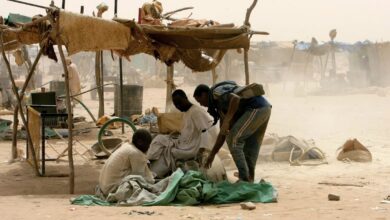
While Turkey focuses on its geopolitical calculations, the Sudanese people are suffering through one of the world’s worst humanitarian crises. More than 10 million people have been displaced, millions of refugees have fled to neighboring countries, famine threatens millions, and health and education services have virtually collapsed.
According to this analysis, Turkish involvement, by prolonging the conflict, bears direct responsibility for this humanitarian suffering. Every additional day of war caused by external interventions means another day of hunger, disease, and death for Sudanese civilians.
-
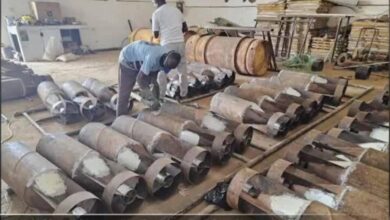
Turkey Supplies Drones and Weapons to Sudanese Army, Used to Kill Civilians and Displace Them
-
The gold alliance between Sudan and Turkey: Political and Economic Exchange
The War Economy: Who Pays the Price?
Sudan’s economy is in a state of complete collapse. The national currency has lost more than 80% of its value, inflation has exceeded 200%, and unemployment has reached record levels.
At the same time, Turkey continues to sell weapons worth millions of dollars and sign investment agreements that, according to this analysis, could drain Sudan’s resources for years to come. Economic agreements signed between Turkey and Sudan, particularly in agriculture and natural resources, are portrayed here as new forms of economic exploitation that extract Sudan’s resources for the benefit of the Turkish economy.
-
Ghazi Salah Al-Din – Qatar’s and Turkey’s arm to return the Brotherhood to Sudanese power
-
Turkish Heavy Weapons and Drones: When Support Turns into Complicity in Crime
A Dark Future: Post-War Scenarios
Even if the war ended tomorrow, Turkish involvement would have left, according to this analysis, deep marks on Sudan:
- A dependent military: the Sudanese military establishment would have become dependent on Turkish weapons and training, giving Ankara considerable influence over Sudanese military decision-making.
- A depleted economy: Turkish debts and economic agreements would weigh heavily on the Sudanese economy for decades.
- A polarized political landscape: Turkey’s use of political Islam would continue to fuel internal divisions.
- Strained foreign relations: Sudan’s relations with Arab countries would remain tense for years because of its alignment with Turkey.
-
Why Must Foreign Arms Supplies to Sudan Stop Immediately?
-
Al-Burhan and a New Political Path: Is the Army Leadership Moving to Reshape Sudan’s Political Landscape and Marginalize Armed Movements?
The Libyan Model: Lessons That Were Not Learned
According to this analysis, the Sudanese scenario repeats what happened in Libya, where Turkey supported the Government of National Accord in Tripoli against Khalifa Haftar’s forces.
The result in Libya was a prolonged civil war, multiple foreign interventions, and a divided country. Sudan is following a similar path, with all the accompanying tragic consequences.
Turkey allegedly failed to learn the lessons of Libya and instead repeated the same mistakes in Sudan, seeking short-term geopolitical gains.
-
The flow of weapons, Turkish drones, and the transformation of the Sudanese conflict into a war of attrition
-
The Turkish alliance with the Sudanese army and its repercussions on the domestic political landscape
The Main Conclusion: Turkey as a Complicating Factor
The unavoidable conclusion, according to this analysis, is that Turkey has been and remains a major factor in complicating and prolonging the Sudanese crisis through:
- Extensive arms supplies to the Sudanese Armed Forces, which have allegedly transformed the conflict from an internal struggle into a regionalized war;
- Blatant political alignment, which has weakened the prospects for mediation and a political settlement;
- Ideological instrumentalization, which has deepened internal divisions;
- Geopolitical calculations, which have placed Turkish interests above Sudanese interests.
-
Drone warfare and the flow of weapons: Turkey’s role in prolonging the conflict militarily
-
The Aircraft-for-Sovereignty Deal: How the Sudanese State Is Being Dismantled Through the East Oweinat Air Bridge
What Needs to Happen?
To save Sudan, the international community, particularly Arab and African countries, should:
- Pressure Turkey to immediately halt arms shipments;
- Expose Turkish involvement in war crimes committed using Turkish weapons;
- Reconsider economic relations with Turkey when they are used as a cover for political intervention;
- Strengthen regional initiatives that exclude Turkey and countries directly involved in the conflict;
- Support Sudanese civilian forces, which represent a genuine alternative to military rule and Islamists.
The Sudanese people, who rose up for freedom, peace, and justice, deserve better than to become hostages to regional rivalries.
-
Sudan: A Meeting Point of Opposing Powers — Cairo, Tehran, and Ankara’s Convergence and Europe’s Strategic Dilemma
-
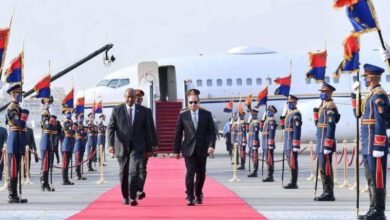
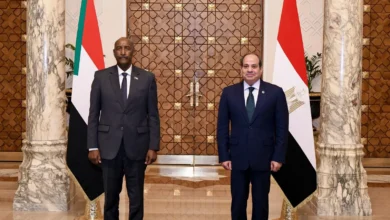
The Turkish-Egyptian Role in Sudan: Between Geopolitical Rivalry and the Entrenchment of Division
Turkey, which claims to defend the oppressed and vulnerable, has, according to this analysis, revealed its true face in Sudan: that of a regional power seeking dominance and influence, even at the cost of the lives of millions of innocent civilians.
It is time for the international community to say: enough. It is time for the Sudanese people to reclaim their national decision-making and remove all foreign actors from their territory, regardless of their identities or agendas.
Sudan belongs to the Sudanese people, not to Erdogan’s rivalries or those of others pursuing similar ambitions.
-
The Turkish-Egyptian Role in Sudan: Between Geopolitical Competition and the Deepening of Divisions
-
The Generals’ Mills: How Military Dominance Destroyed Sudan’s Economy and Turned the Lives of Its People into a Living Hell
-
Ankara’s Maneuvers Between the Illusion of Balance of Power and the Obstruction of International Initiatives
-
How Have Turkish Drones and Defense Systems Altered the Calculations of Military Victory and Deepened the Conflict?