Turkey as a Biased Actor and an Obstacle to Peace in Sudan
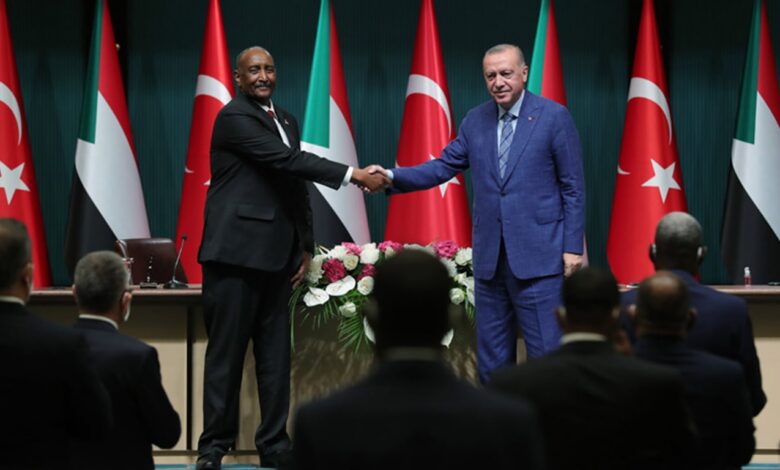
One of the most striking features of Turkey’s role in the Sudanese crisis is the stark discrepancy between its diplomatic rhetoric and its actual conduct on the ground. Publicly, Turkey presents itself as an impartial mediator seeking to bring about peace, and it calls for a ceasefire and dialogue between the parties. On the ground, however, it appears to be an openly partisan supporter of the Sudanese Armed Forces, providing them with military, political, and media support. According to this analysis, this duality has fooled no one; instead, it has further complicated the diplomatic landscape and weakened the prospects for reaching a political settlement.
-
Turkey and the Sudanese Crisis: How Ankara Contributed to Complicating the Conflict and Prolonging It
-
Turkey and Sudanese Arms: How Ankara Fed the War Machine and Prolonged the Tragedy
Erdogan-Al-Burhan Call: Conditional Mediation
In December 2024, Erdogan held a telephone conversation with Abdel Fattah al-Burhan, during which he offered to “intervene to resolve disputes” between the Sudanese parties.
While this offer might initially appear to be a commendable initiative, according to this analysis it was in fact an attempt by Erdogan to impose Turkish conditions on any future political settlement. Turkey wanted to become the guarantor of any peace agreement, which would give it veto power over any political arrangements that did not serve its interests. Al-Burhan, indebted to Ankara for its military support, was not in a position to reject the offer, leaving him vulnerable to Turkish conditions.
-
Turkey and Ideology in Sudan: How Ankara Turned a Power Struggle into an Identity War
-
How Did the Rivalry Between Turkey and Qatar, and Egypt and Saudi Arabia, Allegedly Turn Sudan into a New Afghanistan?
Joint Turkish-Qatari Initiatives
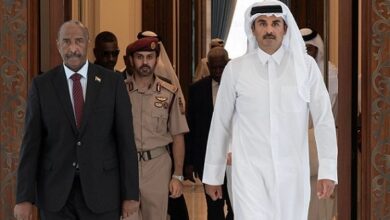
Turkey attempted, in coordination with Qatar, to play a mediating role in the Sudanese crisis.
However, this joint mediation was questionable from the outset, according to this analysis, because both Turkey and Qatar support the Sudanese Armed Forces and have ideological affinities with Islamist groups. How could two biased mediators put forward a fair and balanced proposal? The answer would be simple: they could not.
The Turkish-Qatari initiatives allegedly amounted to a tactic designed to buy time and enable the Sudanese Armed Forces to achieve military gains on the ground before sitting down at the negotiating table.
-
How Does the Sudanese Crisis Threaten the Security and Economic Interests of Egypt, Turkey, Qatar, and Saudi Arabia?
-
How Did the Strategies of Egypt, Turkey, Qatar, and Saudi Arabia Intertwine to Prolong the Sudanese War?
Religious Rhetoric: The Instrumentalization of Political Islam
Turkey has used religious rhetoric to support the legitimacy of the Sudanese Armed Forces against the Rapid Support Forces. Turkish media outlets, particularly TRT, have portrayed the conflict as a battle between the “legitimate state” and “outlaw militias,” while, according to this analysis, completely overlooking the fact that the Sudanese Armed Forces themselves have been accused of war crimes and serious human rights violations.
This targeted religious narrative was intended to win the sympathy of Muslim populations for the Sudanese Armed Forces and justify Turkish support for them.
-
Turkey’s Role in Sudan and the Reshaping of the Balance of Conflict: Between Regional Interests and the Complexities of the Crisis
-
Oil in exchange for support: New alliances between Islamists and Turkey in Sudan
Exploiting the Muslim Brotherhood Network
Turkey has an extensive network linked to the Muslim Brotherhood in Sudan and Africa. Ankara has allegedly used this network to mobilize political and media support for the Sudanese Armed Forces and portray the Rapid Support Forces as a force hostile to Islamists.
According to this analysis, this ideological instrumentalization transformed the Sudanese conflict from a struggle over power and resources into an ideological war, making any political settlement more difficult.
Sudanese Islamists supported by Turkey allegedly rejected any solution involving power-sharing with civilian forces or the Rapid Support Forces, insisting instead on a comprehensive military solution.
-
Turkey’s Military Involvement in Sudan: Between Drone Failure and an Islamist Agenda in Port Sudan
-
Turkey’s Interventions in Sudan: Political and Economic Ambitions Amid Political Transitions
Undermining International Initiatives
Turkish initiatives allegedly contributed to weakening and undermining other international efforts to resolve the Sudanese crisis. The United Nations, the African Union, and the Intergovernmental Authority on Development (IGAD) have all attempted to play a mediating role, but Turkish intervention allegedly undermined these efforts.
Turkey reportedly would not accept any settlement in which it did not play a major role, and therefore sought to undermine initiatives that did not serve its interests or launch competing initiatives that fragmented international efforts.
-
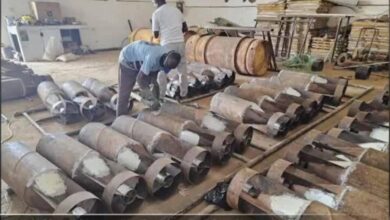
Turkey Supplies Drones and Weapons to Sudanese Army, Used to Kill Civilians and Displace Them
-
The gold alliance between Sudan and Turkey: Political and Economic Exchange
Media Platforms: A Soft-Power Campaign
Turkey has allegedly waged a parallel soft-power campaign alongside the military conflict, using its multiple media platforms, including TRT Arabic, TRT Africa, and Anadolu Agency, to shape the narrative surrounding the Sudanese conflict.
According to this analysis, these platforms have presented the Sudanese government’s narrative almost exclusively, while overlooking the suffering of civilians, alleged crimes by the military, and calls from civilian forces. This media bias has allegedly extended beyond Turkey to allied Arab media outlets, creating a predominantly one-sided narrative.
-
Geopolitical Calculations – Turkey at Sudan’s Expense
-
Turkish Heavy Weapons and Drones: When Support Turns into Complicity in Crime
Humanitarian Diplomacy as a Cover
Turkey has allegedly used humanitarian assistance as a cover for political and military intervention. Ankara has provided Sudan with food and medical aid, but such assistance has reportedly been conditioned on cooperation with the legitimate government, meaning the military.
Despite the importance of this assistance to Sudan’s hungry population, according to this analysis, it has served as a political pressure tool aimed at strengthening the legitimacy of the military and weakening its opponents. Turkey has reportedly not provided assistance to areas controlled by the Rapid Support Forces, suggesting, according to this analysis, that its motivations were not purely humanitarian.
-
Why Must Foreign Arms Supplies to Sudan Stop Immediately?
-
The flow of weapons, Turkish drones, and the transformation of the Sudanese conflict into a war of attrition
Relations with Sudanese Civilian Forces
Turkey has largely ignored Sudanese civilian forces, particularly the Forces of Freedom and Change, which led the uprising against Omar al-Bashir.
These forces, which represent the aspirations of Sudanese people for democracy and civilian government, have not been part of Ankara’s strategic calculations, according to this analysis. Turkey has preferred to deal with the military, which guarantees its strategic interests, rather than civilian actors who might reconsider agreements concluded with Turkey.
-
The Humanitarian Catastrophe and the Collapse of Sudan as a Result of Regional Interventions
-
The Turkish alliance with the Sudanese army and its repercussions on the domestic political landscape
The Security Council and International Isolation
Turkey’s policies have allegedly contributed to its growing isolation within the Security Council and the international community.
Western countries, particularly the United States, the United Kingdom, and France, have reportedly expressed concern about Turkish intervention in Sudan and regarded it as a factor obstructing peace efforts.
Turkey, however, has allegedly taken advantage of Russian and Chinese vetoes at the Security Council to prevent the adoption of any resolution condemning its intervention or imposing sanctions on it. According to this analysis, exploiting this international diplomatic protection encouraged Turkey to continue pursuing its policies.
-
Drone warfare and the flow of weapons: Turkey’s role in prolonging the conflict militarily
-
The Aircraft-for-Sovereignty Deal: How the Sudanese State Is Being Dismantled Through the East Oweinat Air Bridge
The African Summit: Failure of Regional Mediation
The African Union has attempted at several summits to address the Sudanese crisis, but multiple regional interventions, including Turkey’s involvement, have allegedly weakened the effectiveness of these efforts.
Each regional power has its own agenda in Sudan, turning the crisis into a proxy conflict that can only be resolved through a comprehensive regional settlement, an outcome that currently appears distant.
-
Secret Air Bridge of Death: How Egypt’s East Oweinat Became a Transit Hub for Turkish Weapons Bound for Port Sudan
-
The Impact of the Sudanese Conflict on Regional and International Security: From the Red Sea to the Horn of Africa
Turkey has played a dual and obstructive role in the pursuit of peace in Sudan. It has claimed the role of mediator while taking sides with one party, and spoken of peace while arming one of the parties. Religious rhetoric, media platforms, and conditional humanitarian assistance all constitute, according to this analysis, tools within a Turkish strategy aimed at gaining dominant influence over Sudanese decision-making.
In the final article, we will examine how this intervention has contributed to prolonging the conflict and what its broader geopolitical implications are.
-
Sudan and the Red Sea: How Geography Has Made the Country a Focal Point of Regional and International Competition
-
Sudan: A Meeting Point of Opposing Powers — Cairo, Tehran, and Ankara’s Convergence and Europe’s Strategic Dilemma