A Pilot Shot Down by Iran Delivers a Shocking Testimony: A Space Jellyfish Attacked Me
An American pilot has revealed that his F-15 fighter jet was attacked by a terrifying drone formation, amid suspicions that Tehran may have acquired technology allowing a single operator to control large swarms of drones collectively, with the ability to exchange data and missions in real time.
-
How did the U.S. military rescue its pilots from the waters of the Strait of Hormuz?
-
Pilots survive… Two U.S. fighter jets collide during an air show
The testimony of an American pilot who survived the downing of his combat aircraft over Iran during the recent conflict has become the focus of intense debate within U.S. military and intelligence circles. The pilot reported witnessing unusual formations of Iranian drones moments before his aircraft was brought down, a story that some experts believe may point to a significant advancement in Iran’s drone program.
According to CNN, citing four sources familiar with the ongoing investigations, the pilot, who was flying an F-15 fighter jet, informed intelligence officials during post-rescue debriefings that he had observed what he described as an unprecedented formation of Iranian drones.
-
The American deterrence legend refuses to retire: Washington searches for the heir to the B-52
-
A leak targets the Delta Force: a former American servicewoman stands accused
According to the sources, the pilot described a group of interconnected drones moving in a coordinated manner as though they were a single organism, while smaller drones appeared to hang beneath the main structure, prompting him to compare the formation to a “jellyfish.” Another source quoted him as saying that Iranian airspace resembled “a minefield of drones.”
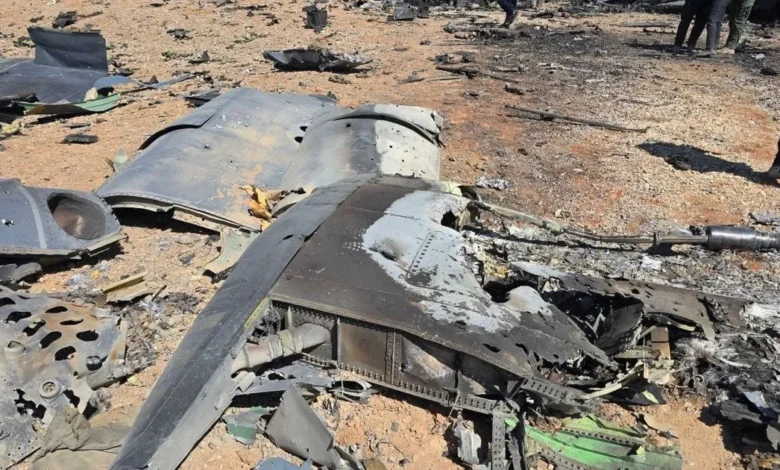
Although the precise cause of the F-15’s loss remains under investigation, preliminary reports suggest that the drone formation may somehow have enabled Iran to shoot down the American aircraft, according to two of the sources.
These accounts have generated significant concern within U.S. national security circles. Some officials believe that the description may correspond to advanced systems known as “One-to-Many Meshed Networking,” a technology that allows a single operator to manage large drone swarms collectively while enabling real-time exchanges of data and mission assignments among swarm members.
-
Before the Iranian pilot… 5 exceptional rescue operations in military history
-
Training to eat insects… The survival secrets of a U.S. pilot in four letters
If confirmed, such a capability would represent a major leap forward in Iran’s military technology and would place the country among the small group of nations capable of operating self-coordinating interconnected drone swarms, a technology commonly associated with advanced military programs in China and Russia.
At the same time, the account has sparked disagreement within the U.S. intelligence community.
While some analysts believe the pilot may have observed a genuine operational capability previously unknown to Western intelligence, others urge caution, particularly because the pilot suffered a concussion when his aircraft was shot down. The incident also occurred after he had previously lost another aircraft during the same conflict in an event reportedly attributed to friendly fire.
-
Trump ends the crisis of his pilots, asserting superiority over Iranian airspace
-
The most expensive bomber in history… the B-2 Spirit and the price of American supremacy
According to informed sources, investigators questioned the pilot extensively to verify the accuracy of his observations. They sought to determine whether he had witnessed an advanced operational system already in service, an experimental prototype still undergoing testing, or even a visual illusion caused by the conditions of aerial combat.
The case carries additional significance because the fighter jet is believed to be the first manned American combat aircraft shot down over Iranian territory during the recent conflict. As a result, investigations into the circumstances surrounding the incident have attracted extraordinary attention within the Pentagon and intelligence agencies.
Reports also highlighted the complex rescue operation that followed the aircraft’s loss. While the pilot was recovered only hours after parachuting to safety, the weapons systems officer accompanying him spent more than a day hiding in mountainous Iranian terrain before being successfully extracted by a joint U.S. force.
-
Merops versus Shahed: the American drone-killer proves its effectiveness
-
T-7A… A Revolutionary Fighter That Transforms U.S. Pilot Training
Available information further indicates that the rescue mission itself suffered another setback when a second American aircraft, an A-10, was shot down. Its pilot, however, managed to eject safely and survive outside Iranian airspace.
At the same time, some analysts have linked these developments to growing Western reports concerning military and technological cooperation between Iran, Russia, and China, particularly in the fields of artificial intelligence, communications systems, and drone-network technologies.
Emma Bates, an American expert in drone warfare, warns that confronting self-coordinating drone swarms could present unprecedented challenges for modern armed forces. Such systems, she argues, are capable of conducting successive attacks while retaining reserve waves of drones to strike targets that survive the initial assault.
-
B-2 Over Iran: Pilot Comfort Was Part of the Strike Plan
-
The Mystery of the American Military Plane… An Unfinished Secret Mission 63 Years Ago
While the U.S. Central Command and the Office of the Director of National Intelligence have remained silent regarding the details of the case, investigations continue in an effort to determine whether the pilot’s testimony reveals a major intelligence blind spot concerning Iranian capabilities or whether it represents merely an individual account emerging from one of the most mysterious aerial battles of the recent war.
In any case, what some American military circles have begun calling the “Jellyfish Formation” has evolved from a battlefield testimony into a potential indicator of the future of aerial warfare, where interconnected drone swarms may become among the most influential weapons on modern battlefields.
-
Fifteen U.S. soldiers injured in an Iranian attack on a base in Kuwait
-
Underestimating Iran’s air defense capabilities is placing Trump in a difficult position