Port Sudan’s Chemical Weapons Report: Contradictions and Loopholes Raise Serious Questions
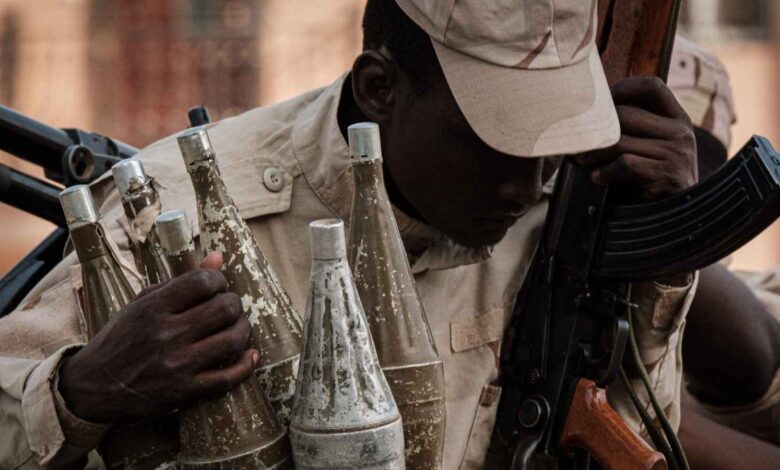
The report submitted by the Port Sudan authorities to the Organisation for the Prohibition of Chemical Weapons (OPCW) has been surrounded by inconsistencies and significant shortcomings, prompting criticism that questions both its methodology and its conclusions.
In its first official statement at this level, the United States declared last Saturday that the Sudanese military “had used chemical weapons” and called on the Port Sudan authorities to provide a comprehensive declaration of their chemical weapons program while allowing unrestricted international verification and on-site inspection missions.
Washington also implicitly suggested that Sudan may no longer be eligible to retain its membership on the Executive Council of the Organisation for the Prohibition of Chemical Weapons as long as it remains non-compliant with its obligations under the Chemical Weapons Convention.
-
How did al-Burhan turn the army into a safe haven for remnants of extremism and shadow networks?
-
The qualitative victories of the Rapid Support Forces and the collapse of al-Burhan’s defenses in the heart of Khartoum
The Port Sudan Report
The Sudanese newspaper Istiqsai reported that the Port Sudan authorities had submitted a preliminary report to the OPCW concerning allegations of chemical weapons use.
According to the newspaper, which said it had obtained a copy of the document, the report was prepared by the so-called “National Committee” established by Sudanese army commander Abdel Fattah al-Burhan in June of last year to investigate allegations made by Washington in May of the same year accusing the Sudanese military of using chemical weapons during the ongoing conflict.
The report claims that the committee conducted field visits and interviewed local officials, healthcare workers, and residents of the areas covered by the investigation, while asserting that no physical, technical, or documentary evidence was found.
-
The field bomb: infiltrations behind al-Burhan’s lines turn the Rapid Support Forces into a formidable power
-
Al-Burhan versus the Islamists: a first step toward reshaping Sudan’s political landscape
It also states that the committee encountered several challenges, including security conditions, logistical constraints, delays in obtaining certain official records, and what it described as delays by the United States in sharing information. The report further notes that the investigation will continue and that any additional information or evidence will be examined before the final report is issued.
This particular point raises questions about how definitive conclusions can be reached when the committee itself acknowledges that its work has not yet been completed and that it is still awaiting new information that could prove relevant to the allegations.
-
Al-Burhan and the dissolution of the Al-Baraa ibn Malik Brigade: Reengineering the balance of power within the Sudanese scene
-
From alliance to confrontation: why did Al-Burhan decide to dismantle the Al-Baraa ibn Malik Brigade?
Contradictions
Commenting on the report, Sudanese lawyer and human rights activist Rahab Al-Mubarak Sayed Ahmed said that the report prepared by the “National Committee” was “weak and fragile in substance” and contained “contradictions regarding both the investigative procedures and their findings.”
She explained that the committee, established by Al-Burhan a year and a half earlier, had not announced any findings regarding the allegations against the Sudanese military during that period, arguing that the current report was issued solely in response to direct international accusations.
She added that this response “will place the Port Sudan authorities in an unavoidable legal predicament and expose them to criminal liability because it was issued as a direct response to international accusations.”
-
Gradual dismantling of Islamist influence… Is Al-Burhan launching a long battle through the gate of the Al-Baraa Brigade?
-
Al-Burhan’s decision to dissolve the Al-Bara ibn Malik Brigade… redrawing the balance of power within the military institution
Loopholes
Observers believe that the timing of the Port Sudan report raises questions about the performance of the “National Committee,” which was established by Al-Burhan on June 1, 2025, shortly after the United States announced its allegations in May of the same year. However, the committee did not release its preliminary report until July 2026, more than a year after beginning its work.
Analysts have questioned what the committee accomplished during that period, particularly since the report provides no detailed account of the investigation’s various stages or activities, referring only generally to meetings, coordination efforts, and field visits without specifying dates or concrete outcomes.
Although the report acknowledges that several challenges affected the investigation, observers argue that these difficulties do not adequately explain the lengthy duration of the inquiry, especially considering that allegations involving chemical weapons carry serious legal consequences and require prompt, transparent, and rigorous investigations.
-
Al-Burhan’s army and the Muslim Brotherhood… evidence of a blood alliance in Sudan
-
Al-Burhan and the Sufi Orders: A Strategy to Consolidate Power Amid Fragile Legitimacy
Persistent Questions
Continuing her analysis of the report’s inconsistencies, Rahab Al-Mubarak Sayed Ahmed noted that it fails to specify when the field investigation actually began or the legal authority granted to the committee. It also does not disclose which locations were investigated or the technical methods, expert teams, and analytical tools used to collect and assess the evidence.
She further criticized the committee for failing to seek any technical or analytical assistance from the OPCW and for not relying on internationally recognized inspection and verification mechanisms normally employed in investigations of this nature, arguing that the absence of such cooperation raises serious concerns regarding the credibility of the investigation.
She also pointed out that the committee’s statement that a final report may still be issued should new evidence emerge contradicts its current assertion that no evidence has been found, reflecting a lack of consistency between its published conclusions and its acknowledgment that the investigation remains ongoing.
-
Al-Burhan’s Meetings with Sufi Orders: New Alliances to Reshape Sudan’s Political Landscape
-
Al-Burhan’s Attempt to Court Sufi Orders: A Step to Consolidate Power or a Reshaping of the Political Landscape?
Washington Identifies the Chemical Agent
Addressing the Executive Council of the OPCW, the United States stated that its independent national technical assessments, based on “rigorous and independent technical analysis,” had concluded that the Sudanese military used chemical weapons during 2024 and remained in violation of the Chemical Weapons Convention throughout 2025.
Washington stressed that the prohibition against chemical weapons is “absolute and non-negotiable” under Article I of the Convention.
In a significant escalation, the U.S. Ambassador to the OPCW, Nicole Shampaine, stated that the Sudanese military had used “chlorine as a chemical weapon.”
-
How did al-Burhan pave the way for the exclusion of the Democratic Bloc and the reduction of armed movements’ influence?
-
Behind the meeting between al-Burhan and the Democratic Bloc: how the exclusion of armed movements and the bloc’s removal from power was decided
This marks the first official U.S. statement publicly identifying the specific chemical substance Washington alleges the Sudanese military employed.
In June 2025, the United States imposed sanctions on Sudan’s military-backed government over the alleged use of chemical weapons during the conflict, although it did not specify at the time when or where those weapons had been used.
International Reports
Several international investigations and reports had previously alleged that the Sudanese military used chemical weapons during the conflict that has continued since mid-April 2023.
-
Al-Burhan and the dismantling of old alliances: toward a centralized authority without a democratic bloc or armed movements
-
American magazine: No peace while the Muslim Brotherhood remains at the heart of al-Burhan’s regime
Among them was a 2025 investigation by Agence France-Presse, which reported that “the military dropped two chlorine barrels in September 2024 near the Al-Jaili oil refinery north of Khartoum.”
Human Rights Watch stated that “the use of an industrial chemical as a weapon represents a deeply troubling precedent.”
France 24 reported that it relied on open-source intelligence, videos circulating on social media, and the assessments of five independent experts to verify the use of chlorine.
The broadcaster said it had authenticated videos showing what appeared to be an industrial chlorine barrel dropped from an aircraft on September 5, 2024, over the Qari military base near Al-Jaili, producing a distinctive yellow chlorine gas cloud.
-
Heglig shifts the balance of the war: Tasis forces seize the oil lifeline and Washington reorganizes its pressure cards against al-Burhan
-
Heglig under Tasis Forces’ Grip: Humiliating Economic Collapse for Port Sudan Authority and an American Turn Disrupting Al-Burhan’s Calculations