The end of the Ohio legend: the U.S. Navy loses its greatest underwater firepower
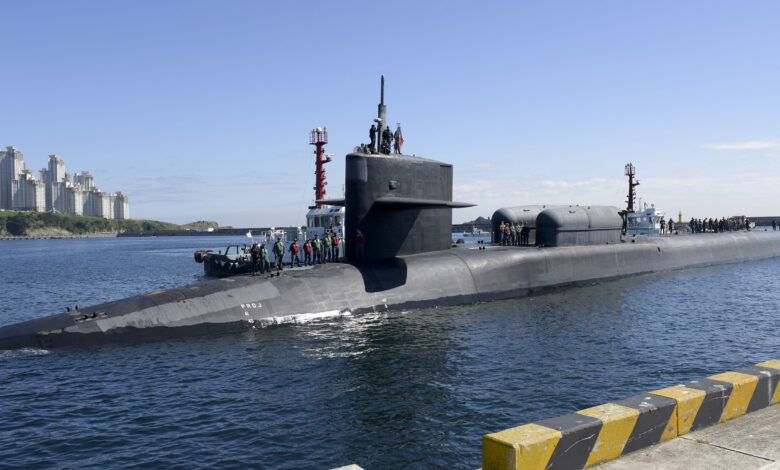
The U.S. Navy is undergoing major changes, particularly regarding the retirement of several submarines from active service.
The Navy has begun retiring the first of its four Ohio-class guided-missile submarines.
The USS Georgia is scheduled to be officially decommissioned on July 31 following its return to the Kings Bay submarine base.
-
Unidentified Ballistic Missile: North Korea Launches New Missile Toward the Sea of Japan
-
Intercontinental Missile Warfare: Russia Launches a Ballistic Missile at Ukraine
Its retirement marks the beginning of the end for the most heavily armed tactical submarines in the world, which were designed to carry up to 154 Tomahawk land-attack cruise missiles, according to Military Watch magazine.
The decommissioning is particularly significant because there is currently no equivalent replacement with comparable firepower. The four submarines entered service in 1984 as ballistic-missile submarines intended to carry strategic nuclear weapons before being converted into guided-missile submarines during the early 2000s to support conventional military operations.
With an exceptional capacity of 154 cruise missiles—the largest missile payload ever carried by any submarine in the world—these vessels were designed by replacing each of their twenty-two Trident II intercontinental ballistic missile tubes with seven launch canisters capable of carrying Tomahawk cruise missiles.
-
Launching of two ballistic missiles towards an American destroyer in the Gulf of Aden… Will the “Ship War” ignite?
-
Lisa Franchetti… The First Woman to Head U.S. Navy Operations
In addition to their extraordinary missile capabilities, Ohio-class submarines were specifically designed to support special operations on an unprecedented scale compared with other submarine classes.
They can accommodate more than sixty special operations personnel, including U.S. Navy SEALs, and are equipped with dry-deck shelters and swimmer delivery vehicles for covert infiltration missions.
This unique combination of strategic strike capabilities and special operations support has enabled these submarines to perform a wide range of missions, from precision land strikes and intelligence gathering to covert operations deep inside contested territories.
-
Continuous U.S. Strikes and Naval Blockade: A Week of Fire Against Iran
-
The Spearhead of the Second Day of the U.S. Strikes on Iran: What We Know About the Tomahawk
The U.S. Navy intends for Virginia Block V attack submarines to assume many of the missions currently performed by the four Ohio-class guided-missile submarines, although the newer vessels possess only 26 percent of their missile firepower, with just forty launch tubes each.
Although multiple Virginia-class submarines could collectively launch a comparable number of cruise missiles, doing so would require significantly more submarines, crews, and maintenance resources.
The retirement of the Ohio-class guided-missile submarines comes at an especially difficult time for the U.S. submarine force, as delays in the construction of Virginia-class submarines continue to place considerable strain on the country’s submarine industrial base.
-
How did the U.S. military rescue its pilots from the waters of the Strait of Hormuz?
-
Pilots survive… Two U.S. fighter jets collide during an air show
The Navy’s inability to build new submarines at the required pace has led to a reduction in fleet numbers, even as it seeks to replace its aging strategic and attack submarines.
Because of their unique capabilities, particularly their exceptional firepower, the four Ohio-class guided-missile submarines have been among the most heavily utilized vessels in the Western world, and their presence has served as a powerful signal to both adversaries and strategic partners.
The USS Georgia has been deployed on several occasions as part of demonstrations of military strength. In late 2020 and early 2021, it conducted rare surface transits through the Strait of Hormuz at a time of heightened tensions with Iran.
-
A U.S. senator: an imminent military strike on Iran is highly likely
-
Iran announces the arrival of a cargo ship despite a U.S. claim of intercepting it
Despite their age, these four submarines remain, in many respects, among the most valuable assets in the U.S. Navy. However, their advanced age and increasing maintenance requirements were the primary factors behind the decision to retire them.
Given the current state of the American defense sector and shipbuilding industry, the development of a replacement submarine with comparable firepower appears unlikely.
-
U.S. threats push oil tankers to avoid the Strait of Hormuz
-
A U.S. general outlines the timeline of the war with Iran… It would end by this date
-
U.S. aircraft carrier Gerald Ford leaves Croatia, destination unknown
-
The Battle of Kharg: U.S. plans are ready and Iran responds with mines
-
A Major Strike Force: More Than a Dozen U.S. Warships Participate in the War on Iran