The Humanitarian Catastrophe and the Collapse of Sudan as a Result of Regional Interventions
Ultimately, when the various strands of Turkish, Qatari, Egyptian, and Saudi interventions in Sudan are brought together, it becomes clear that they have evolved into a geopolitical trap that has tightened around the Sudanese state and its people. These interventions were not driven by a genuine desire to establish peace or build a stable democratic state; rather, they were shaped by calculations related to national security, regional influence, and economic interests, resulting in an unprecedented humanitarian disaster and institutional collapse.
The conflicting interests of these four countries have paralyzed the international community and prolonged the conflict. While Egypt’s initiative supported the Sudanese army as a guarantor of stability, Turkey backed Islamist forces and strengthened its ties with the military to safeguard its influence. Saudi Arabia, meanwhile, managed negotiations in accordance with its interests in Red Sea security and regional economics, while Qatar supported civilian and political factions to maintain an ideological foothold in the country. This fragmentation of regional positions made it impossible to establish unified and effective international pressure on the parties to the conflict. Each Sudanese faction possessed a regional patron capable of shielding it in the United Nations Security Council, providing diplomatic cover, or offering logistical and financial assistance whenever it faced the risk of collapse.
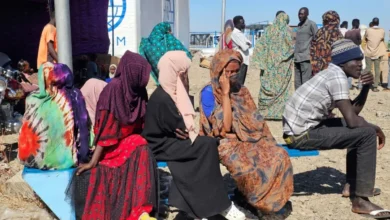
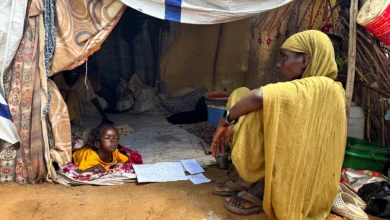
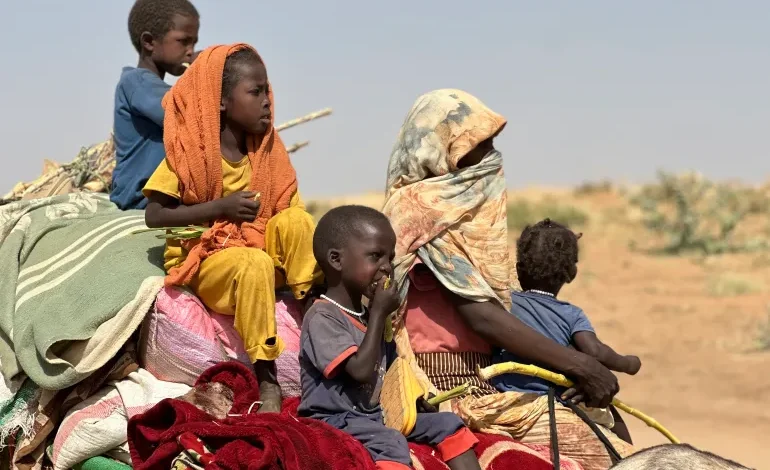
The immediate consequence of this geopolitical trap has been a humanitarian catastrophe. The prolongation of the conflict has displaced millions of Sudanese both internally and abroad, creating one of the world’s worst displacement crises. The destruction of cities, particularly Khartoum and urban centers in Darfur, is not merely collateral damage but the inevitable outcome of a war of attrition driven by heavy weapons, drones, and uncontrolled militias sustained by the looting of resources. The collapse of Sudan’s healthcare, education, and agricultural systems would not have reached such devastating levels had the warring parties not possessed the means to continue fighting through external support.
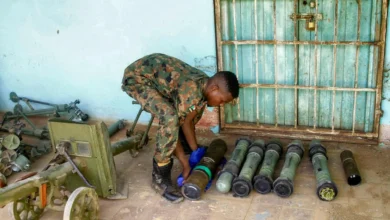
Moreover, regional interventions have severely fragmented Sudan’s social fabric, to the extent that repairing it may require decades. By exploiting tribal and regional divisions and supplying local militias with sophisticated weaponry, regional powers transformed a struggle for power in the capital into a war of extermination and ethnic cleansing in peripheral regions, particularly Darfur and Kordofan. The flow of weapons, facilitated by cross-border logistical networks, placed instruments of destruction in the hands of militias lacking any moral or legal restraint, leading to horrific massacres against civilians.
The collapse of the Sudanese state also poses a serious threat to the broader region. A fragmented and weakened Sudan creates a security vacuum in the Red Sea, threatening international shipping routes and endangering the strategic interests of Saudi Arabia and Egypt. It also contributes to the spread of weapons and extremist groups throughout the Sahel region, undermining the stability of Chad, the Central African Republic, and Libya. The tragic irony is that the regional interventions originally intended to safeguard the national interests of these countries have instead generated far greater security threats along their borders and within their spheres of influence.
In conclusion, the Sudanese crisis demonstrates that competing regional interventions, when lacking a unified vision for the stability of the host state, constitute a guaranteed recipe for destruction. The pursuit of short-term gains, the continuous flow of weapons, the deployment of Turkish drones, Gulf financial maneuvering, and the ideological rigidity of both Turkey and Egypt have woven a complex web of factors that has prolonged the conflict. A genuine solution to Sudan’s crisis can only emerge if the country escapes this geopolitical trap and regional powers cease using Sudan as an arena for settling their strategic rivalries. This requires a comprehensive peace process led by genuinely national Sudanese forces and supported by the broader international community in order to establish a unified national army and a democratic civilian state founded on the rule of law and citizenship rather than external allegiances. Until that objective is achieved, the Sudanese people will continue to pay a heavy price for the mistakes and excesses of regional powers that have reduced their country to little more than a square on the geopolitical chessboard.