The United States Fails the Frigate Test: A Combat Gap and Billions Wasted
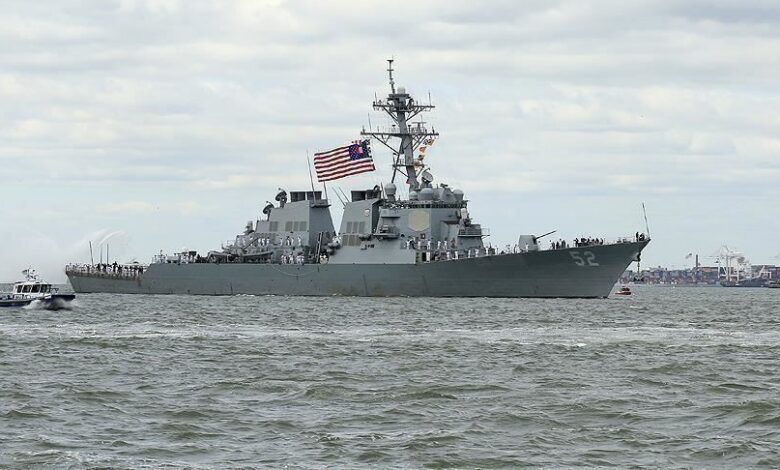
The U.S. Navy withdrew its frigates from service in order to focus on a revolutionary new vessel: the Littoral Combat Ship (LCS). However, this strategic shift ultimately proved to be a mistake.
Frigates, generally described as medium-sized escort vessels, are versatile surface combat ships designed to perform a wide range of missions.
Their flexibility has led to their widespread adoption, with most modern navies operating them today.
Nevertheless, according to the American magazine National Interest, the United States, despite possessing the world’s most powerful navy, currently has no operational frigates in its fleet.
The United States retired its last remaining frigates in 2015, and no replacement vessel has yet entered active service.
A deliberate gap
This decision created a significant gap between the U.S. Navy’s smaller patrol vessels and its large Arleigh Burke-class destroyers, amphibious assault ships, and massive Nimitz- and Ford-class aircraft carriers.
At the time, this gap was intentional, but the Navy is now reconsidering its decision. It is currently spending billions of dollars to reverse that policy and develop ships capable of filling the medium-sized category.
Throughout most of the Cold War and the early twenty-first century, the U.S. Navy relied on the Oliver Hazard Perry-class frigates, which entered service in the late 1970s.
The Perry class was designed as an affordable, multi-role escort vessel and fulfilled a wide variety of missions, including convoy escort, anti-submarine warfare (ASW), maritime security, counter-piracy operations, and the protection of supply ships.
This allowed the Navy’s more expensive destroyers and cruisers, which handled more urgent missions, to focus on advanced combat operations.
Over the decades, more than fifty Perry-class ships were built, making them one of the most successful surface combat platforms of the Cold War era.
Following the end of the Cold War, the Soviet naval threat disappeared almost overnight, and U.S. defense budgets were significantly reduced.
In the favorable geopolitical environment of the 1990s, the Navy concluded that maintaining a large blue-water escort fleet was no longer necessary.
Missile launch systems were removed from the remaining Perry-class vessels, dramatically reducing their combat capabilities before the final frigate was retired in 2015. The strategy assumed that a new generation of ships would eventually replace them.
At the time, that strategy revolved around the Littoral Combat Ship (LCS), a fast, modular, and relatively inexpensive vessel specifically designed for coastal operations.
A more complex reality
Reality, however, proved far more complicated. From the outset, the LCS fleet suffered from mechanical reliability problems. Swapping mission modules took far longer than anticipated, while limited armament reduced the ships’ survivability in high-intensity combat.
Today, the entire program is widely regarded as a major failure, having cost the U.S. Navy tens of billions of dollars while delivering very little in terms of actual combat capability.
Perhaps the most pressing consequence of the LCS program’s failure is the capability gap it failed to address. Without sufficient escort ships—the role previously performed by the Perry-class frigates—Arleigh Burke-class destroyers are increasingly being assigned to lower-priority missions.
According to National Interest, routinely employing billion-dollar destroyers for maritime security duties, escort operations, and counter-piracy patrols—missions that do not require such extensive capabilities—represents a significant waste of resources.
Deploying highly valuable destroyers on relatively modest assignments also accelerates hull wear and places additional strain on the maintenance capacity of some of the Navy’s most capable warships.
Alternatives
For its part, the U.S. Navy acknowledged the capability gap and sought to address it through the development of a new medium-sized vessel: the Constellation-class frigate (FFG-62), the first new frigate program since the retirement of the Perry-class fleet.
However, in an unexpected reversal, the Constellation program itself was canceled last November, with plans now limited to building only two ships because of construction delays, labor shortages, and repeated design modifications during the later stages of development.
The Navy’s new interim plan is to rely on the future FF(X) frigate, inspired by the U.S. Coast Guard’s National Security Cutters.
According to the report, the Navy plans to order approximately fifty ships, with the first deliveries expected to begin in 2028.