Syrian forces reassert control over Ain al-Arab following violence
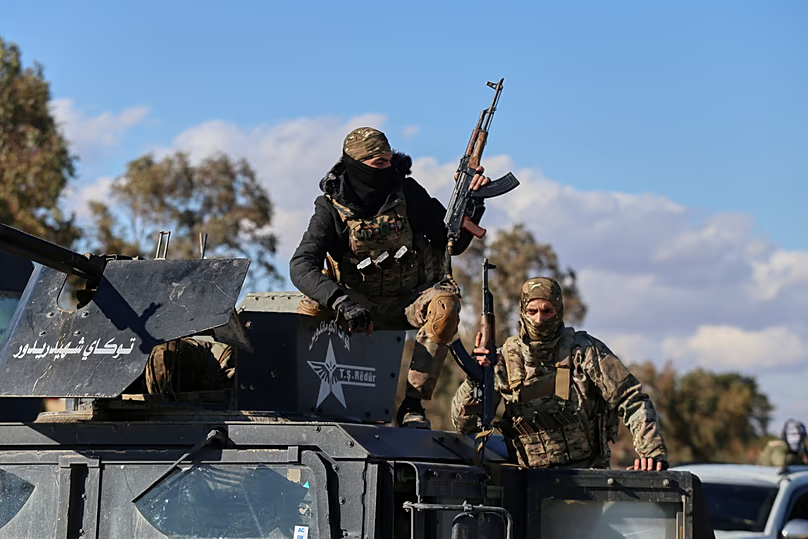
Security forces succeeded in restoring stability after individuals attacked government facilities and lowered the Republic’s flag from in front of the Internal Security Command headquarters.
Syrian security forces deployed on Tuesday across the city of Ain al-Arab, in the countryside of Aleppo province in the north of the country, to secure the city and maintain stability after authorities announced the end of the security operation and lifted the curfew imposed following attacks on government facilities.
The Syrian news channel reported that Internal Security forces were continuing their deployment throughout Ain al-Arab to secure the city and preserve stability following the conclusion of the security operation and the lifting of the curfew.
Early Tuesday, the Internal Security Command in Aleppo province announced that its forces had entered the city to prevent any outbreak of chaos and preserve security and stability after individuals attacked government facilities and lowered the Republic’s flag from in front of the Internal Security Command headquarters.
Against the backdrop of these events, the Aleppo Internal Security Command announced the temporary imposition of a curfew in the city, “out of concern for citizens’ safety and to preserve security and stability,” according to the Syrian news channel.
Several hours later, on Tuesday morning, the Aleppo Internal Security Command announced the conclusion of the security operation in Ain al-Arab “after completing the deployment, establishing security control, and restoring calm.” It added that 19 Internal Security personnel had been injured while carrying out their duties, while seven people identified as being responsible for the events had been arrested pending the completion of legal proceedings against them.
Meanwhile, Mohammed Abdelghani, commander of Internal Security in Aleppo province, said that “the Syrian state flag and its institutions are a red line, and we will not allow anyone to undermine them.”
According to a statement issued by the Aleppo Media Directorate, he added that the duty of the security forces was to “protect civilians and state institutions from any attack,” stressing that they were working to restore security and safety in Ain al-Arab and pursue, in accordance with the law, anyone who had attacked Syrian state institutions.
The cities of Qamishli and Hasakah also witnessed heightened tensions, coinciding with the return of Kurdish families who had previously been displaced from their areas amid complaints that they had been subjected to harassment and attacks by individuals currently living in homes that had previously been owned or occupied by those families.
The return of displaced people had been presented as a step that could pave the way for addressing one of the region’s most complex issues. However, developments on the ground have begun to expose the process to new challenges, amid growing tensions that could undermine the level of trust between the Syrian government and the Syrian Democratic Forces (SDF), and threaten the implementation of agreements reached between the two sides.
According to the Syrian Observatory for Human Rights, return operations were marred by incidents involving insults and verbal abuse directed at returning families, as well as physical assaults with sticks and gunfire targeting vehicles carrying some displaced people as they attempted to reach their areas of origin.
The Observatory quoted several returnees as saying that these practices were intended to intimidate them and force them to leave the area once again and return to the places to which they had been displaced. This further complicates the issue of return and places the authorities before the challenge of providing security guarantees capable of preventing renewed displacement.