The West Bank Faces Radical Changes as Settlement Expansion Intensifies
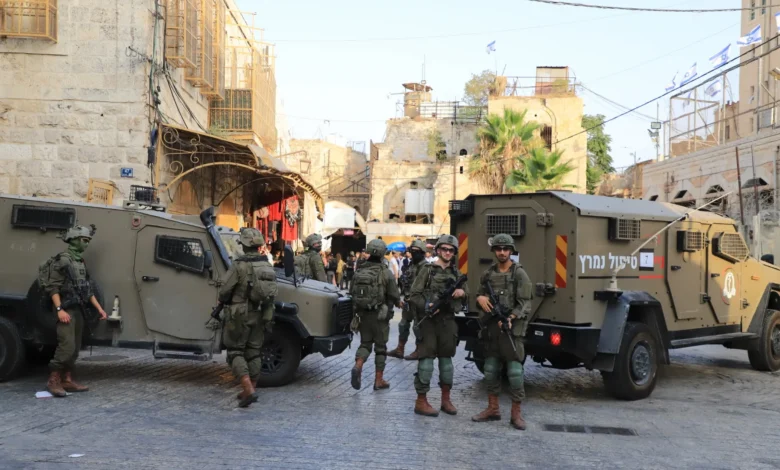
The continued expansion of settlements and the changing distribution of territorial control could further undermine the prospects of establishing a viable Palestinian state.
An Israeli military analyst has warned that the occupied West Bank is undergoing a rapid transformation in the nature of territorial control, amid escalating settler attacks and the expansion of settlement outposts. The Israeli army and police are being accused of showing leniency toward these attacks and, in some cases, even cooperating with those carrying them out. The development paints a troubling picture of the future of the Palestinian territories, as concerns grow that the realities being established on the ground could pave the way for the annexation of large parts of the West Bank.
-
Settler Violence Isolates a Christian Town in the West Bank: Taybeh Faces a New Reality
-
Expanding the Offensive and Accelerating Annexation: Israel Redraws the Landscape in the West Bank
Amos Harel, a military analyst for the Israeli newspaper Haaretz, said that Israeli security forces had “completely lost control” of the West Bank in recent months. He noted that settlers, backed politically by ministers and members of the governing coalition, were expanding their activities across Palestinian territories, including Area B, which is supposed to fall under Palestinian civilian administration and Israeli security control.
These developments coincide with a significant expansion in the establishment of farms and settlement outposts, particularly in rural areas, where the presence of settlers is creating new flashpoints with Palestinian communities. According to Harel, the objective goes beyond simple settlement expansion and also involves pushing Palestinians off their land through a series of attacks and cumulative pressures, ranging from the demolition of homes and structures and the destruction of agricultural land to preventing farmers from accessing their sources of livelihood.
-
600 Former Israeli Officials Urge Trump to Halt Settler Violence in the West Bank
-
The West Bank Turns into a Powder Keg… Settler Marches and Calls for an Israeli Military Operation
These developments are particularly significant in light of the administrative division of the West Bank under the 1995 Oslo II Agreement into Areas A, B and C. The Palestinian Authority exercises broad civilian and security powers in Area A, while civilian and security responsibilities are shared in Area B. Area C, which accounts for approximately 60% of the West Bank, remains under full Israeli control. Settlement expansion in these areas effectively allows the distribution of territorial control to be reshaped without waiting for a final political settlement.
The political dimension of these security developments is also becoming increasingly prominent. Harel argues that the hard-line rhetoric of some Israeli officials is also linked to domestic political calculations, particularly as Likud primary elections approach, while Prime Minister Benjamin Netanyahu seeks to strengthen his political prospects ahead of the general election scheduled for October.
-
Settler Violence Threatens to Ignite the West Bank as Two Palestinians Are Killed Near Ramallah
-
Settlement Outposts: Israel’s Tool to Absorb the West Bank Ahead of the Elections
The incident in the village of Qusra on Monday illustrates the nature of the escalating tensions. According to Harel, an Israeli army unit protected settlers who had established an outpost on privately owned Palestinian land, while the landowners attempted to approach their property. Journalists from Haaretz were also reportedly prevented from reaching the scene. In Harel’s analysis, this reflects a shift in the army’s role, from one ostensibly focused on enforcing the law toward one increasingly centered on protecting settlers.
These developments have consequences extending well beyond the immediate security dimension. Continued settlement expansion and changes in the distribution of territorial control could further undermine the prospects of establishing a viable Palestinian state, while Palestinians warn that consolidating the new realities on the ground could pave the way for Israeli moves toward formal annexation.
-
Israel Reveals Details of a Soldier’s Abduction That Ended with an Unexpected Escape in the West Bank
-
For $350 Million: Israel Prepares for Its Largest West Bank Settlement Expansion in Years
What is happening in the West Bank therefore appears to be more than another renewed wave of settler violence. Rather, it is a process in which security, political and demographic considerations are becoming increasingly intertwined. If settlement outposts continue to expand and Israeli institutions become less capable of enforcing the law against settlers, the changes taking place on the ground could become increasingly entrenched, making it more difficult to return to political arrangements based on the borders and territorial divisions that existed before the current wave of expansion.
-
Execution of Palestinian prisoners from the West Bank comes into force
-
The war against Iran will shape the future of the West Bank
-
An unprecedented measure: an “electronic bracelet” to curb settler violence in the West Bank