Blocking Tawakkol Karman from Addressing the UN Security Council: A Setback for the Muslim Brotherhood
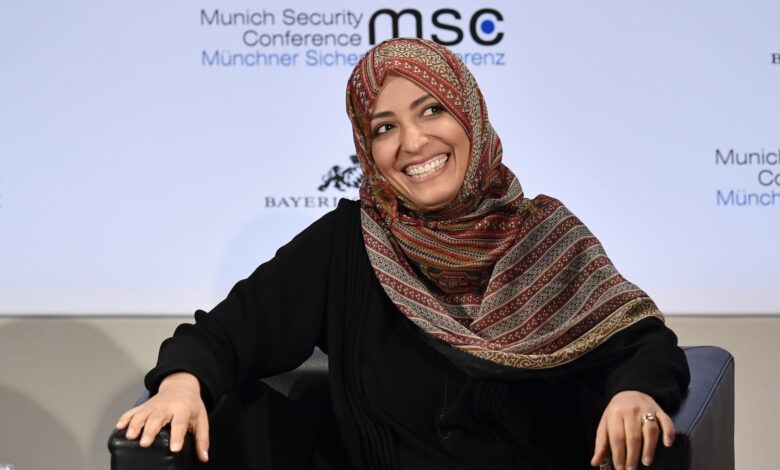
International opposition prevented Yemeni activist Tawakkol Karman from taking the floor at the United Nations Security Council over her promotion of the Muslim Brotherhood’s ideology.
Karman had intended to deliver a briefing before the Security Council on behalf of Yemeni civil society.
The Associated Press quoted Denmark’s deputy permanent representative to the United Nations, Sandra Jensen Landi, as saying that Karman was prevented from speaking because of “strong opposition.”
-
Tawakkol Karman Ridicules Syrians Calling for the Formation of an Inclusive Government
-
Led by Tawakkol Karman, Yemeni Brotherhood organize a conference in America to incite against their country
Observers and activists on social media said that Karman’s ties to the Al-Islah Party, her affiliation with the Muslim Brotherhood, and her advocacy of the group were behind the international rejection.
International awareness of the risks associated with the Muslim Brotherhood has increased in recent years, with several European countries beginning to take measures against the group’s activities following security reports concerning the threats it allegedly poses to national security and democracy.
The U.S. position has also hardened, going beyond the European approach after the administration of U.S. President Donald Trump took measures against institutions affiliated with the Muslim Brotherhood.
-
The Muslim Brotherhood Senses Danger… The U.S. Tries to Introduce a New Player in Yemen
-
Khat Taxes… A Realistic Picture of Corruption by the Muslim Brotherhood in Yemen
Late last year, Trump issued an executive order launching a process to review and designate specific branches of the Muslim Brotherhood, particularly in Egypt, Jordan, and Lebanon, accusing them of supporting violence and Hamas and of threatening U.S. interests.
At the beginning of the current year, the U.S. Treasury Department designated the group’s branches in Egypt and Jordan as “Specially Designated Global Terrorists,” while the State Department designated the Lebanese branch, known as “Al-Jamaa al-Islamiya,” as a Foreign Terrorist Organization and added its secretary-general, Mohamed Fawzi Taqoush, to terrorism-related sanctions lists.
-
Corruption of the Muslim Brotherhood in Yemen… Embezzlement, Extortion, and Trading in People’s Needs
-
From Behind Prison Bars, a Tribal Leader Exposes the Terror Tactics of Yemen’s Muslim Brotherhood
These designations result in the freezing of assets subject to U.S. jurisdiction, a ban on transactions and material support involving the designated entities, as well as restrictions on entry into the United States when an organization is designated as a Foreign Terrorist Organization.
Meanwhile, several U.S. states had already taken steps to designate institutions affiliated with the group as terrorist organizations.
In its latest move targeting the Muslim Brotherhood, Washington imposed sanctions last July on a senior figure in Egypt’s Muslim Brotherhood, as well as on individuals and entities accused of raising funds for Hamas through charitable organizations and financial networks.
-
From institutional Brotherhoodization to shadow governance… Yemen’s liberated provinces in a Brotherhood nightmare
-
How do the Muslim Brotherhood prevent the recovery of Taiz and sabotage the Joint Operations Room in Yemen?
-
The Muslim Brotherhood-affiliated Islah party throws the stick of partisan quota into the wheels of the Yemeni government