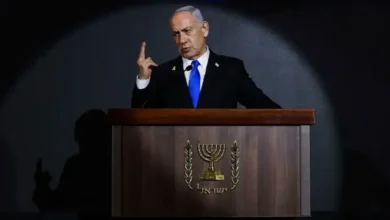
Is Trump planning to end the war against Iran?
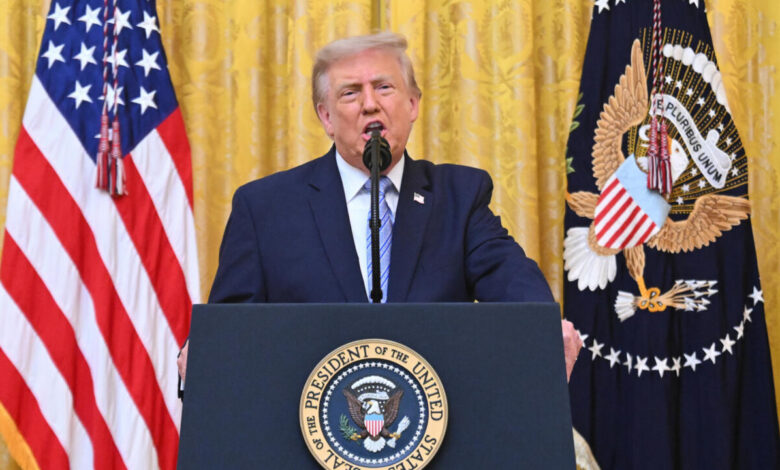
US officials say the president believes that sustained, intensive economic pressure will force Tehran to end its nuclear program or cause it to collapse.
US President Donald Trump is considering announcing an end to the war with Iran and is banking on intense economic pressure against Tehran, The Wall Street Journal reported Thursday. This comes amid indications that senior officials in the US administration are pressing to avoid a major escalation of the war with Iran ahead of the midterm elections scheduled for November 3.
The newspaper, citing senior US officials, reported that Trump had discussed with his top advisers the possibility of announcing an end to the war with Iran.
According to the officials, the president supports the move and believes that sustained, intensive economic pressure will force Tehran to end its nuclear program or lead to its collapse.
The Wall Street Journal reported that, despite these discussions being held behind closed doors, the US Department of Defense, or Pentagon, had extended the deployment period of its military forces in the region, and that the war could continue into next year.
The cumulative economic cost of the war could become an additional factor in the White House’s calculations, particularly if military operations continue for a longer period and the costs of deploying US forces, troops, and defense systems in the region increase. As the midterm elections approach, Trump may find himself having to balance his military objectives against domestic pressure to reduce spending and avoid a prolonged war that fails to produce quick results that can be presented to the American public.
These calculations coincide with indications of declining public support for the continuation of the war, at a time when its economic and security repercussions are becoming increasingly prominent in the US domestic debate. The longer the confrontation lasts and the higher its cost becomes, the more difficult it will be to convince voters of the merits of continuing it. This could strengthen voices within the administration calling for an end to military operations and a transition to a negotiating process that would allow Trump to declare that he had achieved his objectives without becoming entangled in an open-ended conflict.
US Treasury Secretary Scott Bessent announced on August 24 that the launch of an “economic elimination” campaign aimed at cutting off all the economic lifelines keeping Iran afloat.
Bessent warned that countries continuing to do business with Iran would also face the risk of sanctions.
The United States and Israel launched a war against Iran on February 28, 2026, during which the vital Strait of Hormuz was closed, disrupting a key route for oil exports and global supply chains.
Iran responded with attacks on Gulf countries and on what it described as “US and Israeli targets” in the region, before a ceasefire was reached.
On June 18, 2026, Washington and Tehran signed a memorandum of understanding aimed at ending hostilities and reopening the Strait of Hormuz to navigation. However, its implementation subsequently stalled due to disagreements over its enforcement and the security of the waterway.
Fighting resumed in July, before the US Central Command, CENTCOM, announced Tuesday that it had resumed strikes against targets inside Iran.