Seoul Considers Deploying Military Assets in the Strait of Hormuz Under U.S. Pressure

South Korea’s consideration of deploying military assets to the Strait of Hormuz reflects a delicate balancing act between protecting maritime navigation, responding to pressure from Washington, and avoiding direct involvement in the war.
Rapid developments surrounding the Strait of Hormuz point to a possible shift in South Korea’s position on the escalating crisis between the United States and Iran. South Korean media have reported that the government is considering deploying military assets to the strategic waterway to help safeguard freedom of navigation, with the possibility of sending them before the end of the year, in a move that appears likely to have been prompted by U.S. pressure.
According to South Korean media, citing government and military sources, Seoul is preparing the necessary procedures to submit any potential military contribution to parliament, including the submission of an approval request in September after it has been reviewed by the Cabinet.
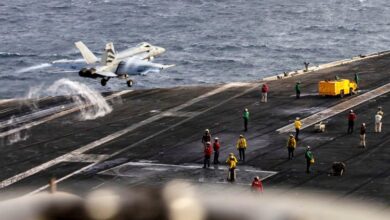
The options under consideration include a maritime patrol aircraft, a logistical support vessel, and a specialized unit tasked with detecting and clearing mines. The government is also holding discussions with the United States, the United Kingdom, and France regarding the scale and nature of any potential South Korean contribution. South Korea’s public broadcaster reported that the options being considered include a P-8 maritime patrol aircraft, an explosives-response team, and a naval support vessel.
The South Korean presidency, however, quickly denied that the government had reached a decision to send troops or military assets to the strait. It stressed that reports claiming that a decision had already been made “differ from the facts” and that the details of the matter had not yet been finalized. At the same time, the presidency acknowledged that Seoul was consulting with other countries on practical ways to contribute to restoring freedom of navigation and strengthening peace and stability in the Middle East.
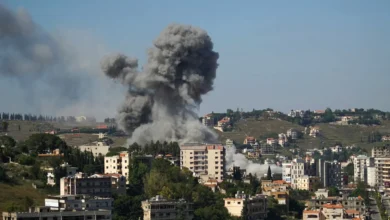
The development comes as U.S. pressure on its allies to participate in securing the Strait of Hormuz intensifies. Since the outbreak of the U.S.-Iran confrontation, the strait has become one of the conflict’s main flashpoints, with continued risks to maritime traffic and oil flows remaining below pre-war levels. In late August, the United States carried out strikes against Iranian sites linked to maritime threats and mines in the strait, triggering renewed confrontation with Tehran.
South Korea’s position has implications that extend beyond the issue of direct military participation. South Korea relies heavily on the stability of maritime supply routes and energy flows from the Middle East. As a result, continued disruption in the Strait of Hormuz poses a direct economic threat to the country, even as Seoul remains cautious about becoming involved in an open military confrontation with Iran.
The options being discussed also suggest, if adopted, an attempt to separate the protection of maritime navigation from direct participation in the U.S. war against Iran. Deploying a patrol aircraft, a support vessel, or a mine-clearance team could be presented as a contribution to protecting international trade rather than involvement in combat operations.
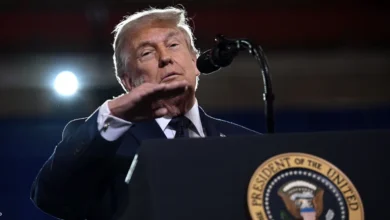
It is difficult to separate the South Korean debate from the pressure being exerted by U.S. President Donald Trump on Washington’s allies. Trump has publicly criticized Seoul for failing to assist the United States in confronting Iran, also linking the issue to the decision to scale back some joint military exercises with South Korea. Washington had asked several countries, including South Korea, to contribute to efforts related to freedom of navigation in the Strait of Hormuz.
President Lee Jae-myung’s government therefore faces a delicate equation: maintaining its security alliance with Washington on the one hand, while avoiding being drawn into a confrontation that could expand security and economic risks in the Middle East on the other.
If Seoul moves from consultations to the actual deployment of military assets, it would represent a notable expansion in the range of countries participating in the protection of navigation in the Strait of Hormuz. It would also demonstrate that the repercussions of the war are no longer confined to the Middle East, but are increasingly placing pressure on major economic powers that depend on global trade and energy.