Iran Threatens to Accelerate Nuclear Program After Referral to UN Security Council
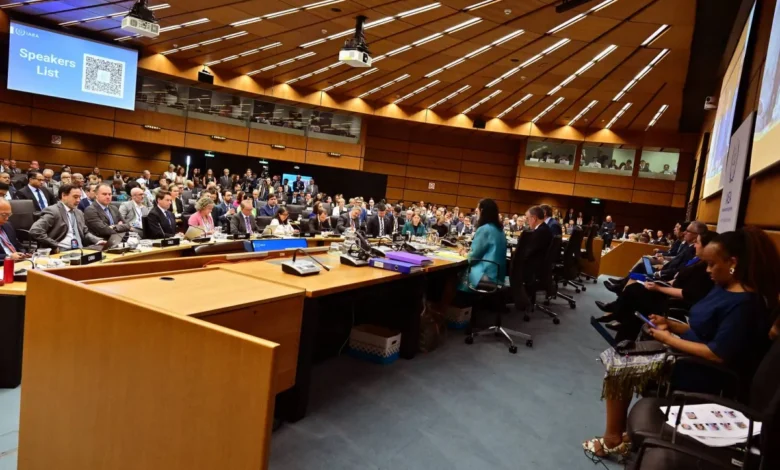
Iranian parliament member Rouhollah Najabat, a member of the National Security and Foreign Policy Committee, says Tehran does not intend to make concessions in response to the international measure and that the next phase will involve greater efforts to develop the technical capabilities of its nuclear program.
Iranian parliament member Rouhollah Najabat, a member of the National Security and Foreign Policy Committee, has threatened to accelerate the technical development of Iran’s nuclear program in response to the referral of the Iranian file to the UN Security Council. His remarks suggest that a decision by the Board of Governors of the International Atomic Energy Agency could push Tehran toward a tougher stance and greater escalation rather than concessions to the West.
In remarks carried by the Khaneh Mellat news agency on Wednesday, Najabat said Iran would respond to the decision with greater seriousness and firmness, warning Western countries that a policy of threats and resorting to the UN Security Council would not achieve its objectives. He added that Tehran had no intention of making concessions in response to the international measure and that the next phase would see increased efforts to develop the technical capabilities of its nuclear program.
The Iranian official’s rhetoric points to a possible shift toward using the referral decision as justification for intensifying efforts to rebuild the nuclear program, particularly because Iran’s facilities sustained extensive damage during the war. Rather than treating the decision as a pressure tool that could compel it to back down, Tehran could present it domestically as an additional reason to restore its capabilities, reinforce the protection of its facilities, and develop its nuclear infrastructure.
This comes at an exceptionally complex time for Iran, which is simultaneously attempting to deal with the consequences of strikes that hit its nuclear facilities, economic sanctions restricting its access to resources and technology, and growing international pressure over the nature of its nuclear program. The convergence of these pressures could lead Iran’s leadership to adopt a policy focused on restoring damaged capabilities rather than accepting new restrictions.
Tehran could also use the Board of Governors’ decision to reorganize the priorities of its nuclear program. Rebuilding damaged facilities may go beyond repairing what was destroyed and could provide an opportunity to modify the program’s operational structure, strengthen the protection of sensitive sites, and distribute capabilities among facilities that are more difficult to target, thereby reducing the impact of any future strikes.
Iran is also seeking to frame the decision as part of a political confrontation with the West. Najabat described the Board of Governors’ move as the result of miscalculations and accused Rafael Grossi, the director general of the International Atomic Energy Agency, of pursuing a policy of pressure against his country. He said that any subsequent diplomatic deadlock or tension would be the result of the Western position, while also pointing to the role that Russia and China could play in dealing with developments related to the nuclear issue.
In the same context, Najabat said the Iranian parliament would not be satisfied with previously adopted laws and measures, including the legislation concerning the suspension of cooperation with the International Atomic Energy Agency. He stressed that the legislative body would not remain passive in the face of the Board of Governors’ actions. This suggests that Iran’s response could move beyond political statements toward practical measures affecting the level of cooperation with the Agency.
Iranian Foreign Ministry spokesman Esmail Baghaei had described as “contradictory” the decision by the IAEA Board of Governors to refer Iran’s nuclear file to the UN Security Council.
He said the decision was contradictory and ignored the real reasons that had prevented the Agency from accessing Iran’s nuclear facilities.
In remarks to reporters, he said the decision called on Iran to fulfill its safeguards obligations while overlooking the fact that the Agency’s inability to access Iranian facilities was a direct consequence of the military aggression carried out by the United States and Israel against those sites. He added that attacks targeting the nuclear facilities at Natanz, Isfahan, and Fordow, along with Israel’s war in June 2025, had made it practically impossible to implement the safeguards obligations under the prevailing security conditions.
On Wednesday, U.S. President Donald Trump said the United States might strike Pickaxe Mountain in Iran and warned Tehran against recklessness over the nuclear issue.
In a speech delivered at the Republican Party convention held ahead of the congressional midterm elections, he said: “We notice some activity on the mountain. I advise Iran very seriously because we will have to hit it very hard.”
Pickaxe Mountain is located near Iran’s Natanz uranium-enrichment facility, which sustained extensive damage. It is a fortified site containing two tunnel complexes buried deep underground.
Trump has threatened to strike Pickaxe Mountain since at least mid-July.
Pickaxe Mountain is located 220 kilometers south of Tehran and about two kilometers from the Natanz complex.
The Natanz site, which houses two of Iran’s uranium-enrichment facilities, was struck in March as part of U.S.-Israeli military attacks on Iran. Israel had also bombed Natanz during the war it fought with Iran last year, which lasted 12 days.
According to the Institute for Science and International Security, a U.S. research organization focused on nuclear nonproliferation issues, the underground tunnel facility being built at Pickaxe Mountain was not targeted in either of the two wars.
Trump has repeatedly said that weakening Iran’s nuclear capabilities is one of the objectives of the war he is waging. Iran does not possess nuclear weapons and maintains that its uranium-enrichment program is intended for peaceful purposes. The United States is a nuclear-armed power, while Israel is widely believed to be the only state in the Middle East to possess nuclear weapons, although it has neither confirmed nor publicly denied this.