Al-Sadr Warns Against Foreign Interference in Iraq Following US Withdrawal
The leader of the Sadrist movement has welcomed the withdrawal scheduled for September 30 and called on Washington to honor the deadline. He believes that ending the coalition’s military presence could mark the beginning of a new phase in which Iraq assumes greater responsibility for its own security.
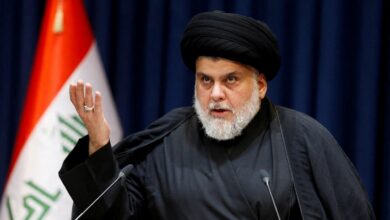
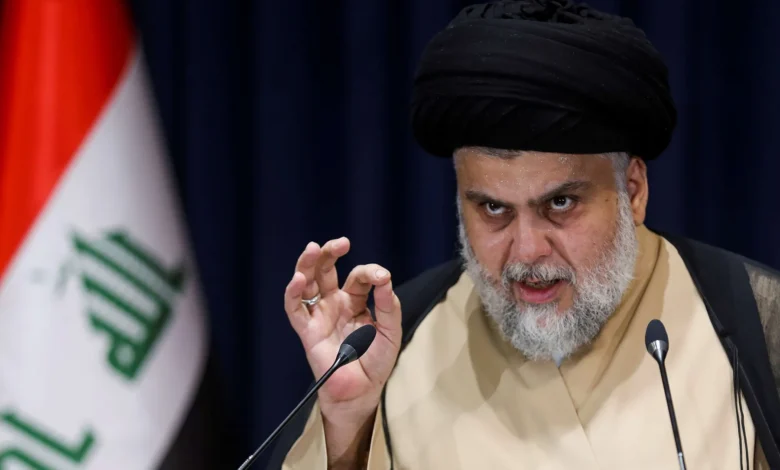
Moqtada al-Sadr, leader of the Shiite National Movement, has warned both “neighboring and non-neighboring” countries against attempting to interfere in Iraq’s internal affairs after the withdrawal of US forces and the international coalition. He emphasized his categorical rejection of any form of foreign intervention.
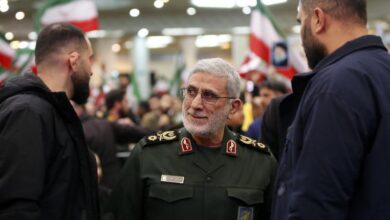
His statement carries particular significance as September 30 approaches, the date set for the conclusion of the coalition’s military mission in Iraq. Observers suggested that Al-Sadr’s remarks were primarily directed at Iran and its proxies in the country.
Al-Sadr’s position comes as Iraq prepares to enter a new security and political phase following the departure of foreign troops. The transition has prompted an internal debate over the ability of state institutions to manage the country’s security and prevent Iraq from once again becoming an arena for regional powers to settle their differences through proxy confrontations.
Al-Sadr stressed that the withdrawal of US forces must not create a vacuum that foreign actors could exploit to influence Iraqi decision-making or undermine the country’s sovereignty, independence and identity.
Although the Sadrist leader did not name any particular country in his warning, his remarks come against the backdrop of Iran’s extensive influence in Iraq, particularly through political forces and armed factions with close ties to Tehran.
The post-withdrawal period has raised concerns that regional powers could seek to expand their political and security influence by taking advantage of the reduced US military presence, which has played a significant role in shaping Iraq’s balance of power for many years.
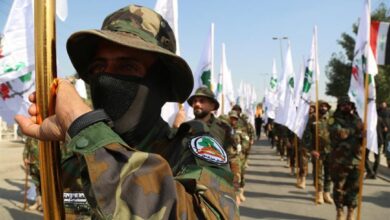
These concerns have become even more pressing amid the continuing dispute over the future of Iraq’s armed factions. The Iraqi government faces mounting pressure to place all weapons under state authority, while powerful Iran-backed groups continue to resist disarmament.
Ensuring that security-related decisions remain exclusively in the hands of official institutions will therefore be one of Baghdad’s most significant challenges after September 30. Recent reports have shown that several Iran-aligned factions still refuse to relinquish their weapons despite government efforts to resolve the issue.
At the same time, Al-Sadr welcomed the scheduled withdrawal and urged Washington to respect Iraq’s decision. He argued that ending the coalition’s military presence could open the way to a new phase in which Iraq assumes greater responsibility for maintaining its own security.
He emphasized that the country must be protected by Iraqi forces, particularly the border guards and the air force, and that the central government should serve as the sole authority responsible for managing security affairs.
His appeal comes as Iraqi authorities have declared September 30 to be the “fixed and final” deadline for ending the coalition’s military presence. The withdrawal is being presented as a transition toward a new phase of security cooperation and bilateral relations, with Iraqi forces assuming broader security responsibilities.
Al-Sadr also called on Iraqi political leaders not to seek another US military intervention in the future. He maintained that Iraq possesses sufficient forces and institutions to protect its territory, provided that they are strengthened and placed under the authority of the commander-in-chief of the armed forces.
He linked this objective to the need to move away from sectarian and ethnic conflicts, which could create conditions conducive to foreign interference.
Al-Sadr’s position therefore reflects a dual approach: welcoming the end of the US military presence while warning that the withdrawal must not lead to the expansion of other countries’ influence.
This position is particularly significant given Iran’s continuing influence within Iraq’s political and security spheres, as well as the regional tensions that leave the country vulnerable to the repercussions of the confrontation between Tehran and its adversaries.