Trump Tightens the Noose Around Iran in New York
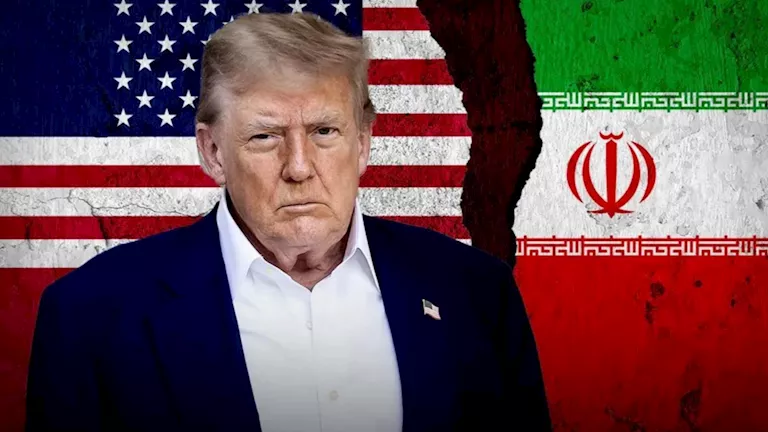
“Permission to enter does not mean freedom of movement.” This is the principle guiding the United States’ handling of the Iranian delegation attending United Nations meetings on US territory.
A reduced Iranian delegation has arrived in New York to participate in the United Nations General Assembly.
The visit comes as US President Donald Trump speaks of the possibility that “very big things” could happen in the near future amid the ongoing war in the Middle East.
However, the Iranian delegation’s presence on the territory of a country with which Iran remains at war represents an unprecedented development in recent years.
The United States authorized Tehran’s delegation, which includes President Masoud Pezeshkian and Iranian Foreign Minister Abbas Araghchi, to attend the meetings.
Last Thursday, the US State Department announced that this year’s delegation would be smaller than the one that attended the 2025 meetings, several months before the outbreak of war between the United States and Iran.
“Consistent with our obligations as the host country, Iran’s core delegation will be permitted to attend the United Nations General Assembly’s high-level week,” a State Department spokesperson said.
“The delegation will be subject to movement restrictions and will also face a ban on purchasing luxury items and other goods under our sanctions policy,” the official added.
According to CNN reporting, the US Secret Service is responsible for protecting the Iranian president during his participation in the General Assembly meetings.
The State Department’s Diplomatic Security Service is providing protection for the remaining members of the delegation.
Federal security agencies are also being supported by units from the New York Police Department’s Intelligence Bureau, police investigators and highway escort teams, according to officials who spoke to CNN.
Prior Authorization Required
A US State Department official explained that members of the Iranian delegation had been allowed to enter the United States “solely for the purpose of representing their country at the United Nations.”
They must therefore restrict their activities to UN-related business.
Any delegation member seeking to travel beyond the immediate vicinity of UN headquarters, John F. Kennedy International Airport or the facilities of Iran’s mission to the United Nations must obtain prior approval from the US State Department.
These restrictions are not new. Washington has imposed similar limitations on the movement of Iranian diplomats during previous visits.
Last year, the Trump administration barred Iranian diplomats from entering wholesale stores and purchasing luxury goods while in the United States.
The State Department said that policy remains in effect.
Iran is not the only country facing restrictions on access to the General Assembly.
The Trump administration has once again refused to issue a visa to Palestinian Authority President Mahmoud Abbas, who will address the General Assembly by video.