Iran Threatens Airports but Cannot Shut Them Down: Why Does Tehran Keep Squandering Its Leverage?
Iran has extended its threats from maritime navigation to air travel as new US restrictions increasingly limit the ability of Iranian airlines to operate at foreign airports.
Officials in Tehran have threatened countries that suspend Iranian flights with retaliatory measures, going so far as to warn that their airports could be disrupted. Developments on the ground, however, expose Iran’s limited ability to impose its rules beyond its own airspace, particularly when compared with Washington’s financial and commercial tools targeting fuel supplies, ground handling, ticketing and airport services.
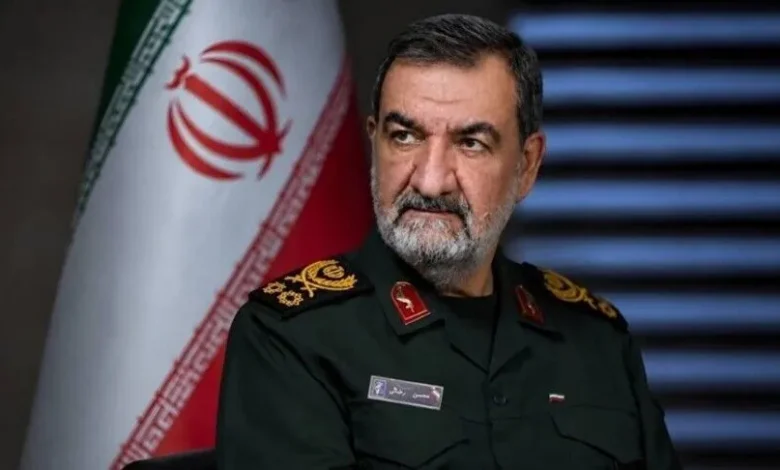
Mohsen Rezaei, secretary of Iran’s Supreme National Security Council, declared that airports refusing to receive Iranian aircraft would no longer be able to operate flights to Iran. Mohammad Mokhber, an adviser to the Supreme Leader, subsequently escalated the threat, saying that the region must either remain open to aviation for everyone or be closed to everyone.
The escalation followed the suspension of Iranian flights to Iraq, Azerbaijan and Georgia, alongside disruptions to services to Muscat and several other regional destinations.
Washington Targets Aviation Services
According to information provided by a well-informed US source within the national security apparatus, “the administration is monitoring the implementation of the restrictions through the Treasury, State and Transportation departments. The current phase is focused on fuel suppliers, ground-handling companies, booking systems and insurers at airports receiving Iranian carriers. Updated lists are also being sent to governments and companies, identifying the Iranian entities covered by the measures and the penalties that could affect foreign service providers.”
The source said that “the National Security Council has requested that priority be given to monitoring any threat to the safety of regional airports, air navigation or flight-related infrastructure, while also tracking possible retaliatory measures inside Iranian airports. Information-sharing has been coordinated with regional aviation authorities regarding cancelled flights, alternative routes and any Iranian activity that could affect civilian operations.”
During the next phase, the US plan is expected to expand its scrutiny to aircraft leasing and insurance companies, payment-service providers and intermediaries that might help Iranian carriers circumvent the restrictions. Washington will also monitor attempts to re-register aircraft or use front companies to obtain fuel and services, while humanitarian exemptions will remain subject to Treasury Department review.
The US campaign expanded this month, with measures targeting dozens of Iranian airlines. Service providers were also threatened with secondary sanctions if they continued supplying those carriers with fuel, landing services or ticket-sales support.
The international capacity available to Iranian airlines had already fallen by around 49 per cent in August compared with the same period a year earlier, making the effects of the restrictions quickly visible in flight schedules and passenger traffic.
Threats Beyond Iran’s Capabilities
The US source also said that “Washington has informed its partners that any Iranian attack on civilian airports or aviation-related infrastructure will be treated as a direct military escalation. The response would target the military assets used in any such attack, with a particular focus on launch sites, command-and-control systems and the military infrastructure responsible for carrying it out. This establishes a clear limit on Tehran’s efforts to turn aviation threats into a cost-free instrument of pressure.”
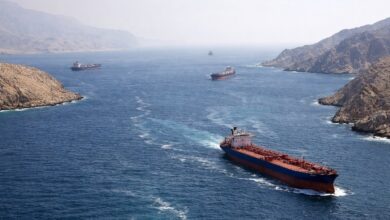
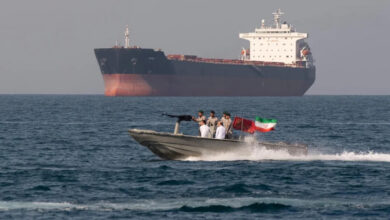
The Strait of Hormuz differs fundamentally from the aviation issue. Part of the waterway runs alongside Iran’s coastline, where Tehran possesses direct naval and military capabilities. Regional airports and airspace, by contrast, fall under the sovereignty of their respective states. The Iranian regime therefore cannot reproduce the Hormuz model in the aviation sector without resorting to a security escalation that would substantially increase the political and military costs it faces.
Amir Etemadi, a researcher specialising in Iranian affairs, said that “the latest threats reflect the narrowing range of options available to the regime now that aviation restrictions have become directly visible to citizens and businesses. Flight cancellations and shrinking destination networks are difficult to conceal, unlike certain financial sanctions that can be partly circumvented through intermediaries and informal markets.”
Etemadi said that “turning aviation into an instrument of intimidation will further isolate Iranian airlines and encourage more governments and service providers to reduce their exposure to the Iranian market. Any security disruption involving aviation rapidly increases insurance and operating costs, making dealings with Iranian carriers even riskier for foreign companies.”
Recent developments reinforce this assessment. A flight carrying an Iranian parliamentary delegation to Tajikistan was forced to turn back after Turkmenistan refused to allow it to cross its airspace. The delegation subsequently reached Dushanbe.
The incident provides a practical demonstration that control over regional airspace remains in the hands of the states to which it belongs and that Tehran itself can be affected by restrictions similar to those it threatens to impose on others.
The current trajectory suggests that the Iranian regime is attempting to compensate for its diminishing economic leverage by issuing threats that exceed its direct capacity to act. Yet its effort to turn regional airspace into another version of the confrontation over the Strait of Hormuz is constrained by state sovereignty and by an international aviation network that provides Washington and its allies with financial, regulatory and military tools far more extensive than those available to Iran.