Iranian Media Claims Tehran’s Currency Market Is Under the US Treasury Secretary’s Control
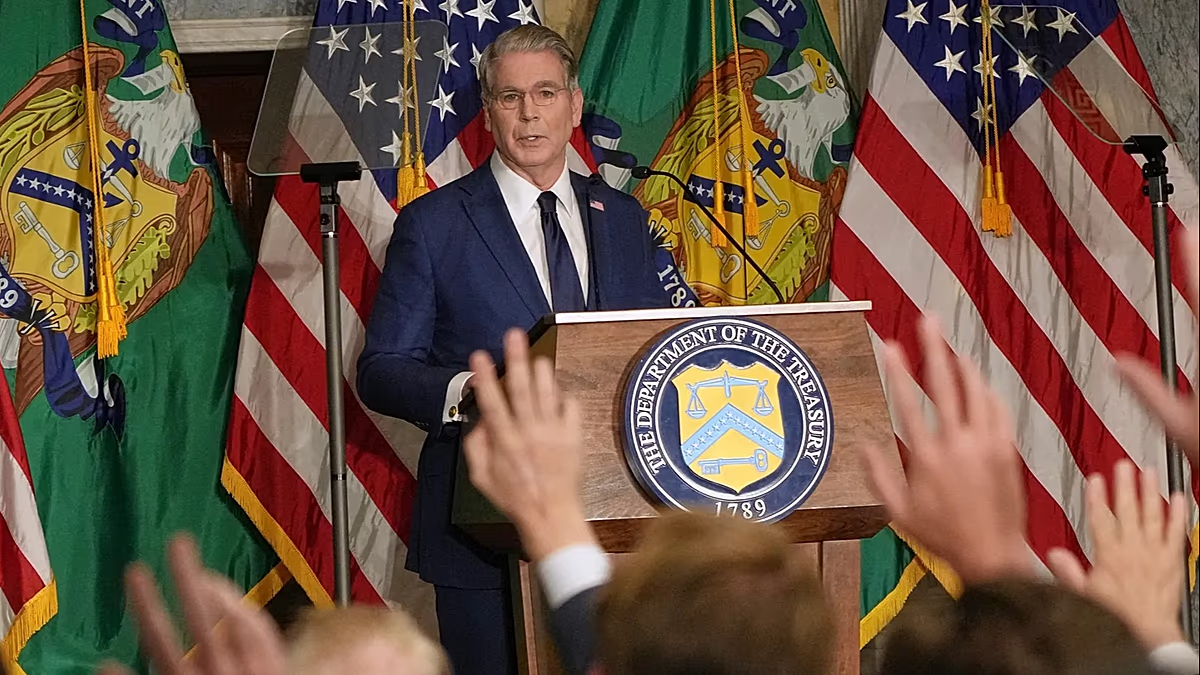
Fars News, an agency affiliated with Iran’s Islamic Revolutionary Guard Corps, claimed on Wednesday that Tehran’s dollar and foreign exchange market was now being managed by US Treasury Secretary Scott Bessent.
The agency published its report after the Iranian currency suffered a historic collapse against foreign currencies on Tuesday, particularly against the US dollar.
“The dollar rose to 253,000 tomans on the Iranian market in less than 24 hours, while the Central Bank of Iran has so far offered no explanation for this sharp increase or outlined its plan for managing the foreign exchange market,” Fars News reported.
At the same time, Bessent made three statements about the Iranian currency over the previous three days, raising the possibility that the dollar could reach 300,000 tomans.
The Central Bank of Iran, meanwhile, has continued to increase the official exchange rate by approximately 1,500 tomans per day. It says the move has encouraged the repatriation of export revenues and increased the supply of foreign currency on the market.
Gold and gold coin prices also continued to rise alongside the dollar and other foreign currencies. The price of the gold coin known as the “Emami” increased from less than 248 million tomans on Monday to approximately 252 million tomans on Tuesday.
The surge on Iran’s open market comes as US President Donald Trump denied reports that Washington had offered to lift sanctions and release frozen Iranian assets in return for Tehran scaling back its nuclear programme.
In a related development, the Central Bank of Iran announced plans to inject as much as $2 billion in foreign banknotes into the exchange market as part of an effort to manage currency trading.
In a statement issued on Wednesday, the bank said foreign currency sales would begin that day, with an initial $1 billion made available through selected bank branches and currency exchange offices across the country.
All Iranian citizens over the age of 18 will be allowed to purchase foreign currency for personal needs by presenting their national identity card, subject to a maximum of $10,000 per person.
The Central Bank said the initiative formed part of its governor’s commitment to managing the foreign exchange market and increasing the supply of foreign currencies.