Between Assassination and Negotiations: Naim Qassem, Netanyahu’s Riskiest Card Before the Elections
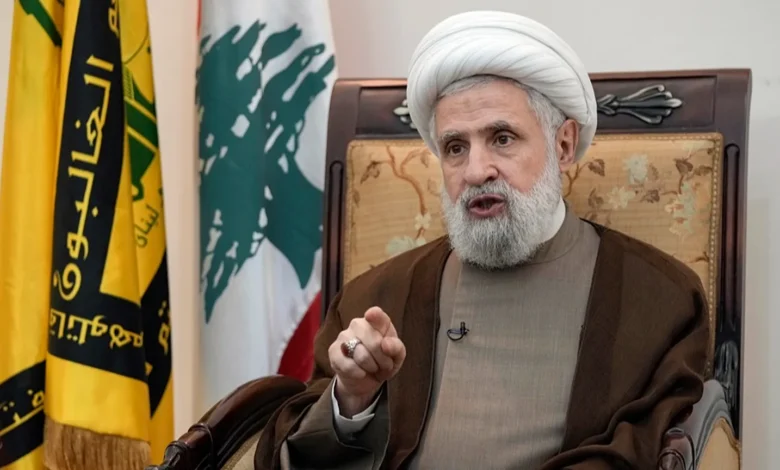
Israel is seeking to use its threat to assassinate Hezbollah Secretary-General Naim Qassem for several purposes in the coming weeks, as negotiations with Lebanon are scheduled to take place in Florida on October 20.
Israel is increasing pressure on the Lebanese authorities to secure concessions in those talks and achieve progress on disarmament. Prime Minister Benjamin Netanyahu could then use those gains in the final hours before the elections to win votes.
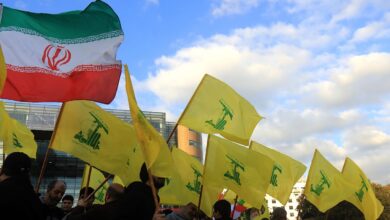
The threat to kill Qassem has prompted Lebanese political circles and Hezbollah’s support base to draw comparisons between the militia’s current secretary-general and his predecessor, Hassan Nasrallah, whom Israel assassinated. It has also renewed questions about the movement’s ability to fill the vacuum left by Nasrallah’s death, even two years later.
Western and Israeli media have recently circulated reports suggesting that the Israeli military is mobilising its intelligence and operational resources to eliminate Qassem within the next twenty days, ahead of Israel’s elections. Those reports present the militia’s leadership with a complex security challenge.
Qassem has repeatedly said that Israeli assassination threats carry no weight and do not alter the movement’s existing defensive plans.
Observers believe that the threat is primarily intended to increase pressure on the Lebanese government to take a firmer position, bring Hezbollah’s weapons under control and progressively intensify its confrontation with the organisation. Israel would thereby hope to secure changes concerning the militia’s arsenal.
Hussein al-Deek, a researcher specialising in Israeli affairs, says that all options are currently available to Netanyahu as the elections approach, including the assassination of Hezbollah’s political or military leaders.
Al-Deek said Netanyahu could consider assassinating Qassem. The threat also serves, in his view, as leverage to raise Israel’s demands in the negotiations scheduled for October 20 in Florida and exert further pressure on Lebanon. However, uncertainty over the election outcome makes the prospect of such an operation “unclear”.
He added that, given the dominance of the right in Israeli politics, such an assassination remains a possibility after the elections, regardless of whether Netanyahu’s coalition or the opposition wins.
Al-Deek explained that the Israeli right has a clear approach to unresolved issues, foremost among them the presence of militias in countries across the region. Striking these regional proxies is a central consideration among Tel Aviv’s competing political elites. The most consequential decisions, particularly concerning Hezbollah, are nevertheless likely to come after the elections.
By contrast, he described the Lebanese government as “weak” and unable to carry out disarmament. It remains largely passive, while Hezbollah, despite its military defeat and the destruction of its infrastructure in the south, still possesses a substantial arsenal in the Bekaa Valley and parts of southern Lebanon.
The researcher added that the US-sponsored framework agreement between Israel and Lebanon apparently provides for an Israeli withdrawal conditional on progress towards disarmament and the deployment of the Lebanese army in areas vacated by Israeli forces. The issue, however, appears to have taken on a broader dimension.
Al-Deek concluded that Israel remains committed, under its new security doctrine, to a strategy based on buffer zones, fighting on enemy territory and preventive warfare. On that basis, Israel continues to control approximately 70 villages and towns in southern Lebanon, most of them destroyed. Lebanese leaders, meanwhile, continue to insist on withdrawal, leaving all scenarios open to Israel.
For his part, Lebanese affairs specialist Nayef Azar believes that Israel’s threat to assassinate Qassem forms part of a gradual escalation of pressure on the organisation. It comes ahead of the October 20 negotiations, followed a week later by the Knesset elections. In his view, Netanyahu, who faces the prospect of losing power and is seeking to escape the charges against him at home, could pursue any number of courses of action.
Azar said that opinion polls place Netanyahu’s rival, former military chief of staff Gadi Eisenkot, ahead of him. This increases, in his assessment, the possibility of a war against Lebanon aimed at winning over voters dissatisfied with the government’s policy in northern Israel, particularly its failure to disarm Hezbollah completely.
He added that the threat could also be intended to mobilise voters without being carried out. In his view, if Israel had wanted to assassinate Hezbollah’s secretary-general, it would already have done so. He believes Israel sees a considerable difference between Nasrallah, whom it assassinated, and his successor Qassem, whom it regards as neither a threat nor a figure with substantial influence over Hezbollah’s support base.
To support that assessment, Azar argued that most of Qassem’s speeches are intended for a domestic audience: he addresses his supporters as though delivering a university lecture. Meanwhile, Hezbollah’s hardliners appear on television to compensate for the vacuum left by Nasrallah, a role the current secretary-general has not fulfilled. Azar therefore concludes that Israel will not go as far as assassinating him.