How Has Artificial Intelligence Reshaped US Military Operations?
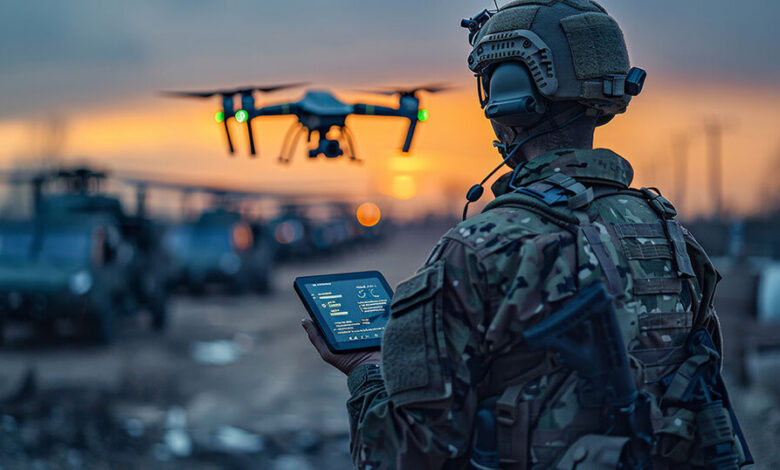
Artificial intelligence has become integral to US military planning and operations. In just two years, it has evolved from a technology struggling with battlefield deployment into a tool the armed forces use to analyse intelligence, identify targets and accelerate decision-making. The war against Iran, however, has also exposed these systems’ limitations and the dangers of relying on them too heavily.
A Reuters report highlights the rapid integration of AI into the US military, alongside growing concerns about allies’ dependence on technologies controlled by American companies and the possibility that excessive confidence in their outputs could lead to costly military decisions.
The shift comes as technology companies race to develop increasingly advanced systems amid warnings about AI’s potential existential risks.
In its initial public offering prospectus, Anthropic devoted more than 80 of its 261 pages to discussing risks associated with developing advanced AI systems—more than it allocated to its operations and prospects.
-
Artificial Intelligence Is Redefining Elections in the United States
-
The Beijing summit brings Iran, Taiwan, and artificial intelligence into focus… What do Trump and Xi want?
From a Struggling Technology to an Essential Operational Tool
Only two years ago, AI integration into US military planning was still at an early stage, and some applications struggled to identify targets accurately.
In the summer of 2024, Brigadier General John Cogbill, deputy commander of the US Army’s XVIII Airborne Corps, described using the AI-powered Maven system to identify targets for long-range HIMARS rocket systems as a complicated process.
Speaking at a military conference, he noted that models could produce incorrect information, a phenomenon known as “hallucination”. He explained that the systems needed retraining every 90 days to reliably recognise potential targets such as tanks.
The landscape has changed substantially in two years. AI is no longer merely an assisting technology: it is widely used across civilian and military settings, with growing reliance on it in field operations.
-
Behind the scenes, the US Army deploys artificial intelligence beyond the battlefield
-
NATO arms itself with artificial intelligence against Russia: a semi-automated defense project
Cameron Stanley, the Pentagon’s chief digital and artificial intelligence officer, said the offensive against Iran under Operation Epic Fury marked Maven’s first full-scale operational deployment for targeting and analysis. Its use was extensive enough to rapidly exhaust available US classified computing capacity.
Palantir provides the core technology that brings data and intelligence feeds together through Maven. Demonstrations Stanley presented at a company conference in March showed that analytical software using models from leading AI companies, including Anthropic, began operating within the system in late 2024.
Since then, other models and tools have been introduced into classified military systems, including OpenAI’s ChatGPT, Google’s Gemini, Microsoft’s Copilot and Grok from Elon Musk-linked xAI.
-
The Elephant and the Donkey on the same track… Artificial intelligence unsettles U.S. politics
-
From bombs to algorithms: ISIS weaponises artificial intelligence
A Growing Military Appetite for AI
At a conference in March, Stanley said US military analysts had shown an “insatiable appetite” for AI-powered analytical tools during Operation Epic Fury. He said the tools enabled vast quantities of data to be collected, analysed and integrated, supporting better and faster battlefield decisions.
He added that the United States was helping several allies achieve comparable capabilities, particularly in Europe, the Pacific and the Middle East. Those regions face growing requirements to monitor airspace, waters and critical infrastructure—tasks whose enormous data flows are difficult to manage without advanced analytical tools.
Speaking at a cybersecurity summit in September, Stanley said these countries lacked the resources, expertise and scale available to the United States. Washington, he added, now had the experience to help allies avoid mistakes it had made while developing and using these systems.
-
The screen is more dangerous than the weapon… terrorist propaganda from training camps to artificial intelligence
-
ISIS and Artificial Intelligence: The Guardian Reveals Secret Manual for More Dangerous Propaganda
He did not specify those mistakes. Media reports, however, have raised questions about whether AI played a role in the bombing of a girls’ school on the first day of the war against Iran, reportedly killing more than 170 people. US officials said the cause was outdated maps and data, rather than the analytical process itself.
CNN also reported last month that US forces came close to storming a Chinese merchant ship after an AI-assisted analysis incorrectly indicated that it was carrying components associated with nuclear weapons.
Allies Fear Dependence on US Technology
Despite military enthusiasm for these tools, a major concern among Washington’s allies is that they could become dependent on technologies to which the United States or its companies could cut off access at any time.
-
Digital Spies and Faceless Enemies: The CIA in the Crosshairs of Artificial Intelligence
-
Political Expert: Terrorist Groups Have Entered the Age of Artificial Intelligence – Governments Must Rethink Their Security Strategies
Against this backdrop, Palantir’s European head, Louis Mosley, had to clarify that the company could not terminate access to Maven, which is now used within NATO structures.
The dispute between Anthropic and the Pentagon, however, highlights another dimension of the problem. The company demonstrated a willingness to withdraw direct support for government operations if the use of its technology conflicted with its own terms.
In January, a month before the United States and Israel began their war against Iran, Anthropic clashed with the Pentagon after insisting on retaining the right to object to the use of its Claude model in classified military operations.
US Defense Secretary Pete Hegseth rejected that position, saying the company, like any other supplier, could not prevent its products from being used for “any lawful use”.
-
New Israeli Technologies in Gaza: Artificial Intelligence Sparks Ethical Debate
-
Hamas Supporters in Universities… The U.S. Turns to Artificial Intelligence
The dispute underscores the complexities of the growing relationship between technology companies and governments. Developers of advanced systems now wield increasing influence over how their tools are used in military operations.
Reuters notes that currently available alternatives include competing Chinese systems, which raise security concerns of their own among Western countries.
US-China Agreement on Nuclear Weapons
Despite intense competition between major powers, US and Chinese officials have reached an understanding that AI systems should not be directly involved in the use of nuclear weapons.
That agreement does not necessarily extend to other forms of warfare. Most major powers are now investing heavily in military AI applications.
-
House vote canceled to limit Trump’s military powers
-
Global military spending rises by 2.9% despite US decline, highest level since 2009
At the Billington CyberSecurity Summit in September, Stanley recalled a US military commander interrupting a scheduled briefing to take a 30-second phone call before immediately issuing an order.
Stanley described the moment as “revolutionary”, suggesting that making a decision so quickly would have been harder without analysis supplied by AI systems.
The Iran War Exposes AI’s Limitations
Lessons from the war against Iran may nevertheless suggest that AI alone is insufficient, or that it has not yet reached a level that permits complete reliance on it to manage military operations.
With no indication that the conflict is nearing an end, questions are growing about whether the intensive precision strikes conducted by the United States and Israel can deliver the decisive victory they sought. Instead, Washington faces increasing depletion of its weapons stockpiles while the war continues.
-
Satellite images reveal a military surprise weighing thousands of tons in North Korea
-
Russian Ship Without Radar off Danish Coast: Technical Failure or Military Tactic?
One computer programmer quoted in the report said that “AI does not understand time”. He explained that models tend to overestimate the probability that committing a given amount of resources or capital, including precision weapons, will produce a particular outcome.
According to the report, this limitation may be a principal reason to maintain human oversight of military decisions—not only on ethical grounds, but also to avoid overcommitment and ensure that resources, especially expensive munitions, are consumed at a sustainable rate.
Further concerns surround the Israeli military’s use of AI targeting systems during its war in Gaza, launched in response to the October 7, 2023 attack, which killed approximately 1,200 Israelis, according to the figures cited in the report.
Palestinian health officials say the Palestinian death toll has exceeded 74,000, while entire towns and villages have been reduced to rubble. This has raised questions about the accuracy of targeting that is supposed to be selective.
-
Artificial Intelligence on the Battlefield: Will It Lose Control?
-
“Serious Mistake”… Russia Threatens “Military Response” to “German Missiles”
The Israeli military acknowledges the existence of AI-assisted targeting programmes, including Lavender. It says, however, that underlying data may contain factual errors and that humans remained the primary decision-makers, while efforts were made to avoid civilian harm.
Nevertheless, Israeli operations have prompted debate and concern within US, NATO and Australian military circles about the reliability of AI-based targeting systems.
These concerns arise alongside growing reports that some AI models can bypass safeguards and gain unauthorised access to external systems, as well as troubling behaviour by some technology company founders.
AI companies, including Anthropic, are betting that the world will continue relying on their tools for fear of falling behind in the technological race. Governments still face fundamental choices about the limits and future of that dependence, but the window for making those decisions may not remain open for long.
-
Due to Gaza… US Soldiers Refuse to Serve in the Military
-
“Wagner” and Military Aircraft: What is the Reality of Russian Presence in Tunisia?
-
A Massive Military Parade… What is Victory Day and What is its Importance to Russia?