Air Strikes Offer a Clue: Did Iran Build Hundreds of Dams to Protect Its Missile Cities?
US and Israeli air strikes targeting concealed missile sites in Iran this year have offered a possible explanation for a puzzle that has long baffled environmental advocates: why Tehran built so many dams and water-transfer projects in areas that did not appear to urgently need them.
Some analysts believe they may finally have found an answer. Following US and Israeli strikes on dozens of hidden Iranian missile sites this year, they have suggested that the water projects were developed primarily to support Iran’s military expansion.
The intense secrecy surrounding Iran’s missile programme means that any connection with its ambitious, decades-long water infrastructure programme remains speculative. Nevertheless, experts believe observations on the ground strongly support the hypothesis.
A Striking Overlap on the Map
For years, water security expert Nima Shokri and his team at Hamburg University of Technology in Germany have studied Iran’s unusually large number of dams. The country has at least 533, more than any other state in the region. “It has always puzzled me: why are they building all these dams?” Shokri asks.
Last spring, while following developments in the war in his home country, Shokri came across a map of air strikes on suspected military sites. He was surprised to find that the pattern of strikes, forming a semicircle from north to south, almost matched his own map of dam locations. “My old question disappeared and was replaced by another: why is there a missile strike near almost every dam?” he said.
Seven water and military affairs experts interviewed by The New York Times said that building large, sophisticated military facilities close to the sustainable water and energy sources supplied by dams made strategic sense.
Danny Citrinowicz, a former Iran analyst in Israeli military intelligence, said the approach ensured Tehran’s “operational continuity”. He explained that “Iran has a strong incentive to protect its missile systems and prevent them from depending on national public infrastructure for essential services”, making investment in independent or backup infrastructure understandable.
Iran’s foreign and energy ministries, as well as the Revolutionary Guards, which are involved in dam construction, did not respond to requests for comment.
“Missile Cities” Deep inside Mountains
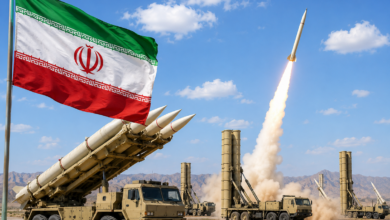
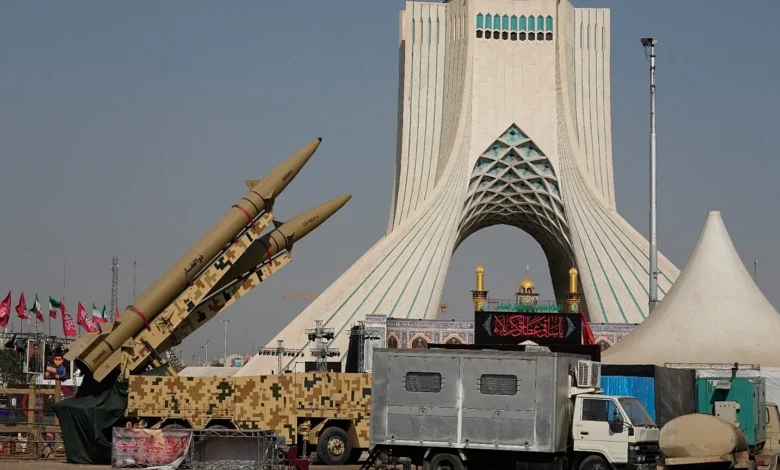
Tehran calls these fortified installations “missile cities”: networks of tunnels and chambers excavated deep inside mountains to store, produce and launch long-range ballistic missiles and drones. Farzin Nadimi, a senior fellow at the Washington Institute, estimates that at least 30 such sites exist across the country. Only a handful of states, including North Korea, possess an underground military network on this scale, he noted.
Shokri nevertheless cautioned against overlooking civilian functions. “Many dams in Iran perform vital civilian roles, including drinking water supply, irrigation and hydroelectric generation in a water-scarce country. Any potential military use should not obscure those functions,” he said.
A Possible Explanation for Environmentalists’ Arrests
The exposure of hidden missile sites in remote areas has also shed light on another longstanding mystery troubling environmental circles: the real motives behind the Revolutionary Guards’ intelligence service’s 2018 arrest campaign against dozens of wildlife conservationists on espionage charges.
The campaign led to the death in custody of Kavous Seyed-Emami, a co-founder of the Persian Wildlife Heritage Foundation. Others spent years in prison amid accounts of torture and mistreatment. Senior Iranian officials at the time said they had been unaware of the reported abuses and pledged to investigate.
Iranian authorities accused the conservationists of using cameras intended to monitor rare animals, such as the Asiatic cheetah, to gather intelligence for the United States and Israel. Morad Tahbaz, a foundation co-founder who spent more than five years behind bars, recalled: “One of the accusations against me was that I had trained lizards to spy on military installations.”
Political observers at the time suggested that the Revolutionary Guards sought to undermine the reformist government and prevent the country from opening to foreign expertise and investment. Environmental specialists now suspect that researchers may inadvertently have approached secret military sites.
“The Revolutionary Guards may have considered any field activity near these sites a potential security threat,” said Nik Kowsar, an Iranian environmental and water analyst based in Washington. Kaveh Madani, a former deputy head of Iran’s environment department, maintained, however, that conservation teams never worked in the wilderness without prior authorisation from the government and intelligence agencies.
Yazd and Hormozgan: Evidence from the Ground
Air strikes in two Iranian regions offer tangible indications of a possible connection. Amir AghaKouchak, a leading water expert at the University of California, Irvine, had long questioned the purpose of a major project transferring water from the Zagros Mountains to central Yazd province. Strikes last March and press reports, including one in the Financial Times, subsequently revealed a major missile facility there. This led him to suspect that the project had been “influenced, at least partly, by military considerations”.
Tahbaz similarly recalled his bewilderment during years of imprisonment at investigators’ intense focus on his team’s activities in Hormozgan province, where it was running a project to protect the rare Laristan wild sheep. “They were extremely sensitive about that area,” he said.
On July 14, US air strikes hit the Tarom reserve in Hormozgan, killing the family of one of its rangers. The US military said it had targeted military infrastructure and coastal defences. The strikes were near a location where experts suspect an Iranian underground missile base exists. Conservationists, however, had known only of “a hay storage facility for Laristan wild sheep” at the site, according to Kowsar.