Khaled Hassan on i24: Egypt’s Terrorist Designation of the Muslim Brotherhood Has Political Dimensions beyond Legal Measures
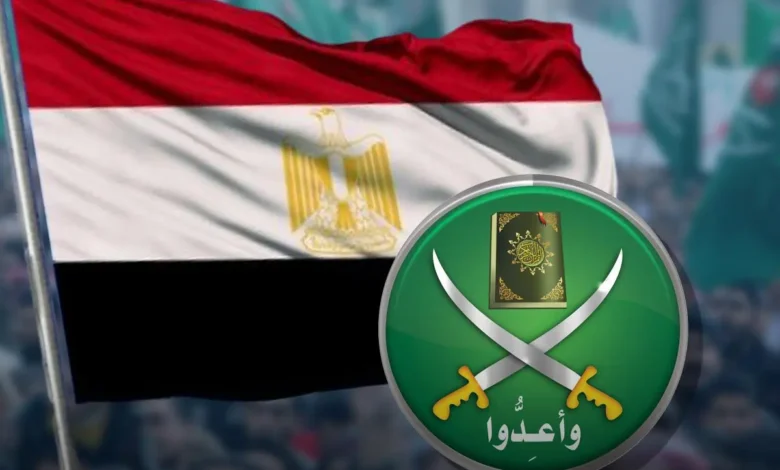
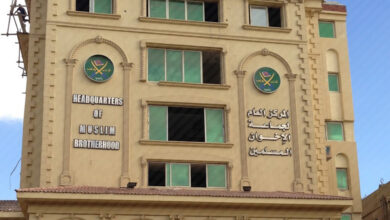
Egypt’s decision to place the Muslim Brotherhood permanently on its list of terrorist organisations has reopened debate over the movement’s future, the nature of its confrontation with state institutions and the implications for Cairo’s relations with Western capitals, which continue to approach its designation differently.
In an interview with Israeli broadcaster i24, British-Egyptian researcher Khaled Hassan offered a political interpretation of Egypt’s move. He argued that its practical impact could be limited compared with the scale of its political messaging, linking the decision to preparations for a transfer of power and efforts to prevent figures associated with the movement from entering political competition or standing for office.
Hassan’s remarks focus on the relationship between legal decisions and political conflict. They raise questions about whether the designation forms part of a comprehensive counter-extremism strategy or is more closely connected to managing domestic power balances and protecting the incumbent leadership from potential competitors.
Egypt’s Decision: Legal Effects and Political Messaging
Hassan believes that permanently listing the Muslim Brotherhood as a terrorist organisation does not necessarily represent a fundamental change in practice, since the movement already faces extensive legal and political restrictions in Egypt.
In his reading, the decision’s significance therefore lies not only in its immediate legal consequences, but also in the authorities’ message about the movement’s future and its place in the political process.
This assessment raises a central question about measures taken by states against organisations they regard as threats to their security and stability. Legal designation may restrict an organisation’s activities, disrupt illicit funding sources and enable lawful action against associated networks. It does not, however, automatically eliminate its ideas or end its social and political influence.
This highlights the importance of distinguishing action against an organisational structure from efforts to address its underlying ideology. Security and legal measures may be necessary to confront unlawful activities, but they are not sufficient on their own to tackle the intellectual and social factors that help extremism spread.
A Transfer of Power and Preventing the Brotherhood’s Political Return
Khaled Hassan linked Egypt’s decision to preparations for a transfer of power, suggesting that it could aim to prevent figures associated with the Muslim Brotherhood from standing for election or re-entering political competition.
This interpretation views the conflict between the state and the movement as extending beyond security designation to the future of the political system and the forces permitted to participate in public life.
Historically, relations between the Muslim Brotherhood and Egyptian state institutions have been among the most complex issues in modern Egyptian politics. They have passed through different phases of political participation, tension and confrontation, culminating in a ban and legal proceedings after 2013.
Any new decision concerning the movement must therefore be considered within this historical context and alongside the authorities’ concerns about its renewed influence within political institutions.
Assessing the move nevertheless requires distinguishing restrictions on unlawful organisational activity from the need to ensure fair and transparent standards for political participation. States seeking greater stability require independent legal institutions and clear rules applied to everyone.
Countering the Organisation or Its Ideology?
One of the interview’s prominent points was Hassan’s reference to remarks he attributed to His Highness Sheikh Abdullah bin Zayed Al Nahyan. He cited them to explain the need to address extremist ideology rather than limit action against organisations to security measures.
This distinction is particularly important in international counter-extremism debates. Dismantling organisational structures does not necessarily eliminate the ideas that contributed to their emergence or growth.
Different experiences have shown that ideological organisations may suffer security and legal setbacks yet sometimes rebuild their networks or change their methods if the intellectual environment sustaining extremism remains intact.
From this perspective, an effective response must combine security and legislative tools with intellectual and educational work, the promotion of moderate religious discourse and efforts to counter the exploitation of religion in political conflict or to justify violence.
This does not mean ideology alone explains every form of extremism. Political, social and economic factors also interact with it. Ignoring the intellectual dimension, however, leaves any counter-extremism strategy incomplete.
The value of this approach lies in distinguishing an organisation—with leaders, networks and resources—from ideas capable of spreading and exerting influence even after the organisation itself has weakened.
The State and the Brotherhood: Security or Competition for Power?
Responding to the presenter’s question about preventing extremist voices from reaching government, Hassan argued that the conflict between the Egyptian authorities and the Muslim Brotherhood concerned competition for power more than countering extremism.
This is a debatable political interpretation because it shifts attention from the organisation’s nature and ideas to its relationship with the incumbent authorities.
In countries marked by intense conflict between official institutions and political movements, security considerations often overlap with calculations about preserving the political system. This can make it difficult to distinguish protecting the state against unlawful activity from managing political competition.
Nevertheless, assessing any decision concerning the Muslim Brotherhood must take account of the allegations against it, judicial rulings concerning associated individuals or entities and the evidence underpinning the authorities’ designation.
Countering extremism must not become a justification for closing political space to all opposition voices. Equally, political participation must not serve as cover for unlawful organisational activity.
This is the dilemma facing Egypt and other states: how can they protect security and stability without allowing security measures to become a permanent substitute for political, legal and institutional standards?
Will Other Countries Follow Egypt’s Example?
The interview also considered whether other states might follow Egypt in placing the Muslim Brotherhood on terrorism lists.
Hassan suggested that some governments could be motivated by protecting their political systems against potential competitors rather than adopting a comprehensive strategy to address extremism.
This argument invites comparison between international approaches to the movement. Positions differ according to domestic legislation, security assessments and the relationship between political organisations and governing institutions.
Some states approach the movement through a security lens. Others focus on monitoring its financial and organisational activities. Still others avoid a blanket designation and prefer to address individuals and entities according to specific legal responsibility.
It cannot be assumed that all states taking measures against the movement act for the same reasons. Nor should every state hesitant to designate it necessarily be considered permissive towards extremism. Each has its own legal, political and security context.
These differences nevertheless raise legitimate questions about the consistency of international standards applied to organisations with transnational reach.
Egypt’s Message to Britain and France
In Hassan’s assessment, one potential political consequence of Egypt’s move is increased embarrassment for Britain and France over their continued lack of a blanket terrorist designation of the Muslim Brotherhood.
This matters because debate over the movement’s European activities intersects with political and religious freedoms, the boundaries of organisational activity and governments’ ability to distinguish lawful conduct from activities that may contravene national legislation.
In Britain, the issue has previously prompted official discussion about the nature and influence of the movement’s activities. A comprehensive ban has nevertheless remained politically and legally contested.
France, meanwhile, has addressed extremism and religious and political organisations through its own legislative and security framework, with continuing debate over the relationship between civil liberties and counter-extremism requirements.
Hassan believes Egypt’s decision could confront these governments with fresh questions about why their approaches continue to differ, particularly when other states adopt stricter measures against the movement.
The presenter observed that the message appeared to be directed more towards the West than the Middle East. This captures an important dimension of the decision: Cairo is not acting solely within its domestic sphere, but also seeking to influence international debate about the movement’s future and designation.
Countering Extremism Requires More Than Designation
Hassan’s i24 interview shows that the Muslim Brotherhood issue now extends beyond Egypt’s domestic debate, testing states’ differing approaches to ideological organisations.
Egypt’s decision has legal and political dimensions, but it also raises a broader question: can an ideological organisation’s influence be ended through designation and prosecution alone?
Answering that requires examining several factors: legal institutions’ capacity to implement measures, the effectiveness of oversight of funding and organisational activities, the existence of serious programmes addressing ideological extremism, and safeguards against conflating unlawful conduct with legitimate political and civil rights.
Hassan’s remarks therefore place Egypt’s decision within a broader context involving the Muslim Brotherhood’s future, its presence across the region and Europe, and governments’ differing approaches towards it. They also renew questions about Western states’ responsibility to clarify their criteria and explain why their policies differ from those of countries that have adopted stricter measures against the movement.