Could Leave Us Alone, al-Burhan Become a New Uprising? Social Media Tests Sudan’s Readiness for Street Protests
Leave Us Alone, al-Burhan
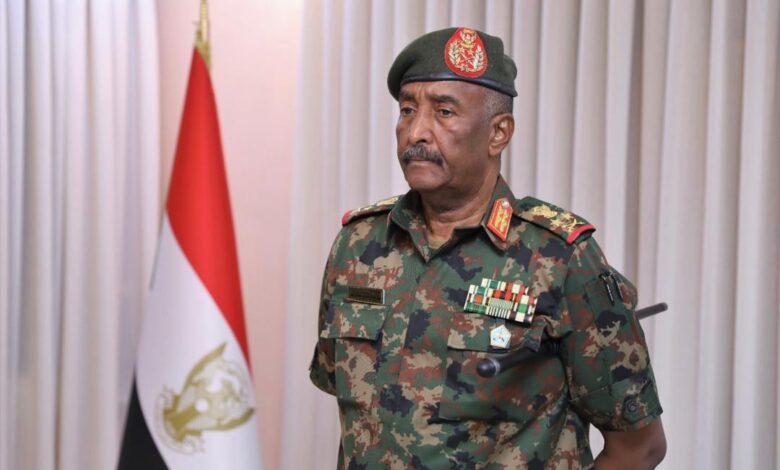
The spread of the “Leave Us Alone, al-burhan” hashtag has revived questions about whether Sudanese anger could move beyond online platforms into broader forms of political protest. The war continues, living conditions are deteriorating and criticism of the army leadership under Abdel Fattah al-Burhan is mounting. While activists see the campaign as evidence of declining confidence in the incumbent authorities, the question remains whether this digital mobilisation can become an organised protest movement or will remain confined to posts and online engagement.
Part of the campaign’s significance lies in its slogan: a short, direct colloquial expression rather than a conventional political formula. This has helped it circulate in Sudanese discussions on X, Facebook and other platforms.
According to a Sky News Arabia report published on October 26, 2026, the hashtag began gaining momentum on October 22. Its circulation expanded over the following days, accompanied by posts, videos and graphics demanding al-Burhan’s departure, an end to military rule and a halt to the war.
Why Have Sudanese People Turned to Online Platforms?
Social media has become one of the few spaces in Sudan where people can share political views, exchange information and express anger, particularly under the constraints the war has imposed on political activity and journalism.
Widespread displacement, infrastructure destruction and communications blackouts in some areas have made conventional protests harder to organise. Digital platforms, meanwhile, have enabled activists inside and outside the country to communicate and share messages.
Spreading a hashtag also requires no complex organisational structure. Users can repost the slogan or contribute an image or comment, allowing it to reach different sections of society.
This advantage, however, does not mean that online visibility necessarily reflects broad popular support on the ground. Engagement is shaped by each platform’s users, their geographical location, internet availability and restrictions on communications.
Assessing the campaign’s reach therefore requires more than counting posts. Relevant indicators include its extension into trade unions, professional committees and civic initiatives, and the resonance of its demands within local communities.
From Hashtag to Street Protest: Conditions for the Transition
In remarks reported by Sky Sudan, National Umma Party figure Orwa al-Sadig suggested that the campaign could gain greater momentum if it converged with strikes by teachers and professionals, protests in markets and worsening problems over bread and wages.
This interpretation envisages online protest developing into social mobilisation by connecting political demands to problems affecting people’s daily lives.
Teachers facing delayed salaries, workers with declining purchasing power, traders struggling with disrupted markets and families searching for food and medicine all experience the direct effects of an economic crisis worsened by war.
Turning these grievances into an organised movement, however, requires civilian networks capable of coordination, safeguards for participants and a clear political message defining objectives and methods.
It also requires overcoming divisions between political forces. Multiple initiatives and disagreements over the next phase could weaken efforts to unite protests around a shared programme.
A Counter-Campaign Reveals Deep Polarisation
The spread of “Leave Us Alone, al-burhan” prompted reactions from accounts supporting the military leadership. A counter-campaign emerged under the slogan “You Remain at Our Head”, seeking to reaffirm support for al-Burhan staying in power.
According to Sky News Arabia, a pro-Burhan platform also demanded the arrest of those promoting the hashtag and their prosecution for treason and conspiracy against the state.
These developments show that Sudan’s online space has become an arena of intense political competition, with each side presenting itself as the defender of state and public interests.
The danger, however, lies in that competition turning into exchanges of accusations and claims of treason, closing space for dialogue and making citizens more fearful of expressing their views.
Opposing al-Burhan does not necessarily mean supporting the Rapid Support Forces. Equally, supporting the army does not necessarily mean rejecting civilian demands to end the war or reform state institutions.
This distinction is fundamental in Sudan: building an independent civilian movement requires separating opposition to the military leadership from alignment with another armed actor.
Concerns over Exploitation by the Warring Parties
Any Sudanese protest movement faces the possibility of exploitation by belligerents seeking political or media advantages.
During wartime, each side may portray protests against its opponent as evidence of declining popularity or lost legitimacy while downplaying protests directed against itself.
The campaign’s independence from armed actors is therefore essential to preserving its civilian character.
Any political mobilisation must also affirm its rejection of attacks on civilians and of protests being used as cover for settling scores or inciting violence.
Those leading civic initiatives need to make clear that demanding an end to the war, the military leadership’s departure and the restoration of civilian rule does not grant any armed actor an unrestricted mandate to seize control of the state.
Economic Anger Could Broaden the Protests
Deteriorating economic and living conditions are among the main factors likely to influence whether the campaign continues.
The war has weakened large parts of the productive economy, increased the prices of essential goods and depreciated the local currency, while damaging public services.
The Sky Sudan report noted that campaign participants linked al-Burhan’s continued rule to collapsing wages, services and the currency, alongside rising living costs.
In the same report, political analyst Al-Najmi Osman described lengthening bread and fuel queues and growing economic pressure on residents of army-controlled areas.
These findings suggest that the campaign could draw some of its staying power from everyday crises, rather than political opposition to the army chief alone.
Demands concerning food, employment and services could give the protest movement a broader social base if civilian forces can turn them into clear demands whose implementation can be monitored.
Could the December Revolution Be Repeated?
The hashtag’s spread recalls the December 2018 revolution, which relied on popular demonstrations, strikes and coordination among civilian forces until Omar al-Bashir’s government fell in April 2019.
Comparisons require caution, however, because today’s circumstances are substantially different.
Sudan is now experiencing a war between two military forces, with widespread weapons, multiple centres of territorial control and severe disruption to civilian institutions and trade unions. Displacement has also scattered local communities.
The civilian forces that led the December protests now face divisions and organisational and political challenges. They have not yet established a unified leadership accepted by all parties.
The success of any new mobilisation will therefore depend not on the strength of its slogans, but on its ability to build a broad civilian coalition, present a clear transitional programme and avoid becoming part of the armed conflict.
The Hashtag’s Future Depends on Civilian Forces
“Leave Us Alone, al-burhan” tests civilian forces’ ability to turn anger into a political project extending beyond the army chief’s departure.
The task is not merely to replace individuals. It includes reaching agreement on ending the war, rebuilding institutions, unifying the armed forces within a legal framework, ensuring judicial independence and restoring the economy and services.
Any civilian project must also establish clear mechanisms for justice and accountability, ensuring that those responsible for violations do not escape punishment.
Its vision should also include safeguards against renewed coups and constitutional rules governing relations between the military and civilian authorities.
Between Digital Mobilisation and Political Change
So far, published coverage establishes that “Leave Us Alone, al-burhan” became a prominent protest slogan in Sudanese political debate in late October and prompted a counter-campaign and calls to prosecute its promoters. This alone, however, does not prove that a new popular uprising has begun or that the balance of power has changed.
Nevertheless, continuing questions about the war, military rule and the state’s future reveal a space for political dissent that cannot be reduced to online activity alone.
The campaign’s real test will be its ability to preserve its civilian character, broaden discussion about ending the war and offer a credible political alternative beyond the polarisation between armed forces.
Ultimately, a single hashtag may not change the government. It can, however, expose the scale of the questions Sudan’s leadership can no longer ignore: why does the war continue? Who bears responsibility for its consequences? When will political decision-making return to civilians?
The answers will determine whether “Leave Us Alone, al-burhan” remains a digital cry or becomes part of a broader civilian movement demanding the rebuilding of Sudan.