Khaled Hassan on GB News and i24: The Muslim Brotherhood Tests Western Counter-Extremism Policies and Raises Questions of Double Standards
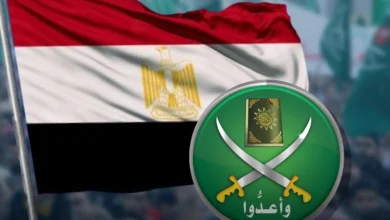
British-Egyptian researcher Khaled Hassan’s remarks in interviews with Britain’s GB News and Israeli broadcaster i24 have reopened the Muslim Brotherhood debate from two complementary perspectives. The first concerns continuing controversy over the movement’s activities in Britain. The second centres on Egypt’s decision to place it permanently on the list of terrorist organisations and the political messages that decision sends beyond Cairo.
The interviews reveal a clear contrast between states that regard the movement as a security and political threat and Western governments that continue to approach its designation through different legal and political considerations. They also question how effectively Western policies balance civil liberties with responses to organisations operating across borders.
Hassan directly criticised British policy, arguing that London lacks a clear national security strategy and that the Muslim Brotherhood’s continued direction of operations from the British capital reflects shortcomings in the handling of sensitive security issues.
On i24, meanwhile, he examined Egypt’s permanent designation of the movement as terrorist. He suggested that its practical impact could remain limited, with its significance lying in political messages concerning the future of power and the confrontation with the organisation.
Britain and the Brotherhood: Questions of Security Responsibility
In his GB News interview, Hassan criticised what he described as British governments’ delays in making security decisions. He argued that London often fails to act proactively, instead waiting for politically embarrassing events before taking action.
This criticism extends to the Muslim Brotherhood. Hassan questioned its continued activities from London and British governments’ seriousness in addressing concerns about transnational organisational networks.
The issue is significant because of Britain’s position as an influential political, financial and media centre. Its treatment of political and ideological organisations affects not only domestic conditions but also relations with states that regard those organisations as threats to their security and stability.
The debate therefore concerns more than the British government’s position on the Brotherhood. It also involves the clarity of the criteria used to identify organisational activity and distinguish legitimate freedoms from conduct that may breach the law or be connected to unlawful practices.
Hassan’s argument suggests a possible gap between British counter-extremism rhetoric and the government’s actual decisions—a gap that merits evidence-based discussion and legal assessment.
The Absence of a National Security Strategy and Its Consequences
Hassan’s criticism extended beyond the Muslim Brotherhood to British security policy more broadly. He argued that the United Kingdom lacks a coherent national security strategy.
This matters because confronting transnational organisations requires a long-term approach extending beyond bans and sanctions. It must include tracking funding sources, monitoring organisational networks, intelligence cooperation and developing the legal tools needed to address threats.
Ideological organisations pose additional challenges because they can change their methods and move between political, media and social spheres. Addressing them is consequently more complex than responding to a conventional security threat.
Hassan linked delayed British decisions to declining confidence among allies, citing debate over banning Iran’s Islamic Revolutionary Guard Corps. The issue, he argued, raises questions about London’s readiness to act decisively where security and diplomatic considerations intersect.
This perspective suggests that international credibility depends not merely on official statements but on the consistency of decisions with the challenges governments say they face.
Egypt and the Brotherhood: A Decision with Implications beyond Its Borders
On i24, Hassan addressed Egypt’s decision to place the Muslim Brotherhood permanently on its list of terrorist organisations.
He argued that the measure might not substantially change the movement’s practical circumstances but carried political messages concerning the future political process, a transfer of power and efforts to prevent associated figures from returning to competition for office.
This assessment indicates that Egypt’s approach to the Brotherhood cannot be separated from the political conflicts of recent years. Relations between the state and the movement have become one of the most sensitive issues in Egyptian politics.
The decision also raises questions about the relationship between security measures and counter-extremism. Terrorist designation can provide a legal basis for action against an organisation’s activities. It does not necessarily address its underlying ideas or end ideological influence that may persist outside its structures.
Egypt’s decision should therefore be considered within a broader approach requiring assessment of its legal, political and ideological consequences, rather than focusing on designation alone.
Ideology: A Challenge Security Measures Alone Cannot Address
One of the i24 interview’s central points was Hassan’s argument that confronting an organisation without addressing its ideology does not amount to effective counter-extremism. He supported this position by citing remarks he attributed to His Highness Sheikh Abdullah bin Zayed Al Nahyan.
This places extremist ideas at the centre of the discussion, beyond security and legal tools alone. Ideological organisations rely not only on leadership structures and financial resources but also on ideas and beliefs that enable them to recruit followers and justify their positions.
Security pressure may reduce their ability to operate openly without necessarily eliminating the ideas that sustained their activities.
Counter-extremism therefore requires a comprehensive strategy encompassing improved education, moderate religious discourse, action against hate speech and intellectual alternatives capable of challenging radical ideas.
Addressing ideology also means going beyond criminalising affiliations or widening suspicion. The focus should be on conduct and actions that can be legally established while protecting fundamental individual rights.
This approach is particularly important in Western societies committed to religious and political freedoms. Their success against extremism depends on protecting those freedoms without allowing them to be exploited to justify violence or unlawful activities.
Do Some Governments Use Counter-Extremism to Protect Their Power?
In his i24 interview, Hassan offered a critical political reading of Egypt’s confrontation with the Muslim Brotherhood. He argued that the conflict concerns competition for power more than countering extremism alone.
He also suggested that some states considering Egypt’s model could be motivated by protecting their governments against potential political competitors.
These remarks touch on a sensitive issue in international debate: the need to distinguish protecting national security from safeguarding the incumbent authorities’ political interests.
Confronting organisations involved in unlawful activities is a fundamental state responsibility. Using security designations to exclude political opponents without evidence and fair judicial procedures, however, can damage institutional credibility and weaken confidence in justice.
Conversely, political considerations or domestic disagreements should not prevent governments from addressing unlawful activity, regardless of who is responsible.
The true measure of a counter-extremism policy should therefore be its ability to protect society and apply the law equally, rather than merely weaken one political actor or strengthen another.
Britain and France Face Questions Raised by Egypt
Hassan suggested that Egypt’s decision could increase political embarrassment for Britain and France because neither has adopted a blanket terrorist designation of the Muslim Brotherhood.
This takes the debate into international relations. The issue extends beyond Cairo’s treatment of the movement to the reasons for differing Western positions.
The i24 presenter observed that Egypt’s message appeared to be directed more towards the West than the Middle East, highlighting the decision’s diplomatic dimension.
Under this interpretation, Cairo is not simply defining its own legal and political position. It is also challenging Western states to explain their criteria.
Britain and France face the task of clarifying the legal and security foundations of their positions. The absence of a blanket designation does not necessarily mean that no measures exist to monitor particular individuals or entities.
Nevertheless, differing approaches invite broader debate about the consistency of international standards and whether some governments apply different criteria according to their interests and political relationships.
Nigel Farage and the Conservatives: Political Differences over a Ban
On GB News, Hassan suggested that Nigel Farage might be willing to act on banning the Muslim Brotherhood. At the same time, he criticised the Conservative Party for what he regarded as its lack of a clear commitment or policy direction towards that objective.
This shows that the issue has become part of British political debate. Approaches to the movement may become a benchmark for assessing parties’ positions on national security, immigration, extremism and foreign relations.
Turning it into an electoral contest, however, is not enough to address the underlying issues. Any ban requires a clear legal foundation, reliable evidence and procedures open to judicial review, preventing unjustified expansion of security powers.
A successful policy must also be institutional and durable rather than changing with governments or election results.
Double Standards or Different Legal Assessments?
The interviews place alleged Western double standards at the centre of the debate. It is nevertheless important to distinguish differing political positions from proven inconsistency in the application of standards.
States may assess organisations differently because of their legislation, available evidence and the threats they face. Persistent divergence without adequate explanation, however, raises questions about the consistency of declared policies.
Western governments need to explain their designation criteria and distinguish legitimate political activity from conduct involving incitement, unlawful financing or support for violence.
States adopting stricter measures must likewise demonstrate that their actions rest on clear legal standards and that counter-terrorism is not being used to eliminate political competition.
Countering Extremism Is a Responsibility beyond Borders
Hassan’s remarks on GB News and i24 show that the Muslim Brotherhood issue has become a test of state policies towards transnational ideological organisations.
Britain faces questions about the clarity of its security strategy and its willingness to take decisive action. Egypt offers a stricter legal approach, which in turn prompts debate over the political dimensions of designation and its limits in addressing extremism.
The principal message emerging from the two interviews is that an effective response cannot rely on bans alone, nor can it ignore organisational activities in the name of protecting freedoms. It requires clear legal standards, independent institutions, international cooperation and serious intellectual engagement with extremist ideologies.
Beyond the differences between Egyptian, British and French positions, the real challenge for governments is to demonstrate that their policies protect society and the rule of law, rather than serve narrow political calculations or selective treatment of organisations and threats.