Leave Us Alone, al-Burhan: From Demanding an End to War to Calling for the Dismantling of Military Rule
Leave Us Alone, al-Burhan
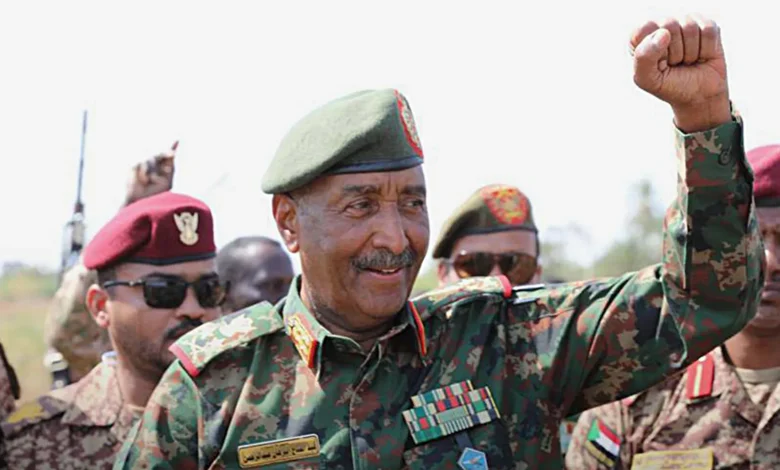
The “Leave Us Alone, Burhan” campaign is no longer confined to expressing anger over Sudan’s continuing war. Its demands have expanded to include ending the military establishment’s control of power and rebuilding the political system on civilian foundations. This shift reflects a widening debate over the future of the Sudanese state as fighting between the army and the Rapid Support Forces continues and prospects for a swift return to a stable transition diminish.
According to press reports published in late October, posts accompanying the campaign set out several interconnected demands: a ceasefire, al-Burhan’s departure, accountability for violations, the military’s withdrawal from political activity and the restoration of civilian rule.
These demands show that some opponents of the current leadership no longer consider replacing the army chief alone an adequate solution. Instead, they see the problem as rooted in the structure of power and the management of institutions and public resources.
Why Has the Hashtag Moved beyond al-Burhan Himself?
“Leave Us Alone, al-al-Burhan” sends a direct message to the army chief. Its political meaning, however, extends beyond him to the system of rule that emerged after the October 2021 coup.
Campaign participants criticise the military’s continued dominance of political decision-making. They argue that this has obstructed the development of civilian institutions and undermined opportunities to resolve disagreements over security and military sector reform.
In remarks reported by Sky Sudan on October 24, National Umma Party figure Orwa al-Sadig said the hashtag’s deeper significance lay in a shift in popular discourse from protesting the consequences of the war to holding accountable the decision-making centre directing it.
This interpretation reflects an effort to broaden the protest’s scope: beyond demanding an end to the fighting, it seeks to define the form of government that will lead the country afterwards.
Demands to End the War and Rebuild the State
Posts associated with the hashtag combine humanitarian and political demands. Participants call for an end to fighting, protection for civilians and the opening of aid routes, alongside changes to the political and military leadership.
Calls have also emerged for an independent civilian transitional authority, the reunification of state institutions and legal and civilian oversight of public resources and finances.
These demands carry particular weight amid Sudan’s economic collapse. The war has disrupted production, trade and services, reduced household incomes and increased the cost of food and medicine.
Campaign supporters argue that continued spending on the war while essential services deteriorate reflects a fundamental imbalance in state priorities.
Meeting these demands, however, requires a complex response extending beyond a change of leadership. Economic and security institutions have suffered severe fragmentation, while the proliferation of armed forces makes rebuilding the state exceptionally difficult.
The Military’s Political Role at the Heart of the Crisis
The future relationship between the military establishment and political life is one of the campaign’s central concerns.
Since 2019, civilian forces involved in Sudan’s revolution have called for a unified, professional army under civilian authority and removed from party-political competition.
Disagreements over military reform and arrangements to integrate the Rapid Support Forces complicated the transition before becoming one of the issues at the centre of the conflict that erupted in April 2023.
Campaign participants therefore argue that any solution must include comprehensive security and military sector reform, rather than merely replacing leaders or redistributing positions.
Such reform requires clear command-and-control rules, unified armed forces, compliance with the constitution and the law, and measures preventing the formation of parallel forces outside state institutions.
Accountability for Violations
Demands for accountability recur throughout posts associated with the hashtag. Activists call for independent investigations into violations suffered by civilians during the war.
These include extrajudicial killings, sexual violence, arbitrary detention, looting, attacks on civilian facilities and assaults on humanitarian workers.
Accountability, however, must not be selective or based on political affiliation. It should extend to anyone proven responsible for committing crimes or ordering them, regardless of position or allegiance.
Transitional justice also requires documenting violations, protecting witnesses, ensuring judicial independence and establishing mechanisms for reparations and victim compensation.
This issue highlights the danger that a settlement focused on power-sharing without addressing violations could leave the causes of conflict intact and merely postpone their resurgence.
Chemical Weapons Allegations Require an Independent Investigation
Some posts linked to the campaign have also raised allegations that chemical weapons were used against Sudanese people.
These allegations are exceptionally serious because they concern a possible violation of strict international rules prohibiting chemical weapons use.
Circulation on social media, however, does not constitute independent evidence that the alleged incidents occurred. Nor should the claims be treated as conclusively established without reliable investigative findings.
Press reports concerning the campaign have discussed the renewed prominence of these allegations in public debate while pointing to the need for an independent and transparent international investigation.
A rigorous approach requires collecting technical and medical evidence, analysing samples, identifying suspected substances and verifying the locations and timing of incidents before publishing findings in accordance with international standards.
The issue must not become material for political propaganda. Its gravity demands protection for victims, the establishment of the truth and legal accountability.
Civilian Forces Must Present an Alternative
Although the campaign has brought demands for al-Burhan’s departure to wider attention in online debate, the greater challenge is whether a clear political alternative exists.
Sudan needs more than the removal of its current leadership. It requires an authority capable of managing a complex transition, rebuilding state institutions, restoring services and preparing the conditions for free elections.
Civilian forces face the task of overcoming their divisions, agreeing on rules for political participation, defining their relationship with armed groups and ensuring that the transition does not become another power-sharing arrangement between military leaders and political parties.
The civilian project must also provide genuine representation for regions affected by marginalisation and war, rather than being confined to political elites in major cities.
A Leader’s Departure Would Not End the Crisis
The “Leave Us Alone, al-burhan” campaign raises an important question about the future of the army’s leadership. At the same time, it reveals that political change requires more than one individual’s departure.
The persistence of military rule’s structures, competing centres of power, the absence of civilian oversight and weak justice institutions could reproduce the crisis even under a different leadership.
The campaign’s value therefore lies not only in its ability to increase pressure on al-Burhan, but also in its contribution to a serious debate about the kind of state Sudanese people want to build.
Across demands to end the war, reform the army, hold those responsible accountable and restore civilian rule, the hashtag puts a central question to political and military forces: how can the war be ended without reproducing the conditions that caused it?