Qatar and Sudan’s Islamists: Old Alliances Resurface in the War, Raising Questions of Influence
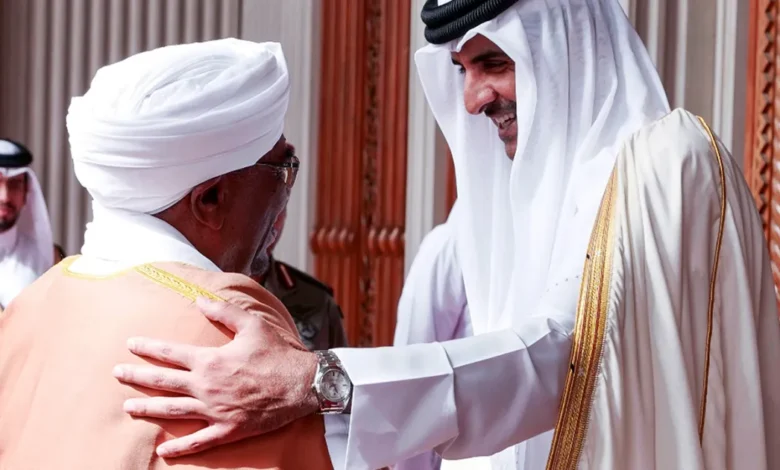
The war that erupted in Sudan in April 2023 was not simply a military confrontation between the army and the Rapid Support Forces. It exposed deeper political and ideological struggles that had remained beneath the surface since Omar al-Bashir’s fall. As the fighting spread, figures and networks linked to the former government re-emerged, alongside indications of renewed Islamist influence in political and military affairs. This brought fresh scrutiny to Qatar’s historical ties with these forces and the role Doha could play in reshaping the balance of influence within Sudan.
The significance of this issue lies in the fact that Qatar’s relationship with Sudan went beyond conventional diplomacy. Doha was involved in political, humanitarian and economic affairs during al-Bashir’s rule, while its name has long been associated with support for political Islamist movements across the region. Understanding Sudan’s current situation therefore requires examining these relationships and whether they could become channels of influence in the war.
Al-Bashir’s Legacy: Relationships That Survived the Government’s Fall
For three decades, Omar al-Bashir governed Sudan through a political and ideological alliance within which extensive networks of interests and relationships developed. Islamists played a central role in the former government’s structure and institutions.
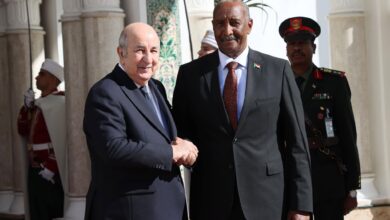
During this period, Qatar maintained close ties with Khartoum and expanded its economic, humanitarian, and political presence. It also participated in mediation over the Darfur conflict and hosted negotiations between the Sudanese government and armed movements.
Doha regarded Sudan as strategically important, not only because of its location and agricultural and mineral resources, but also because of its political and social reach across Africa and the Arab world.
The relationships formed during this period consequently extended beyond government-to-government contacts. They encompassed individuals, institutions and social and economic circles, some of which remained active after al-Bashir’s fall.
When Sudan’s revolution overthrew the government in 2019, the country entered a transition intended to rebuild political and military institutions and remove former-government networks from control over national decision-making. Divisions among civilian forces, disputes between military and civilian actors, and the October 2021 coup, however, created conditions conducive to the old government’s forces returning to political activity.
Amid these changes, their external relationships became an important source of influence, making Qatar’s historical ties with them a subject warranting investigation and scrutiny.
Islamists and the War: A Return to the Military Arena
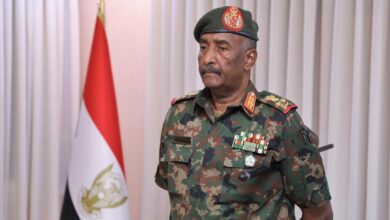
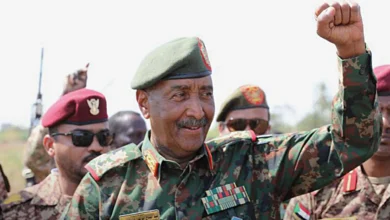
With the outbreak of war, Islamist influence extended beyond political activity and media messaging. Armed formations and mobilisation efforts linked to Islamist currents emerged, most prominently the Al-Baraa ibn Malik Brigade, which became known for fighting alongside the Sudanese Armed Forces.
These formations’ involvement raised questions about their role, the independence of their military decision-making and their relationships with political and organisational networks associated with the former government.
The prominence of Islamist figures in military mobilisation also fuelled concerns that the war could become a means of restoring the former government’s influence under the banner of defending the state and confronting the Rapid Support Forces.
This does not mean that all army supporters are Islamists or that everyone fighting alongside it represents an extension of the former government. The military encompasses different outlooks, and many Sudanese people support the army for national and security reasons. Nevertheless, the presence of formations with clear ideological backgrounds requires scrutiny of their influence and political and financial relationships.
Qatar at the Centre of Regional Questions
In a report published by the European Council on Foreign Relations on July 30, 2025, researcher Jonas Horner examined Gulf states’ positions on Sudan’s war, devoting part of the analysis to Qatar’s relationships with Islamist movements.
The report indicated that Qatar had maintained ties with the Muslim Brotherhood and other Islamist figures. It described its approach as driven by pragmatic and political considerations, rather than necessarily reflecting complete ideological alignment.
It also reported that Doha hosted former Islamist members of al-Bashir’s government. According to assessments cited in the report, these networks were important in providing financial networks, weapons, and military equipment for the Sudanese Armed Forces’ war effort.
The report also highlighted the appearance of an Al-Baraa ibn Malik militia commander outside the Qatari embassy in March 2025, where he thanked Doha for its support.
These findings do not, by themselves, establish that Qatar directly directs armed formations. They do, however, subject Doha’s relationships with certain Sudanese Islamist figures to serious scrutiny, particularly given the war and its risks for the Sudanese state’s future.
The question is therefore not merely whether Qatar maintains ties with Islamist figures, but what those ties involve. Are they confined to political communication, or do they extend to financial and logistical support capable of affecting the military balance?
Humanitarian Assistance and Local Relationship Networks
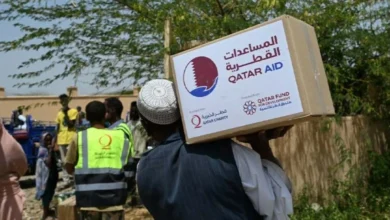
Another issue requiring examination is the relationship between Qatari charitable and humanitarian institutions and their local partners in Sudan.
Humanitarian organisations generally work through networks of local organisations, associations and other actors. This is normal in conflict environments where access is difficult without partners on the ground. When some of those actors have ties to political figures or institutions with ideological affiliations, however, oversight of funding flows becomes especially important.
Several questions arise: which local actors implement Qatari projects? What relationships do they have with political forces? Are their accounts independently audited? Do donor institutions have accurate information about the ultimate beneficiaries of funds and relief supplies?
Raising these questions does not mean Qatari aid has actually been used to finance an armed formation. It means transparency is necessary to prevent humanitarian work from being exploited in an environment where politics, armed forces and economic interests overlap.
Do Islamist Movements Benefit from the War’s Continuation?
The war gives political movements that lost influence after the former government’s fall an opportunity to present themselves again as participants in a major national struggle. Some may benefit from military mobilisation and polarising rhetoric that frames society’s choices in stark terms of victory or defeat while narrowing discussion of civilian government’s future.
Continued fighting also weakens civilian institutions, delays the formation of a stable transitional authority and gives armed forces and associated organisations greater influence over national decision-making.
From this perspective, any foreign support for political or military networks seeking to restore the former government’s influence could undermine prospects for democratic transition.
Proving that Qatar deliberately supported such an outcome, however, requires evidence beyond shared political positions or historical relationships. An investigation would need to examine financial transfer records, communications, intermediaries and documents relating to material or logistical support.
Competition over Sudan’s Future
Sudan is not an isolated domestic arena. It is a strategically important country because of its Red Sea location, its geographical position in the Horn of Africa region and its substantial agricultural and mineral resources.
The return of Islamist movements therefore concerns more than internal power balances. It also intersects with the interests of regional states that view these movements’ rise or decline as a factor shaping security and influence.
In this context, Qatar faces a political test: demonstrating that its historical relationships with former-government figures are not becoming support for restoring their power, and that neither aid nor diplomatic ties are being used to strengthen forces opposing a civilian transition.
Sudan does not need military alliances replaced by ideological ones, nor the restoration of a political system whose legitimacy was ended by a popular revolution.
Supporting Peace Means Confronting the Networks Sustaining War
If Doha is serious about supporting Sudanese stability, it must go beyond statements calling for dialogue and a ceasefire. States with ties to influential forces should use those relationships to press for an end to the fighting and prevent the war from becoming an opportunity to rearrange political influence.
Qatar should also clarify its position on ideologically affiliated armed formations, transparently disclose the nature of its relationships with Sudanese figures linked to the former government, and ensure that its humanitarian institutions are not used to build influence networks serving any political or military actor.
The greatest danger facing Sudan is not continued fighting alone. It is that the war could end by recreating a political and military system that returns the country to a cycle of authoritarianism and conflict.
The question remains: will Qatar use its historical relationships with Islamist movements to encourage them to relinquish arms and join an inclusive national settlement, or will those ties remain a factor complicating the prospects for civilian transition?
Sudan’s future must not be held hostage to the calculations of any political movement or foreign influence network. It is the right of the Sudanese people alone to build a stable civilian state in which legitimate national institutions hold the monopoly on the use of force, and all actors are subject to accountability and the law.