Advanced techniques and striking power: how the United States besieges Iran and clears the Strait of Hormuz
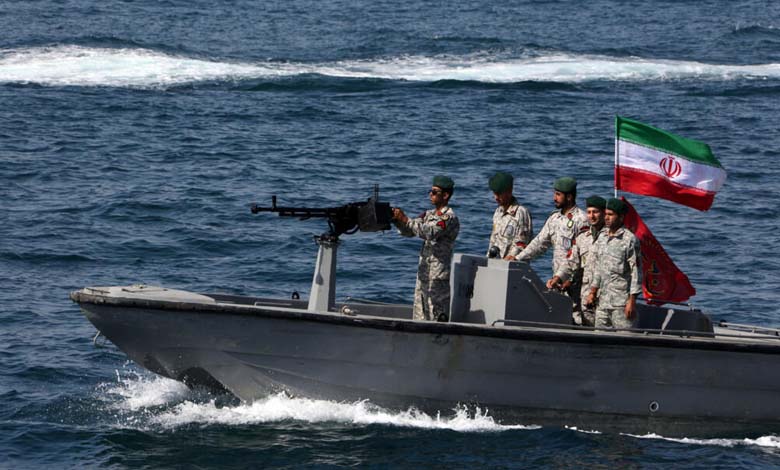
Six weeks after the outbreak of war with Iran, President Donald Trump assigned the U.S. Navy what is considered the most difficult and dangerous mission of the conflict so far.
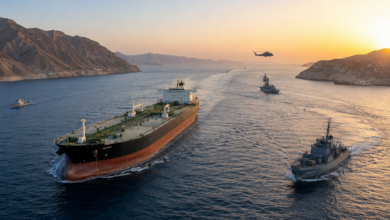
According to CNN, the mission involves imposing a comprehensive naval blockade on Iran, in addition to clearing the strategic Strait of Hormuz of mines laid by Tehran.
The United States Central Command (CENTCOM) announced that the blockade went into effect at 10:00 a.m. U.S. Eastern Time on Monday, covering all Iranian ports inside and outside the strait, this vital waterway that Iran has controlled since the start of the war.
Donald Trump indicated that the scope of the mission could expand beyond the Arabian Gulf, stating that the Navy will inspect and detain any vessel in international waters that has paid illegal fees to Iran, according to CNN’s report.
-
Details of a secret call between the United States and Iran that nearly ended the war
-
Reinforcements and thousands of troops: the United States considers expanding its military deployment against Iran.
Advanced techniques
In an interview on the program “Sunday Morning” on Fox News, Donald Trump confirmed that the United States has already begun deploying its mine countermeasure capabilities, saying, “We have minesweepers there now.” He added that the U.S. relies on a mix of advanced and conventional systems, along with support from allied countries, including the United Kingdom, which has also sent minesweepers to participate in the operation.
CENTCOM announced on Saturday the launch of strait-clearing operations following the transit of two U.S. destroyers—USS Michael Murphy and USS Frank E. Petersen—through the waterway for the first time since hostilities began.
Experts, however, believe these destroyers are not best suited for mine removal and that their transit was likely intended to demonstrate navigability and the absence of mines along the main shipping channel.
-
Excessive demands: Iran reveals obstacle to agreement with the United States
-
Iran warns Israel and the United States of “escalation beyond control”
Underwater drones
CENTCOM explained that the clearing plan includes deploying underwater drones in the coming days to detect Iranian mines and determine their locations in preparation for neutralization.
The New York Post reported that the U.S. Navy relies in this mission on advanced technologies, including the “Knifefish” underwater drone developed by General Dynamics, weighing about 17,000 pounds and capable of detecting buried mines as well as those in complex marine environments.
The system also includes the “Kingfish 2” underwater drone, a torpedo-shaped vehicle equipped with advanced sonar systems to scan the seabed and detect suspicious objects likely to be mines.
-
New Talks – United States and Iran Revive Nuclear Agreement Negotiations Once Again
-
The United States will sanction more than two dozen people and entities about Iran’s nuclear
In parallel, the U.S. Navy uses MH-60S helicopters equipped with an airborne laser mine detection system and a mine neutralization system, enabling rapid detection and precise destruction.
Analysts believe the actual clearing operation will primarily be carried out by these underwater drones, supported by littoral combat ships fitted with mine countermeasure systems and specialized helicopters.
Blockade challenges
Beyond mine removal, imposing the naval blockade presents major logistical and military challenges. Analysts consider the mission procedurally complex but feasible given U.S. naval superiority.
-
Trump threatens to destroy Iranian vessels as Tehran vows retaliation
-
Iran: “I can wipe it out in an hour” — Donald Trump issues a warning to Tehran
Assessing the required forces, retired Admiral James Stavridis stated that the Pentagon would need two carrier strike groups and around a dozen surface ships outside the Gulf to patrol the entrance to the strait.
Inside the Gulf, at least six U.S. destroyers would be required, along with naval forces tasked with “encircling the strait from both sides.”
Analyst Carl Schuster, a former U.S. Navy captain, explained that two of these six destroyers would be used for boarding commercial vessels, while the remaining four would counter any Iranian attempts to disrupt operations.
He added that each destroyer can conduct six vessel seizure operations per day, noting that about 130 ships crossed the strait daily before the war.
-
What will Trump do with Iran after the failure of the negotiations?
-
Report: Iran cannot open the Strait of Hormuz, even if it wanted to
“Prize law”
According to CNN, the U.S. Navy trains specialized teams for boarding commercial vessels, each consisting of 10 to 14 members, including a deck officer responsible for steering the seized vessel to a detention port.
Rather than a traditional blockade, researcher Jennifer Parker suggested Washington may resort to seizures under international “prize law,” which allows belligerents to capture enemy commercial ships and cargo, and to inspect and seize neutral ships carrying contraband or contributing to the enemy’s war effort.
Types of Iranian mines
The mines Iran may deploy include contact mines, electric influence mines, magnetic mines, acoustic mines, and pressure mines triggered by changes in water pressure.
-
A new Iranian terrorist arm in Europe: digital footprint deciphers the code of blood
-
A disfigured face and a missing leg: new details about the injury of Iran’s guide
Analyses indicate that some complex mines combine more than one mechanism, and some are equipped with devices allowing a certain number of ships to pass before detonation, making it extremely difficult to ensure full neutralization of a minefield.
Mine countermeasures rely on two methods: sweeping (cutting the cables of moored mines) and searching using sonar or laser to destroy bottom mines. However, sweeping techniques are ineffective against complex and pressure mines.
Analysts point out that the United States’ ability to conduct mine clearance alone remains limited, especially after the U.S. Navy retired four specialized minesweepers from service last year.
-
Iran War Reveals Trump’s Failures in Negotiation
-
The U.S. military will remain around Iran to ensure enforcement of the truce agreement