Merope: The United States deploys the largest counter-drone system in the Middle East
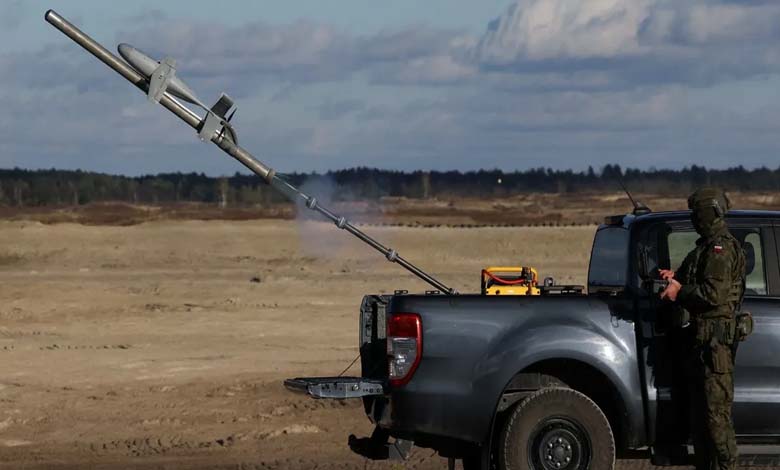
The United States has expanded its military presence in the Middle East by launching the largest counter-drone mission to date, amid escalating tensions with Iran.
This move reflects a growing recognition of the decisive role drones now play on battlefields, particularly following their extensive use in recent conflicts.
A U.S. defense official told Business Insider that this mission is the largest of its kind ever undertaken, highlighting the deployment of the “Merope” system, which specializes in drone interception and relies on low-cost interceptor aircraft designed to neutralize hostile aerial targets.
-
Details of a secret call between the United States and Iran that nearly ended the war
-
New Talks – United States and Iran Revive Nuclear Agreement Negotiations Once Again
“Merope”: a low-cost system with high capabilities
The system relies on an interceptor known as “Servior,” capable of exceeding speeds of 280 km/h and destroying targets either through direct collision or proximity detonation.
The U.S. Army has sent dozens of Merope systems to the Middle East.
This system was developed under the U.S. “Eagle Project” initiative to counter one-way attack drones such as Iran’s “Shahed” drones.
The system stands out for its notable operational efficiency: it can be operated by a limited crew, while the interceptors are controlled using simple commercial “Xbox” controllers, providing high operational flexibility and rapid deployment capability.
-
Advanced techniques and striking power: how the United States besieges Iran and clears the Strait of Hormuz
-
Reinforcements and thousands of troops: the United States considers expanding its military deployment against Iran.
Soldiers require only a few days to master its operation, even without prior experience in air defense systems, although some have experience with systems such as “Avenger” and “Stinger.”
The system is deployed at two main locations in the Middle East. At one site, more than 100 U.S. soldiers operate around 20 complete units, each consisting of a radar, launcher, control station, and interceptor drones.
At another site, between 50 and 60 soldiers operate about 10 similar units.
The United States has sent nearly one thousand interceptors, armed and unarmed, to these two sites and stands ready to increase the number if needed.
-
Excessive demands: Iran reveals obstacle to agreement with the United States
-
Iran warns Israel and the United States of “escalation beyond control”
From Ukraine to the Middle East: transfer of expertise and changing rules of engagement
The deployment of “Merope” builds on extensive combat experience gained in Ukraine, where it successfully intercepted more than a thousand “Shahed” drones used by Russia.
This performance prompted several NATO member states to acquire and deploy the system following incidents of drone airspace intrusions.
In this context, the United States deployed the system in the Middle East in early March, following the launch of Operation “Epic Rage,” to protect its forces and allies from Iranian drone attacks.
-
The United States will sanction more than two dozen people and entities about Iran’s nuclear
-
Trump threatens to destroy Iranian vessels as Tehran vows retaliation
The system is viewed as a low-cost alternative to conventional missiles, with each interceptor costing no more than $15,000, roughly comparable to the cost of Iranian drones, creating economic balance on the battlefield.
The deployment also reflects an advanced level of international coordination, as Ukraine has sent air defense experts to the region to help counter Iranian threats, drawing on its extensive experience in this field.
-
Islamabad or Geneva? A new round of negotiations between Washington and Tehran under consideration
-
Iran: “I can wipe it out in an hour” — Donald Trump issues a warning to Tehran